
Driving the news: Saudi Arabia’s with its Gulf neighbours jumped 187.12% year on year in September 2026, according to an Al Arabiya Business analysis of preliminary General Authority for Statistics (GASTAT) data.
Why it matters: The surge shows the Kingdom cementing its role as the Gulf’s trade and logistics hub. Moreover, it arrives as Saudi Arabia reroutes cargo around regional shipping disruptions.
The big picture: The surplus reached SAR 13.89 billion ($3.7 billion), up from SAR 4.84 billion ($1.29 billion) in September 2025. These figures exclude petroleum exports.
The bottom line: Exports to Gulf neighbours more than doubled, while imports rose by less than that pace. As a result, the surplus widened sharply.
UAE, Kuwait and Qatar Lead the Gains
Zoom in: The United Arab Emirates anchored the result. Saudi Arabia’s surplus with the UAE climbed 118.85% to SAR 10.54 billion ($2.81 billion), compared with SAR 4.82 billion ($1.28 billion) a year earlier.
Kuwait delivered the sharpest rise. The Kingdom’s surplus there soared 366.67% to SAR 2.55 billion ($679.47 million), more than quadrupling in a year. Similarly, the surplus with Qatar grew 8.1% to SAR 787 million ($209.87 million).
Meanwhile, Saudi Arabia flipped to a surplus with Oman, at SAR 208 million ($55.47 million). The Oman shift reverses a previous deficit. Bahrain remained the only deficit partner. However, the net gap there narrowed 14.7% to SAR 197 million ($52.53 million).
Despite the broad gains, the UAE remains the Kingdom’s dominant Gulf partner. It accounts for about 70% of total non-oil trade with the GCC, with SAR 29.35 billion ($7.83 billion) of SAR 41.85 billion ($11.16 billion). Furthermore, the Emirates received 85.57% of September’s re-exports. That share sits slightly below the 89.33% it took across the first five months of 2026.
By the numbers:
- Exports to the GCC: Non-oil exports rose 130.58% to SAR 27.87 billion ($7.43 billion), versus SAR 12.09 billion ($3.22 billion) a year earlier.
- Re-exports: These jumped 84.3% to SAR 16.76 billion ($4.47 billion), versus SAR 9.09 billion ($2.42 billion).
- UAE share of re-exports: The Emirates received 85.57% of the total, worth SAR 14.34 billion ($3.83 billion), up 79.2%.
- National exports: Saudi-made non-oil goods surged 270.9% to SAR 11.1 billion ($2.96 billion), versus SAR 2.99 billion ($798.4 million).
- Imports from the GCC: These climbed 92.85% to SAR 13.98 billion ($3.73 billion), versus SAR 7.25 billion ($1.93 billion).
- Total non-oil trade: Volume rose 116.4% to SAR 41.85 billion ($11.16 billion), versus SAR 19.34 billion ($5.16 billion).
- Trade by partner: The UAE led with SAR 29.35 billion ($7.83 billion), followed by Oman at SAR 4.02 billion ($1.07 billion), Bahrain at SAR 3.66 billion ($976.53 million), Kuwait at SAR 3.28 billion ($874.67 million) and Qatar at SAR 1.54 billion ($409.87 million).
Re-Exports and Red Sea Routes Lift Trade
Zoom in: National exports drove much of the leap. Their 270.9% rise shows that Saudi-made goods, not only re-exported products, are gaining ground in Gulf markets. That matters for Vision 2030, which prizes diversification beyond oil.
Re-exports also play a growing part. Non-oil exports, including re-exports, rose 18.9% to $97 billion (SAR 363.75 billion) in 2025, as re-export activity surged 64.4%.
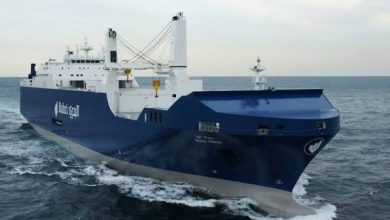
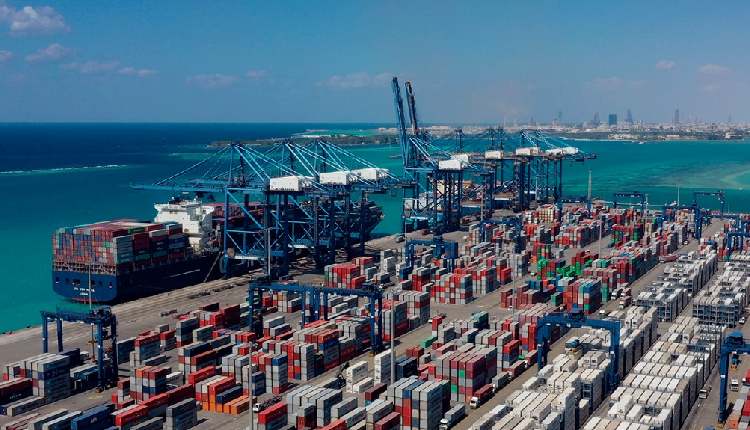
The bigger picture: Regional shipping disruptions have reshaped trade flows. After the Strait of Hormuz closed in late February, Saudi Arabia redirected crude exports through its East-West pipeline to Yanbu on the Red Sea. Saudi Arabia launched a Logistics Corridors Initiative to redirect cargo from Arabian Gulf ports to Jeddah Islamic Port and other Red Sea gateways. As a result, the Kingdom imported a record $30.2 billion (SAR 113.25 billion) of goods through Red Sea ports in the second quarter.
The wider trade ratio shows the same pattern. The ratio of non-oil exports, including re-exports, to imports rose to 41.6% in April 2026, up from 37.8% a year earlier, according to GASTAT. Saudi Arabia’s use of alternative ports contributed to that rise, Asharq Al-Awsat reported.
Land corridors add another layer. Roads now link Red Sea ports with the Arabian Peninsula, so shipments reach other GCC markets by truck. Consequently, Saudi territory increasingly serves as the connecting bridge for Gulf commerce, and the September data reflects that shift.
Momentum had already built before September. Over the first five months of 2026, the surplus with the GCC rose 11.29% to SAR 20.8 billion ($5.55 billion). Imports from Gulf neighbours also grew 11.9% to SAR 37.6 billion ($10.03 billion), so the Kingdom keeps buying as it sells. Overall, September’s jump marks a sharp acceleration.
What’s next: GASTAT’s next monthly bulletin will test whether the momentum holds. In addition, analysts will watch whether national exports keep their pace as Red Sea routes carry more regional cargo. Policymakers also will track the balance between re-exports and Saudi-made goods, because domestic production anchors long-term diversification under Vision 2030. Gulf traders and exporters will watch closely.