Saudi Arabia Reaches for the Stars: Student-Designed Satellites Launch Successfully

The Saudi Space Agency (SSA) announced on Saturday the successful launch of two student-designed satellites during a recent international space mission. These new scientific instruments signal a significant advancement in the Kingdom’s commitment to space exploration and technology development.
Fostering STEM Talent
According to the Saudi Press Agency, students from Umm Al-Qura University and Prince Sultan University designed the “Radwa Scope” and “Ufuq” satellites. Furthermore, this project formed a key part of the SARI competition for building and designing small satellites. The ambitious contest launched in December 2024, inviting undergraduate students from 42 universities across the Kingdom to participate actively. From a massive pool of 480 ambitious entries, the selection committee chose only these two innovative satellite designs to proceed to the launch stage.
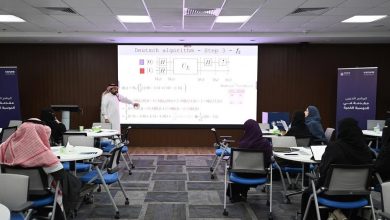
Consequently, the agency aimed for this competition to give students practical experience in the crucial areas of satellite construction, design, and operation. This powerful initiative significantly develops student skills in science, technology, engineering, and mathematics (STEM) fields, preparing them for the future.
Inspiring a New Generation
Recently, interest in the space science sector has rapidly accelerated since Saudi astronauts Rayyanah Barnawi and Ali Al-Qarni completed the historic Axiom Mission 2. In May 2023, Barnawi and Al-Qarni traveled to the International Space Station, capturing the nation’s imagination with this remarkable journey.
Moreover, they traveled aboard the powerful SpaceX Dragon capsule alongside astronaut Peggy Whitson and renowned business pioneer John Shoffner. Seven astronauts, including one from the UAE, warmly welcomed the Saudi mission crew upon their arrival at the ISS laboratory.
Ultimately, this pioneering spirit recalls Prince Sultan bin Salman Al Saud, who three decades ago achieved a similar, remarkable feat for the Arab world when he became the first Arab in space, flying aboard the Space Shuttle Discovery for the STS-51G mission in June 1985.