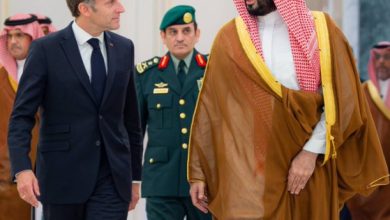


The big picture: Saudi Arabia joined seven Arab and Muslim allies Sunday to condemn Israeli plans to forcibly displace nearly two million Palestinians from Gaza. The move reinforces Riyadh’s role as the leading Arab voice defending Gaza’s civilians.
Why it matters: The diplomatic coalition reinforces firm red lines against forced Palestinian displacement while highlighting Riyadh’s pivotal leadership in defending Gaza.
Diplomatic Rejection of Forced Displacement
The foreign ministers of Saudi Arabia, Jordan, the UAE, Indonesia, Pakistan, Qatar, Egypt, and Türkiye strongly condemned statements by Israeli National Security Minister Itamar Ben-Gvir. Specifically, Ben-Gvir proposed forcibly displacing Palestinians from their land and establishing settlements in the Gaza Strip.
In a joint statement issued on Sunday, the ministers described Ben-Gvir’s remarks as “provocative proposals that constitute a blatant violation of international law, including international humanitarian law”. Furthermore, they stated that these proposals pose “a direct threat to the inalienable rights of the Palestinian people”.
The coalition reaffirmed its “categorical rejection and condemnation of any attempts or plans to displace the Palestinian people, individually or collectively, within or outside the occupied Palestinian territories, under any name or pretext”. Moreover, the ministers warned of serious consequences if extremist calls become declared policy or practical measures.
Consequently, such unilateral actions directly challenge international peace efforts, foremost among them US President Donald Trump’s comprehensive plan to end the Gaza conflict. Trump’s initiative explicitly rejects forced displacement. Therefore, attempts to impose new realities risk fueling further violence and regional instability.
Firm Stance
The statement emphasized that “the Gaza Strip is an integral part of the occupied Palestinian territory”. As a result, the ministers stressed the need to halt all illegal settlement activities across Gaza and the West Bank, including East Jerusalem.
The coalition asserted that “the only path to achieving a just and lasting peace is through implementing the two-state solution”. This framework requires establishing an independent Palestinian state along June 4, 1967 borders, with East Jerusalem as its capital.
Additionally, the ministers called on the international community, particularly the permanent members of the UN Security Council, to assume their legal and moral responsibilities. They urged immediate action to prevent attempts to impose a new geographic or demographic reality on the ground.
Finally, the ministers reaffirmed their “full support for the Palestinian people’s steadfastness on their land” while rejecting all attempts to undermine their legitimate rights.
Saudi Arabia’s Frontline Role
Saudi Arabia continues to spearhead regional diplomatic and humanitarian initiatives to safeguard Gaza’s civilian population. Riyadh previously convened the Extraordinary Arab-Islamic Summit and led its ministerial committee across major world capitals. Through these diplomatic engagements, the Kingdom systematically builds global consensus to protect Palestinian civilians and enforce international law. Additionally, Saudi diplomatic efforts consistently prioritize the unconditional protection of civilian lives and critical infrastructure throughout Palestinian territories.
Beyond diplomacy, the Kingdom maintains a continuous air and sea relief bridge managed by the King Salman Humanitarian Aid and Relief Centre (KSrelief).
By the numbers:
- SAR 2.03 billion ($542.48 million): Cumulative assistance KSrelief delivered to support Palestine across multiple relief sectors.
- SAR 500 million ($133 million): Direct public donations raised through Saudi Arabia’s Sahem campaign for Gaza, backed by 806,000 donors.
- 84 relief air flights: Saudi cargo aircraft carrying food, medical supplies, and shelter materials directly to El-Arish Airport.
- 8 large relief ships: Saudi maritime vessels delivering heavy humanitarian aid directly to regional sea ports.
- 24,500 daily hot relief meals: Emergency food rations KSrelief central kitchens distribute continuously across the Gaza Strip.
- 83,000 food baskets: Essential family food parcels delivered directly to displaced Gaza families.
Bottom line: Saudi Arabia is pairing diplomatic pressure with sustained humanitarian spending. Together, these two tracks signal that Gaza’s civilians remain central to the Kingdom’s regional strategy. That strategy will likely face fresh tests, since displacement calls still persist inside Israel’s government, and Riyadh has signaled it won’t stay quiet.
What’s next: Saudi Arabia will maintain active diplomatic coordination with regional allies and international partners to prevent Palestinian displacement, ensure unhindered humanitarian aid access, and secure a lasting two-state peace resolution. Specifically, Riyadh will leverage its influential regional leadership to defend Palestinian sovereignty.