KAUST, OSP Sign Agreements to Advance National Sustainability

King Abdullah University of Science and Technology (KAUST) and the Oil Sustainability Program (OSP) have signed two strategic agreements aimed at strengthening national sustainability capabilities. The collaborations focus on developing scientifically grounded solutions and enhancing the effectiveness of hydrocarbon-related initiatives across critical sectors.
LCC
The first agreement centers on comprehensive sustainability assessments using life-cycle assessment (LCA) and life-cycle cost (LCC) modeling for seawater concrete technology under the NovusCrete Consortium. This innovative approach, which substitutes saline water for freshwater in concrete production, seeks to improve resource efficiency in infrastructure development. Through the partnership, KAUST and OSP will evaluate the environmental and economic performance of seawater concrete compared to conventional materials, explore alternative design strategies, and provide evidence-based insights to guide sustainable construction decisions.

The second agreement aims to broaden sustainability integration within OSP by developing more robust methodologies for assessing environmental, economic, and social impacts. It also focuses on enhancing data quality and standardizing assessment frameworks to support future initiatives and ensure alignment with Saudi Vision 2030 and the Saudi Green Initiative.
KAUST
To mark the signing, KAUST hosted an international workshop bringing together global experts, policymakers, and industry leaders to promote the adoption of LCA as a foundational tool for sustainable development in Saudi Arabia. Discussions emphasized the value of LCAs and Environmental Product Declarations (EPDs) in boosting global competitiveness, strengthening supply chain transparency, and enabling evidence-based decision-making.
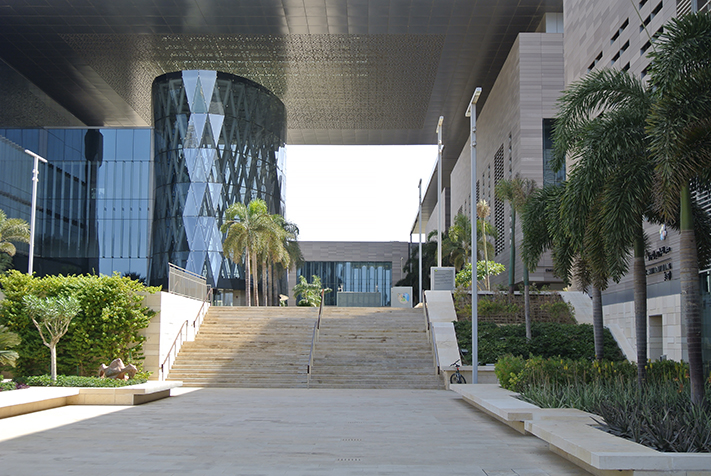
According to the release, the workshop represents a major step in national capacity building and the harmonization of sustainability practices, helping Saudi organizations meet increasing global expectations in environmental reporting. It further reinforces KAUST’s role as a strategic national partner in advancing environmental data and implementing life-cycle-based decision-making systems in support of Saudi Vision 2030 and the transition to a low-emission circular economy.
Related Topics:
Higher Education: Saudi Arabia’s Emergence as Global Destination
Saudi Students Organize Qur’an Competitions in UK
Saudi Women in the Workforce: How Does the Kingdom achieve real Empowerment?
International Mining Conference to Host Global Geological Survey Leaders in Jan.