Several Arab and regional countries have voiced strong condemnation of Israel’s recognition of Somaliland as an independent state, warning it could undermine the stability of the Horn of Africa.
Somaliland is a breakaway region in northern Somalia that declared independence in 1991 and has since spent decades seeking international recognition.
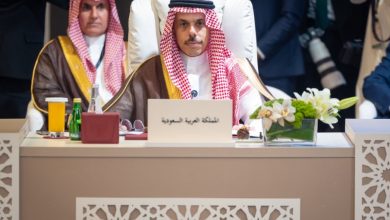
Saudi Rejection
Saudi Arabia has spearheaded Arab and Muslim rejection of Israel’s recognition of Somaliland, condemning it as a “unilateral secessionist move that violates international law.”
In a statement on Friday, the Saudi Foreign Ministry said that the Kingdom fully supports Somalia’s sovereignty, unity, and territorial integrity, reaffirming rejection of “any attempts to impose parallel entities that undermine the country’s unity.”
Saudi Arabia also stressed support for legitimate state institutions, reiterating its commitment to preserving the stability of Somalia and its people.
Arab and Muslim Condemnation
The Gulf Cooperation Council (GCC) has adopted a similar position, saying that Israel’s recognition of Somaliland “constitutes a grave violation of international law and a blatant infringement on the sovereignty and territorial integrity of Somalia.”
Moreover, the GCC Secretary-General, Jasem Albudaiwi, warned that this move marks a “dangerous precedent that will undermine the foundations of stability in the Horn of Africa and open the door to further tensions and conflicts,” which runs against regional and international efforts to strengthen peace and security.
Meanwhile, the General Secretariat of the Organization of Islamic Cooperation (OIC) condemned the Israeli move, stressing support for Somalia’s sovereignty and territorial integrity and warning of any move that could undermine stability in the Horn of Africa.
Controversial Decision
On Friday, Israel formally recognized Somaliland as an “independent and sovereign state,” signing an agreement establishing full diplomatic relations, including the opening of embassies and the appointment of ambassadors.
The Israeli Prime Minister, Benjamin Netanyahu, said the declaration “is in the spirit of the Abraham Accords,” referring to US-brokered peace agreements between Israel and a number of countries, signed during Donald Trump’s first term.
He also invited the breakaway region’s head, Abdirahman Mohamed Abdullahi, to visit Israel. Abdullahi, for his part, hailed the Israeli decision as the beginning of a “strategic partnership,” expressing Somaliland’s readiness to join the Abraham Accords.
Strategic Importance
Somaliland is a former British protectorate, which declared independence from Somalia in 1991, running a de facto state in the north-west tip of Somalia. It is bordered by Djibouti to the north-west and Ethiopia to the west and south.
Home to a population of around 2.6 million, the breakaway region has a democratic system that has had peaceful transfers of power. However, Somaliland failed to gain international recognition.

Analysts noted that Somaliland’s strategic location and its geographical proximity to Yemen is a key factor behind Israel’s decision to recognize the region.
According to a report by the Institute for National Security Studies (INSS) in November, Somaliland could help Israel in its military campaigns against the Iranian-backed Houthi militia in Yemen.
“Somaliland’s territory could serve as a forward base for multiple missions: intelligence monitoring of the Houthis and their armament efforts; logistical support for Yemen’s legitimate government in its war against them; and a platform for direct operations against the Houthis,” the report said.
African Backlash
Israel’s recognition of Somaliland has faced strong response from Somalia and the African Union (AU). In a statement, the Somali Foreign Ministry voiced Somalia’s categorical rejection of Israel’s “deliberate attack” on its sovereignty.
It stressed that Somaliland Region is “an integral, inseparable, and inalienable part of the sovereign territory of the Federal Republic of Somalia.”
Importantly, Somalia noted that it “will not permit the establishment of any foreign military bases or arrangements on its territory that would draw Somalia into proxy conflicts or import regional and international hostilities into this region.”
The statement also warned that such a move “seriously undermine regional peace and stability, exacerbate political and security tensions in the Horn of Africa, the Red Sea and Gulf of Aden, the Middle East and the wider region.”
Similarly, the Chairperson of the AU Commission, Mahmoud Ali Youssouf, said he “firmly rejects any initiative or action aimed at recognizing Somaliland as an independent entity,” reaffirming the AU’s “unwavering commitment to the unity, sovereignty, and territorial integrity of Somalia.”
He also warned that any attempt to undermine Somalia’s sovereignty and territorial integrity “risks setting a dangerous precedent with far-reaching implications for peace and stability across the continent.”
Regional Actors’ Position
Egypt, Türkiye and Djibouti have condemned Israel’s recognition of Somaliland as an unlawful move that undermines regional stability.
The spokesperson for the Turkish Foreign Ministry on Friday said that the Israeli move sets “a new example of the Netanyahu government’s unlawful actions aimed at creating instability at regional and global levels,” adding that it aligns with Israel’s “expansionist policies and efforts to prevent international recognition of the State of Palestine.”
Separately, Egypt’s Foreign Minister held phone calls with his Somali, Turkish and Djiboutian counterparts to discuss the recent developments in the Horn of Africa.
The four ministers expressed “categorical rejection and condemnation of the Israeli decision, stressing their full support for the unity, sovereignty and territorial integrity of Somalia,” the Egyptian Foreign Ministry said in a statement.
Furthermore, they warned that the “recognition of breakaway regions within sovereign states sets a dangerous precedent that poses a direct threat to international peace and security and violate the principles of international law and the UN Charter.”
US Stance
Commenting on Israel’s decision to recognize Somaliland, the US President, Donald Trump, said that Washington has no plans to follow suit.
In an interview with the New York Post published on Friday, Trump replied to a question about US recognition of Somaliland. “No,” he said. “Does anyone know what Somaliland is, really?” Trump added.
In July 2025, Somaliland offered the US a naval base at the entrance to the Red Sea and access to critical minerals in exchange for international recognition. Trump said in August that Washington was considering the offer.
However, he seemed unimpressed by the offer when asked by the New York Post. “Big deal,” he dismissively replied. “Everything is under study. We’ll study it. I study a lot of things and always make great decisions and they turn out to be correct,” Trump said.