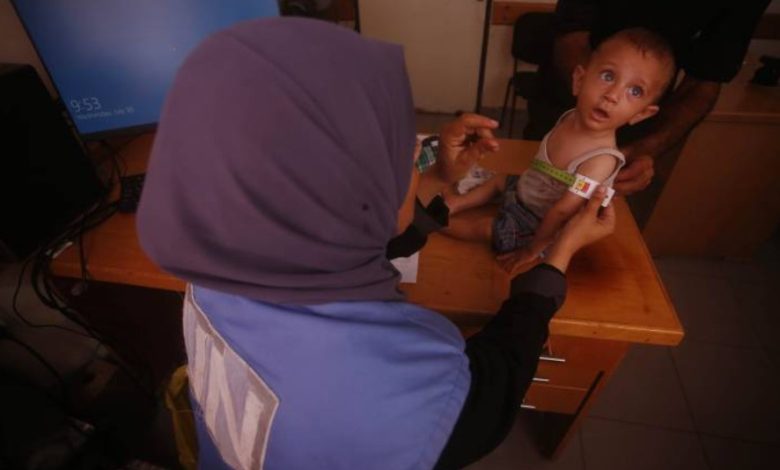
Israel has created a “manufactured malnutrition crisis” in Gaza, which has devastating effects on pregnant and breastfeeding women and infants, a new report by Doctors Without Borders (MSF) found.
The report also highlighted the role of the US- and Israeli-backed Gaza Humanitarian Foundation (GHF) in reducing food distribution across the war-torn enclave.
Man-made Crisis
The report, released on Thursday, noted that Israel’s blockade of essential goods and attacks on civil infrastructure had caused a “manufactured malnutrition crisis,” which impacted pregnant and breastfeeding women, newborns, and infants under 6 months old.
“Insecurity, displacement, restrictions on aid, and limited access to food and medical care have had devastating consequences for maternal and newborn health,” the report stated.
In light of this, MSF medical referent for emergencies, Mercè Rocaspana, said that the malnutrition crisis in Gaza is “entirely manufactured,” pointing put that the Strip had no malnutrition before the war.
“For 2.5 years, the systematic blockade to humanitarian aid and commercial goods on top of insecurity have severely restricted access to food and clean water. Health care facilities have been forced out of service and living conditions have profoundly deteriorated. As a result, vulnerable groups of people are placed at heightened risk of malnutrition,” she said.
Malnutrition during Pregnancy
The non-profit medical organization conducted an analysis covering the period between late 2024 and early 2026 at four health facilities run and supported by MSF.
It found higher levels of prematurity and mortality among infants born to mothers affected by malnutrition during their pregnancy. The analysis also observed high levels of miscarriage and sharp increases in treatment defaulting among malnourished children.
Data collected from 201 mothers of newborns, between June 2025 and January 2026, showed that over half of them had malnutrition at some point during pregnancy, while a quarter of them were malnourished during delivery.
As a result of this maternal malnutrition, 90% of babies were born prematurely, while 84% suffered from low birth weight. Furthermore, neonatal mortality among babies born to malnourished mothers was twice as high as those born to mothers with adequate nutrition.
Lack of Treatment
The report pointed to a staggering default rate among infants under therapeutic feeding programs due to insecurity and displacement.
Between October 2024 and December 2025, MSF treated 513 infants under six months for malnutrition in Khan Younis, with 91% facing significant developmental risks. However, only 48% of exiting infants were cured, while 32% defaulted due to displacement and insecurity, and 7% died.
“Reduced admissions in late July and early August 2025 coincided with a period of intensified insecurity and disruptions to food distributions” resulting from Israel’s blockade, Marina Pomares, medical coordinator for Palestine, said.
GHF & Food Militarization
The MSF report indicated that the GHF exacerbated the food crisis in Gaza since starting operations in late May 2025, as it reduced food distribution hubs from 400 to just 4 amid a blockade on commercial food trucks.
“The [food distribution] points were militarized and deadly, barely functioning, or open at the same time, further restricting access to much needed food assistance,” head of the MSF emergency unit, José Mas, noted.
Israel faced accusations of targeting Palestinian aid seekers near GHF sites amid rising malnutrition in the Strip. Amnesty International accused Israel and GHF aid distribution system of using starvation tactics against Palestinians as part of the Israeli ongoing genocide in Gaza.
Between May and August 2025, more than 1,500 Palestinians were killed by Israeli forces while seeking aid, most of them near GHF distribution sites, according to the UN Human Rights Office.
In August 2025, the Integrated Food Security Phase Classification (IPC) determined that Gaza City and the surrounding areas were officially enduring famine that would likely spread across the entire enclave. Moreover, it estimated that about three quarters of the Gaza population were facing high levels of acute food insecurity, in the period between October 16 and November 30.
The MSF report pointed to a sharp increase in patients seeking care due to violence at food distribution points and malnutrition linked to the deprivation of food. MSF teams also observed a high number of miscarriages in the same period due to high stress related to significant risks male family members face while trying to secure food at GHF sites.
Fragile Situation
In its report, MSF warned that the situation in Gaza remains fragile despite a US-brokered ceasefire between Hamas and Israel.
“Israel’s tactical restrictions on the entry of food, the militarization of aid corridors and distribution sites, and the targeted attacks on Gaza’s essential infrastructure have created an environment in which hunger is deliberately used as a means of control over the population,” MSF’s José Mas said.
“While the current so-called ceasefire has seen some stability in the situation, it is still extremely fragile. Our teams continue to admit new patients for malnutrition as the people of Gaza are forced to endure deliberate undignified living conditions, and lack access to assistance, income, and basic resources,” he added.
In this context, the MSF official urged Israeli authorities and allied states such as the US to immediately allow the unhindered and sustained entry of vital assistance and supplies.