A recent report by Doctors Without Borders (MSF) stated that Israel has weaponized water against Palestinians in Gaza, depriving the enclave’s population from access to clean water.
These actions are framed as part of a campaign of collective punishment and, according to the report, constitute “an integral part of Israel’s genocide.”
Although Hamas and Israel reached a ceasefire agreement in October 2025 to end the war, Israeli strikes have persisted, with both sides trading accusations over truce violation. Since the the war began, Israel has killed 72,594 people and injured 172,404, according to Gaza’s Health Ministry.
Water as a Weapon
In a report titled “Water as a Weapon: Israel’s Destruction and Deprivation of Water and Sanitation in Gaza” released on Tuesday, MSF said that Israeli authorities have systematically deprived the population of Gaza from access to water in what it called a “campaign of collective punishment.”
The non-profit medical organization documented how Israeli actions have constituted part of a “recurrent, systematic and cumulative pattern” that involves the direct killing of civilians, the devastation of health facilities, and the flattening of homes forcing mass displacement.
“Together, they constitute a deliberate infliction of destructive and inhumane conditions on Palestinians in Gaza,” the report said.
Israeli ‘Genocide’
In its report, MSF said that depriving Palestinians in Gaza from access to water is part of Israeli genocide. “The deliberate denial of water from Palestinians is an integral part of Israel’s genocide,” the report stressed.
Israel has faced accusations of committing genocide against Gaza’s population. In September 2025, an independent inquiry, commissioned by the UN Human Rights Council (HRC), concluded that Israel is committing genocide against Palestinians in Gaza.
The inquiry cited Israel’s weaponization of the “withholding of life-sustaining necessities, specifically by cutting off supplies of water, food, electricity, fuel and other essential supplies, including humanitarian assistance,” pointing to Israel’s total blockade on Gaza since the eruption of the war.
Destroying Water Infrastructure
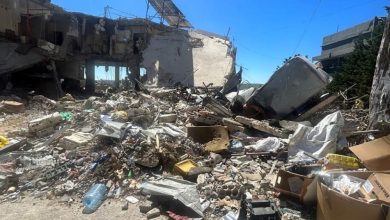
Citing data from the UN, the European Union (EU) and the World Bank, the MSF report noted that Israel has destroyed or damaged nearly 90% of water and sanitation infrastructure in Gaza, including desalination plants, boreholes, pipelines, and sewage systems.
MSF is the largest producer and a main distributor of drinking water in Gaza after local authorities. The report cited operational data and medical evidence gathered between January 2024 and December 2025, as well as firsthand testimonies collected in the last months of 2025.
MSF teams have documented the Israeli military targeting clearly identified water trucks and destroying boreholes that served as lifelines for tens of thousands.
These attacks have frequently occurred during water distribution, resulting in injuries to civilians and aid workers, alongside the destruction of vital equipment.
Blocking Supplies Entry
According to the report, one in every five of MSF’s water distribution points ran dry between May and November 2025 due to lack of sufficient water.
Furthermore, Israeli displacement orders have obstructed MSF operations in regions housing hundreds of thousands of residents. Consequently, water provision has ceased, and the infrastructure necessary to sustain life has been lost or rendered inaccessible.
The report also noted that one-third of MSF’s requests to bring in critical water and sanitation supplies, such as water desalination units, pumps, chlorine and other chemicals to treat water, water tanks, insect repellent, and latrines, have been “rejected or left unanswered.”
In July 2025, UN experts accused Israel of “using thirst as a weapon to kill Palestinians” in Gaza. “Cutting off water and food is a silent but lethal bomb that kills mostly children and babies,” they said in a statement.
“Israel’s blockade and destruction of civilian infrastructure has left most of Gaza’s two million residents displaced and without access to the minimum vital amount of drinking water,” the experts added, calling Israel’s actions a “serious violation of international law and a crime against humanity.”
Severe Consequences
The MSF report highlighted the dangerous consequences of Israeli weaponization of water on people’s health, hygiene, and dignity, particularly for women and people with disabilities. “Access to basic hygiene, including clean water, soap, diapers, and menstrual hygiene products, has become extremely difficult,” the report noted.
It also warned against the spread of diseases. “The lack of access to water and hygiene, coupled with life in dire and undignified conditions like overcrowded tents and makeshift shelters, also leads to increases in diseases, including respiratory infections, skin diseases, and diarrhoeal diseases,” it said.
Action Needed
Acknowledging the far-reaching consequences of the lack of access to water, MSF urged the Israeli authorities to “immediately restore water for people at the required levels in Gaza.”
It also called on Israel’s allies to “use their leverage to pressure Israel to stop impeding humanitarian access, including water infrastructure needs.”
In light of this, MSF emergency manager Claire San Filippo said that Israel has “deliberately and systematically” destroyed water infrastructure in Gaza and blocked the entry of water-related supplies.
“Palestinians have been injured and killed simply trying to access water. This deprivation, combined with dire living conditions, extreme overcrowding, and a collapsed health system, create a perfect storm for the spread of diseases,” she warned.