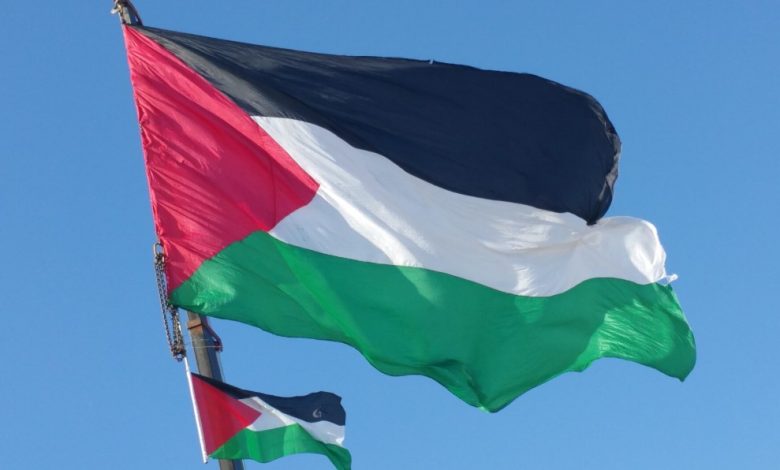
Palestinians in the occupied West Bank and Gaza’s Deir al-Balah area have started voting in municipal elections, in the first vote since the war in Gaza.
The elections come at a critical juncture as Gaza prepares for a planned transition from Hamas rule and the Palestinian Authority (PA) seeks to consolidate public trust in a broader political system that unites Gaza and the West Bank.
Local Elections
Palestinians at 491 polling centers began casting ballots for representatives in 183 local councils early Saturday morning, reported PA’s official news agency WAFA.
In the occupied West Bank, about 1.5 million people are registered to vote while Gaza’s Deir al-Balah area has 70,000 eligible voters, according to the Ramallah-based Central Elections Commission.
The elections mark the first in more than two years in the West Bank. They also represent the first vote in Gaza since 2006, when Hamas won the legislative elections and ultimately seized control of the enclave.
With regards to this, the Ramallah-based Central Election Commission spokesperson, Fareed Taamallah, said that the voting “reflects the will of the Palestinian people to stay on their land and develop their country,” according to the Associated Press (AP).
Political Unity
Taamallah noted that the local elections could pave the way for an integrated political system that connects the occupied West Bank and Gaza. “The main idea is to link the West Bank and Gaza politically as one system,” he said.
Under US President Donald Trump’s 20-point peace plan for Gaza, a Palestinian technocratic committee assumes control of the territory, supervised by the Gaza Board of Peace.
In light of this, Arab and European governments envisage a reformed PA governing Gaza. They support the establishment of an independent Palestinian State comprising Gaza, East Jerusalem and the West Bank, where the PA exercises limited self-rule.
No Hamas Candidates
The majority of electoral lists are either independent or aligned with PA President Mahmoud Abbas’s secular-nationalist Fatah party, according to AFP.
Hamas – which maintains control over nearly half of Gaza – has no affiliated lists. Despite this, polling from the Palestinian Center for Policy and Survey Research indicates Hamas remains the most popular faction across both territories.
According to Reuters, residents and analysts view one list in Deir al-Balah as aligned with Hamas, which has not formally nominated candidates but said it would respect the results.
Furthermore, Hamas police has deployed unarmed security personnel in civilian clothing to secure polling centers, a Palestinian source told AFP.
In several West Bank cities, including the Palestinian Authority’s seat in Ramallah, uncontested lists have secured automatic victories. These local council votes are limited to administrative oversight of infrastructure, such as water and roads, and lack legislative power.
In Gaza, the vote is primarily symbolic, restricted to Deir al-Balah as one of the few areas to avoid a ground invasion.
International Backing
The Palestinian municipal elections have received support from international bodies, including the UN and the European Union (EU).
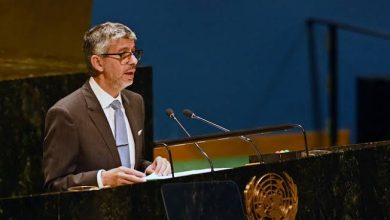
In this context, the UN deputy special coordinator for the Middle East peace process, Ramiz Alakbarov, praised the elections as a “credible process.”
He also said that the elections mark “an important opportunity for Palestinians to exercise their democratic rights during an exceptionally challenging period.”
Similarly, the EU Member States and like-minded countries welcomed the organization of the elections “in these challenging times,” noting that many of their diplomatic missions and representatives will be present on the ground.
In a statement, the EU, Austria, Belgium, Brazil, Bulgaria, Canada, the Czech Republic, Cyprus, Denmark, Finland, France, Germany, Greece, Hungary, Ireland, Italy, Japan, Lithuania, Malta, the Netherlands, Norway, Poland, Portugal, Romania, Slovakia, Spain, Sweden, Switzerland, and the UK, said that the process gives Palestinians a chance to “renew their democratic legitimacy.”
“We underline the importance of transparent, credible and inclusive elections and welcome this round of elections as an important step towards broader democratization and strengthened local governance, in general terms and in line with the ongoing reform process,” the statement said.