Conflicting reports have emerged regarding the imminent shut down of the US-led Civil-Military Coordination Center (CMCC) responsible for monitoring the ceasefire between Hamas and Israel in Gaza.
Meanwhile, talks resume in Cairo between Hamas, Palestinian factions, Board of Peace representative and mediators to break the current stalemate in the Gaza ceasefire agreement and move forward with the implementation of phase two.
Gaza Center Closure
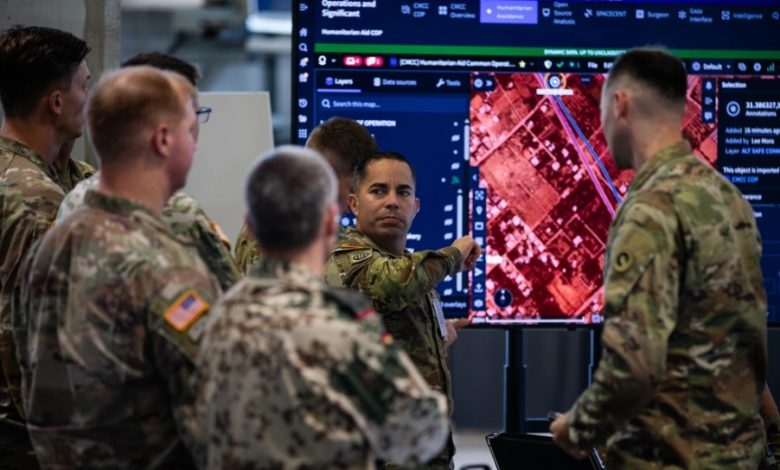
Established by the US on October 17 in Israel, the CMCC is the main coordination hub for Gaza assistance, tasked with overseeing the ceasefire with Hamas and aid delivery in the Strip.
Criticized for failing to fulfill its mission, the US administration will soon close the center, Reuters reported on Saturday citing diplomatic sources familiar with the matter. The sources attributed the move to difficulties in overseeing the truce and coordinating on aid.
US President Donald Trump has encourage allies to contribute personnel to the CMCC and commit funds to his reconstruction plan for Gaza. However, the plan was put on hold since the outbreak of the US-Israeli war with Iran in late February 2026.
Several countries, such as Germany, France, Britain, Egypt and the UAE, sent personnel, including military planners and intelligence officials, to the center. But Israel’s continued strikes in Gaza have impacted countries’ interest in participating.
ISF to Handle Mission
The sources told Reuters that an International Stabilization Force (ISF) – set to be deployed soon to Gaza – will handle the CMCC’s responsibilities, effectively ending its mission.
After its integration into the ISF, the CMCC will be rebranded as the International Gaza Support Center under the leadership of Major General Jasper Jeffers, the US-appointed ISF commander, according to two of the sources.
While the ISF was originally intended for immediate deployment to stabilize Gaza, the mission remains stalled by a lack of international troop pledges and Washington’s refusal to put boots on the ground.
For now, the ISF operates out of a restricted annex within the CMCC’s southern Israel warehouse. However, three sources said that US forces maintain such tight control over the annex and frequently deny entry to allied representatives.
According to diplomats briefed on the matter, the US intends to slash the number of its troops in the revamped ISF from 190 to just 40, with plans to fill the gap with civilian staff from other countries.
However, diplomats noted that the coordination center lacked authority to enforce aid delivery or ceasefire, signaling that its transition to the ISF is unlikely to yield any real results on the ground.
BoP Denial
In response to Reuters report, the Gaza Board of Peace (BoP) dismissed claims about the imminent closure of the CMCC. In a statement on X, it said that “any claim that the CMCC is closing is wrong.”
The statement added that the CMCC is “advancing its efforts every day to continue delivering aid at a level unprecedented in modern history.” It noted that food aid is now reaching three times more people than before, while aid diversion has plummeted to less than 1% and UN-monitored nutrition levels have seen a dramatic upturn.
Moreover, the BoP claimed that the CMCC played a significant role in boosting security. “The ceasefire has continued to hold despite all the predictions from so-called experts. We now have a pathway to the establishment of a transitional government in Gaza and the International Stabilization Force,” the statement said.
“Quite simply, life for the people of Gaza gets better on a daily basis. The CMCC has been an essential part of this story and will continue to be mission critical to our efforts,” it added.
Ceasefire Talks
Delegations from Hamas and Palestinian factions are meeting with the BoP High Representative for the Administration of Gaza, Nickolay Mladenov, and mediators in Cairo to discuss the latest proposal to advance the second phase of Trump’s peace plan.
According to Asharq Al-Awsat, citing Palestinian sources, the Palestinian delegation responded positively to a 15-point proposal, saying that it could serve as a basis for launching negotiations on phase two.
Hamas and Palestinian factions insisted on Israel’s full compliance with its commitments under the first phase of the deal and requested a response from Israel before initiating any negotiations over the latest proposal.
In response, Mladenov presented the factions with amendments to the proposal to study, with sources saying that Israel’s response was negative as it refuses to offer any guarantees that it would fully commit to implementing all the terms of the first phase of the ceasefire.
The second phase of the ceasefire deal calls for the disarmament of Hamas, the deployment of the ISF to Gaza, and the withdrawal of Israeli forces from the war-torn enclave.
However, the Palestinian movement has repeatedly rejected laying down its weapons before complete Israeli withdrawal, while Israeli military officials have said they are preparing for a swift return to full-scale war if Hamas does not disarm.