Iran to Target US-Israeli Financial Interests as UNSC Moves to Condemn Gulf Attacks
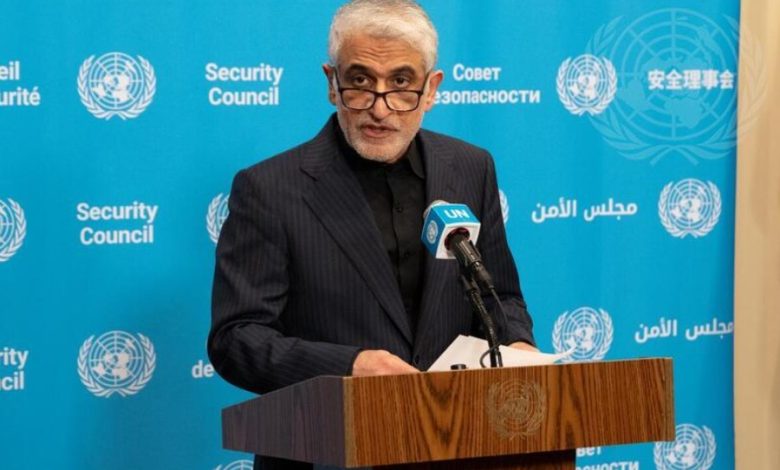
Iran has issued a warning to US and Israeli banking and financial institutions in the Middle East, saying they have become targets for Iranian attacks.
Meanwhile, the UN Security Council (UNSC) is preparing to vote Wednesday on a Gulf-backed resolution demanding a halt to Iran’s heinous attacks on its Arab neighbors.
Financial Interests Under Fire
Iranian military vowed on Wednesday to target banking and financial institutions linked to the US and Israel in the region, in retaliation for an attack against an Iranian bank, according to the military’s central operational command, Khatam Al-Anbiya.
“Following their failed campaign, the terrorist US army and cruel Zionist regime (Israel) have targeted one of the country’s banks,” Khatam Al-Anbiya spokesperson, Ebrahim Zolfaqari, said in a statement, carried by Iranian state TV.
“With this illegitimate and uncommon action, the enemy is forcing our hand to target economic centers and banks linked to the US and Zionist regime in the region,” he added.
The statement also urged civilians across the region to stay one kilometer away from banks.
The Iranian threat imperils regional financial centers, particularly Dubai, which is a global banking hub, as well as Bahrain, according to the Associated Press (AP).
Iranian Bank Hit
The Iranian warning followed an overnight attack on an administrative building linked to Bank Sepah, one of the country’s major banks, located in Tehran, reported West Asia News Agency (WANA).
In an official statement, Bank Sepah confirmed one of its buildings was hit by a missile attack at 1 am Wednesday in what it called an attack by the “US–Zionist regime.”
The US and Israeli strikes on the bank reportedly left an unspecified number of employees dead, according to IRNA news agency.
The state-owned Bank Sepah, alongside Bank Melli, suspended services on Tuesday, in what seemed to be a pre-cautionary measure to prevent the collapse of the banking system amid the ongoing war.
The ISNA news agency described the suspension of key banks as a “response to the urgent need to protect vital resources”.
“In the country’s critical situation, where economic pressures and widespread threats have affected daily life and financial stability, the government has been forced to prioritize limited resources with care and urgency,” the state-affiliated outlet said.
UNSC Vote
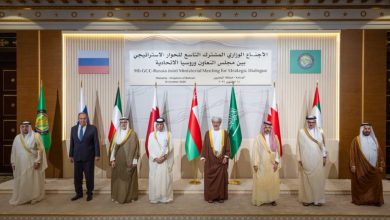
The UN Security Council will vote later Wednesday on a draft resolution backed by Gulf Cooperation Council (GCC) demanding a halt to Iranian aggressions against Arab countries, reported the AP.
The draft resolution condemns Iran’s “heinous” missile and drone attacks against Bahrain, Kuwait, Oman, Qatar, Saudi Arabia, the UAE and Jordan, demanding Tehran “immediately and unconditionally” halt its “provocations and threats to neighboring countries.”
The resolution also calls on Iran to stop any provocations or threats toward neighboring countries, including through the use of regional proxies.
Iran’s Regional Aggressions
On February 28, 2026, the US and Israel carried out a joint military operation against Iran, launching airstrikes that eliminated Iranian Supreme Leader Ali Khamenei and top commanders.
In response, Iran retaliated by targeting Israel and US assets in the region with barrages of missiles and drones that directly violated the sovereignty of several Arab States, including Saudi Arabia, Qatar, Bahrain, Kuwait, the UAE and Oman. Iranian drones also hit Cyprus, Azerbaijan and Türkiye.
Although they have successfully intercepted the vast majority of the Iranian missiles, Gulf countries have stressed their right to self-defense against these blatant aggressions against their sovereignty.
On Wednesday morning, Saudi Arabia’s air defenses successfully neutralized 23 drones and 7 ballistic missiles targeting several locations in the Kingdom.
In a series of statements, the Spokesperson for the Saudi Defense Ministry, Major General Turki Al-Maliki, said that Saudi air defenses intercepted and destroyed 6 ballistic missiles launched toward Prince Sultan air base in Al-Kharj, in addition to one ballistic missile heading to the Eastern Province.
Furthermore, Saudi air defenses repelled 8 drones in the Eastern Province; 7 drones targeting Al-Shaybah field in the Empty Qaurter; 5 drones east of Al-Kahrj; and two drones in Hafr Al-Batin.