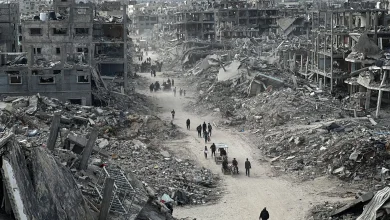
Saudi Arabia is racing to contain the fallout from the collapsing US-Iran ceasefire, launching one of its busiest diplomatic weeks in years. According to a report by Saudi news Al Arabiya, Riyadh has opened talks with Gulf neighbors, European capitals and Asian partners as Iranian strikes on Gulf states and Jordan intensify.
Why it matters: Iran’s renewed attacks, including strikes on Kuwait and Houthi threats to shut the Bab Al-Mandeb Strait, put Gulf energy exports and shipping lanes directly at risk. Saudi Arabia, as the region’s most influential power, is positioning itself as the broker that keeps a bad situation from becoming a catastrophic one.
Driving the news: Saudi officials held talks this week with Gulf states, plus Greece, Germany, Italy, Spain and India. The consistent themes: security, de-escalation, energy protection and safe passage through key waterways. At the same time, Riyadh expanded military talks with the US, Italy, France and South Korea to strengthen defense cooperation.
Riyadh Builds a Stability Buffer
Dr. Salman Al-Anzi, vice president of the Saudi Political Association, told Al Arabiya’s website that the Kingdom’s intensity reflects early awareness of how dangerous this moment has become. “Countries with regional and international weight don’t wait for events to unfold, they build the environment of stability themselves,” he said. He added that Saudi Arabia is acting like a “pivotal state,” working simultaneously to contain escalation, protect energy security and secure vital corridors.
The stakes became personal this week after Iran struck Kuwaiti territory. Crown Prince Mohammed bin Salman called Kuwait’s Emir, Sheikh Mishal Al-Ahmad Al-Jaber Al-Sabah, to affirm the Kingdom’s full solidarity and to strongly condemn what Saudi officials called “reckless Iranian aggression” on Kuwaiti soil.
Dr. Ahmed Al-Shahri, head of the Saudi Expertise Forum, echoed that assessment. He said the Kingdom’s coordination with Gulf, regional and international powers shows Riyadh is actively working to stop the region from sliding into a broader confrontation that could threaten energy security and global trade routes. On defense ties specifically, he said expanding cooperation with the US, France, Italy and South Korea “reflects a balanced approach that combines diplomacy and deterrence,” and argued that real stability requires political dialogue backed by strong defense readiness.
Broad Diplomatic Outreach and Maritime Security
Saudi Foreign Minister Prince Faisal bin Farhan has been at the center of the outreach. He spoke by phone with Greek counterpart Georgios Gerapetritis about safeguarding freedom of navigation in the Gulf and Red Sea, and rejected any actions that threaten maritime safety.
Saudi Arabia, Qatar and Jordan also sharpened coordination through intensive calls on Thursday morning, while Prince Faisal separately received calls from Qatar’s Sheikh Mohammed bin Abdulrahman, Jordan’s Ayman Safadi and Egypt’s Dr. Badr Abdelatty to discuss de-escalation efforts.
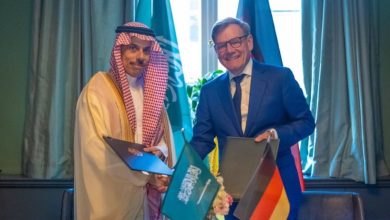
Riyadh additionally consulted with Bahrain, Egypt and Turkey on regional developments, met India’s national security adviser, Ajit Doval, to discuss strategic partnership and energy security, and spoke with Germany’s Johann Wadephul about the security and economic fallout of the crisis. Calls with Italy’s Antonio Tajani and Spain’s José Manuel Albares included condemnation of a Houthi attack on southern Saudi Arabia, alongside renewed calls to protect Gulf and Red Sea shipping.
Defense Coordination Deepens
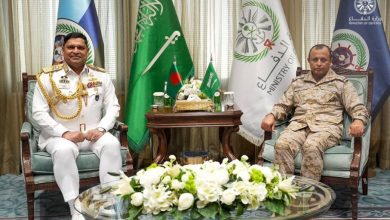
Beyond diplomacy, Saudi military officials met American counterparts in Riyadh to discuss defense cooperation. General Fayyad Al-Ruwaili, chief of the General Staff, also met his French counterpart, General Fabien Mandon, to advance bilateral defense ties.
Meanwhile, Saudi Defense Ministry officials held parallel talks with South Korean and Italian counterparts on shared defense priorities.
The bottom line: Saudi officials maintain that lasting regional stability cannot come from military force alone. Instead, Riyadh is betting on sustained diplomacy, paired with defense readiness, to prevent a wider war that would endanger the Gulf’s energy security and shipping routes, and by extension, the global economy.