Education: Adoption of Two Semesters Reinforces Calendar Flexibility, Global Standards
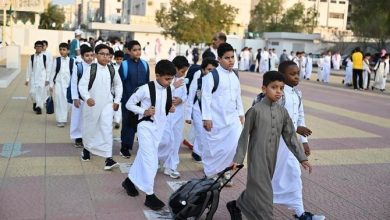
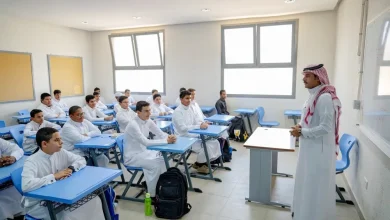
The Ministry of Education appreciated the Cabinet’s approval of the adoption of a two-semester system for public education schools starting from the upcoming academic year 1447/1448. This will be implemented while maintaining the previously approved general time frame for the academic calendar over the next four years, including the periods that define the beginning and end of the academic year.
Global Alignment, Quality Gains from Previous System
The Ministry emphasized that the decision to adopt the two-semester system is based on the qualitative gains achieved during the implementation of the three-semester system, which contributed to establishing a minimum of 180 school days annually. This standard aligns with the average number of school days in advanced countries, according to the Organisation for Economic Co-operation and Development (OECD), and also matches the systems of G20 countries, where the number of school days ranges between 180 and 185, and in some cases reaches up to 200 days.

Vision 2030 Alignment
The Ministry clarified that a comprehensive study was conducted with wide participation from specialists, educational leaders, teachers, students, and parents. The study aimed to evaluate the applied models and enhance future directions in line with the goals of Saudi Vision 2030 and the Human Capability Development Program, one of the Vision’s realization programs.

Focus on Quality, Not Number of Semesters
The study concluded that the quality of education is not tied to the number of academic semesters as much as it depends on essential elements, most notably: training and motivating teachers, developing curricula, improving the school environment, enhancing governance and institutional transformation, and empowering schools as agents of change by granting them more authority and flexibility.
The study also emphasized the importance of enhancing the flexibility of the academic calendar to suit the Kingdom’s geographic and cultural diversity, and to contribute to the variety and sustainability of student activities.
Institutional Autonomy, Regional Adjustments
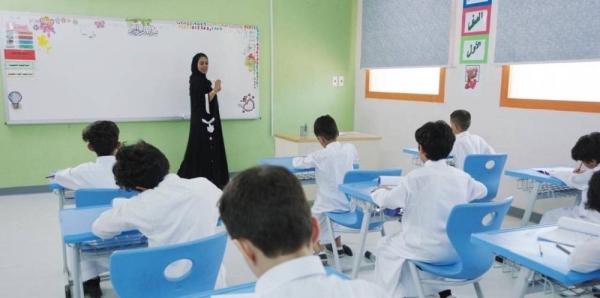
The Ministry of Education also indicated that flexibility will continue to be granted to certain schools and educational institutions—such as private and international schools, universities, and the Technical and Vocational Training Corporation—in determining the academic system that suits them. In addition, educational departments in Makkah, Madinah, Taif, and Jeddah will retain the authority to make adjustments that consider the specific needs of the Hajj, Umrah, and visitation seasons, and to enhance coordination with government entities and community activities.
Related Topics:
National Water Company, Japanese Company Fuji Clean Sign MoU
SDAIA Launches Allam Challenge 2024: Arabic Language Prizes Worth 1 Million Riyals
Arabic Language Month Concludes Its Events in Indonesia
King Salman Global Academy for Arabic Language Launches Riyadh Lexicon