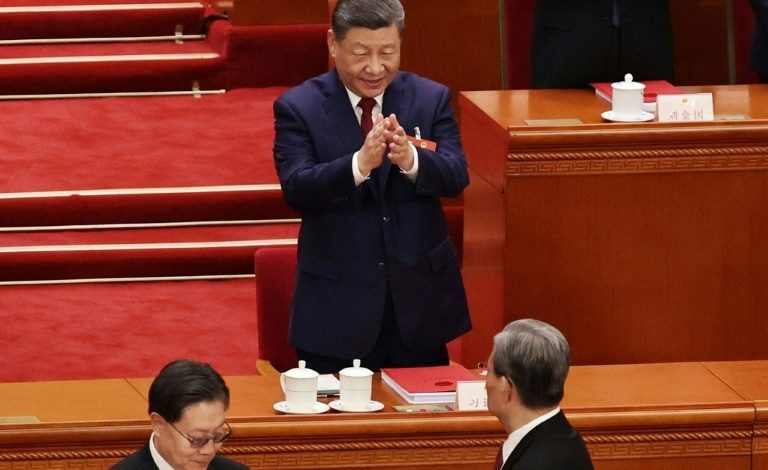
China’s leadership concluded nine days of annual legislative meetings in Beijing on Thursday, projecting domestic stability despite the war in the Middle East. While conflict involves Iran, a critical trading partner, officials under President Xi Jinping prioritized internal growth over external distractions during the gathering.
The “Two Sessions” emphasized a policy roadmap centered on “continuity” rather than reactive shifts to international crises. Beijing announced a steady seven-percent boost to the annual defense budget and approved new laws regarding ethnic unity and development.
“The message from the Two Sessions this year is all about security, continuity… and instilling confidence,” said Drew Thompson, a senior fellow at the S. Rajaratnam School of International Studies. He noted that the international community remains a passive observer rather than the intended audience for these internal proceedings.
Technological Sovereignty and AI Goals
The draft of the 15th Five-Year Plan maps out national development until 2030 with a heavy focus on consumption. Consequently, Beijing aims to master semiconductor production and artificial intelligence to ensure technological self-reliance and long-term energy and resource security.
Zheng Shanjie, head of the top economic planning body, vowed that AI industries would exceed 10 trillion yuan by 2030. “Beijing very much wants to master chips, it is at the heart of the self-reliance drive,” explained Damien Ma. Despite these ambitious sectoral goals, China set a modest annual growth target of 4.5 to 5 percent this year.
Managing the Sino-US Relationship
Strikes against Iran have not yet signaled a disruption to US President Donald Trump’s expected visit to Beijing later this month. Analysts believe both Xi and Trump want to stabilize the relationship and have withheld explicit criticisms regarding the Iran conflict.
Foreign Minister Wang Yi suggested that while the two nations cannot change each other, they can change their mutual interactions. Both sides should manage differences and eliminate interference as they prepare for a significant year in Sino-US diplomatic relations.
Next year’s political gatherings will likely offer more “fireworks” as the 21st Party Congress prepares for major leadership changes. For now, Beijing remains keen to show that external turbulence will not easily disrupt its long-term strategic and governing rhythm.