China is sending its Middle East Envoy to the region as part of an intensified diplomatic effort to de-escalate the ongoing military tensions involving the US, Israel and Iran.
On Saturday, the US and Israel launched a joint attack on Iran, killing its Supreme Leader and top officials. In response, Iran has unleashed salvos of missiles and drones across the region, amid fears of the conflict expansion.
China Envoy Travels to Region
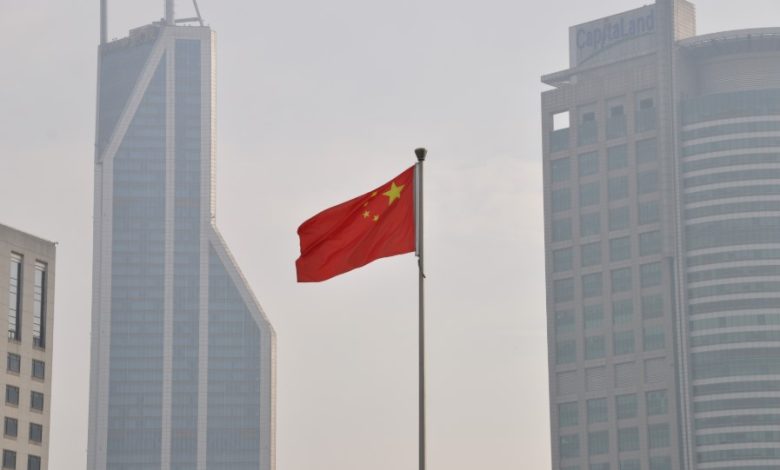
China’s Foreign Ministry said on Thursday that it will send its Special Envoy on Middle Eastern Issues to the region to help easing the current tensions.
“China will send its Special Envoy for Middle East Issues, Zhai Jun, to the Middle East in the near future to make positive efforts to de-escalate tensions,” Chinese Foreign Ministry spokesperson Mao Ning said during a regular briefing in Beijing.
Moreover, Mao voiced China’s “deep concern” over the current military escalation in the Middle East, stressing that the protracted conflict and escalating tensions are not in the interest of any party.
Chinese Mediation Efforts
The Foreign Ministry’s Spokesperson noted that China has played an active mediation role to ease the ongoing tensions. In light of this, Chinese Foreign Minister Wang Yi held separate phone calls with his counterparts from Saudi Arabia, Russia, Iran, Oman, France, Israel, and the UAE, during which they exchanged in-depth views on the regional situation.
Furthermore, Wang reiterated the need to uphold the principles of the UN Charter, expressing opposition to the frequent use of force in international relations. He also stressed the urgent need to halt military operations and resume dialogue to prevent further escalation and the spread of conflict.
According to the Spokesperson, China believes that dialogue and negotiations remain the only viable path for resolving conflicts.
“We should adhere to resolving contradictions and differences through political and diplomatic means. China will continue to maintain communication, strengthen mediation, and build consensus with all relevant parties, including those directly involved in the conflict,” Mao said.
Protecting Hormuz Strait
As reports emerged about Iran’s Revolutionary Guards closing the Strait of Hormuz, China urged the warring parties to safeguard the vital waterway.
“The Strait of Hormuz and its adjacent waters are an important international trade route for goods and energy. To keep the region secure and stable serves the common interests of the international community,” Mao said on Wednesday.
“China urges relevant parties to immediately stop military operations, avoid further escalation of the tense situation and prevent regional turmoil from causing greater damage to global economic growth,” she added.
The Strait of Hormuz is a crucial shipping route linking the Arabian Gulf with the Gulf of Oman and the Arabian Sea, through which a fifth of all global oil supplies pass.
China is the world’s largest importer of oil and fossil gas. It has also become a major buyer of Iranian oil, making it one of the countries most vulnerable to the interruption to energy shipments.
Middle East Escalation
The current military escalation involving the US, Israel and Iran has raised fears of spiraling into an all-out regional confrontation.
While US and Israeli strikes continue to pound Iranian cities, Iranian missiles and drones have directly violated the sovereignty of several Arab States, including Saudi Arabia, Qatar, Bahrain, Kuwait, the UAE and Oman.
Successfully intercepting the vast majority of the Iranian missiles, Saudi Arabia and other Gulf countries have reaffirmed their right to respond to these blatant aggressions against their sovereignty.
Furthermore, Hezbollah has joined the conflict, launching missile strikes toward Israel. In response, Israel launched military strikes and ground incursion in southern Lebanon.
Additionally, suspected Iranian drones were intercepted over Cyprus and Azerbaijan, while NATO defenses neutralized a ballistic missile heading toward Türkiye‘s airspace.
As the war entered its sixth day on Thursday, it has killed 1,045 people in Iran, including 175 schoolgirls and staff, according to the Iranian Red Crescent Society. In Israel, 12 people have been killed, while the US CENTCOM announced that 6 US service members have been killed in Kuwait.
Meanwhile, the Health Ministry in Lebanon said that Israeli strikes have killed 77 people. Moreover, Iranian strikes and projectiles debris have killed 3 in Kuwait, one in Oman, 3 in the UAE and one in Bahrain.
In Syria, an Iranian missile attack on Sweida killed 4 people, according to SANA. Iraqi health authorities also said that strikes killed at least 13 people, including 11 militiamen, one army soldier and one civilian.