US Central Command (CENTCOM) Commander Admiral Brad Cooper met with senior officials from Lebanon and Israel as part of a trip to the Middle East.
Cooper’s meetings with Lebanese officials focused on discussing the recently signed Trilateral Framework Agreement between the US, Lebanon and Israel aimed at ending hostilities and laying the groundwork for a broader peace deal.
Visit to Beirut
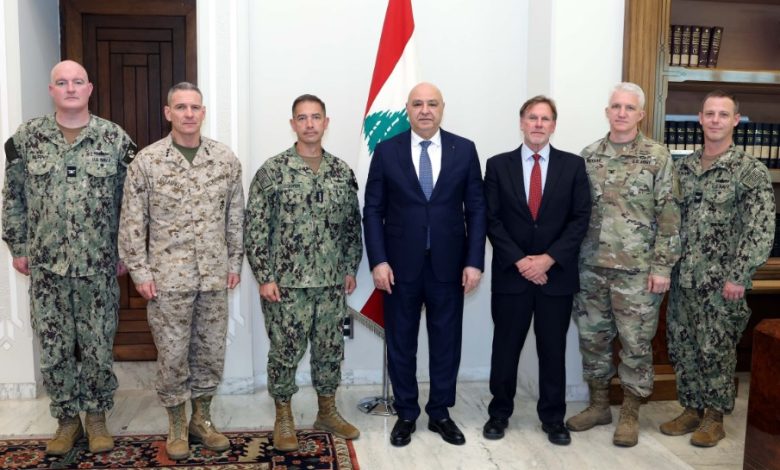
In a statement on Monday, CENTCOM said that Cooper and his team met with Lebanon’s President Joseph Aoun and Lebanese Armed Forces (LAF) Commanding General Rodolphe Haykal in Beirut to discuss the US-brokered deal.
“The leaders discussed the path forward in implementing a historic framework agreement signed in Washington, D.C., on Friday,” the statement noted.
During an ongoing trip to the Middle East, Adm. Brad Cooper, CENTCOM commander, engaged senior civilian and military leaders in Israel and Lebanon. While in Lebanon, Cooper and his staff met with President Joseph Aoun and Lebanese Armed Forces Commanding General Rodolphe Haykal.… pic.twitter.com/9KRSJyNJIR
— U.S. Central Command (@CENTCOM) June 29, 2026
The US Embassy in Lebanon said that the meeting focused on discussing “the path forward and the official launching of the framework’s implementation, looking to build on the momentum generated by this agreement quickly and tangibly.”
“This framework builds a realistic path out of the current conflict and establishes a clear and structured process to restore Lebanon’s sovereignty and disarm Hezbollah,” the US Embassy statement added.
The US-brokered agreement stated that the LAF “will restore effective sovereign authority over all Lebanese territory, pending the verified disarmament of non-state armed groups and dismantlement of associated infrastructure,” enabling the Israeli military to progressively redeploy out of the Lebanese territory.
Lebanon Sovereignty
During his meeting with Cooper, President Aoun reaffirmed Beirut’s commitment to asserting control over the entirety of the country’s territory up to the Israeli border, through its armed forces, according to the Lebanese Presidency.
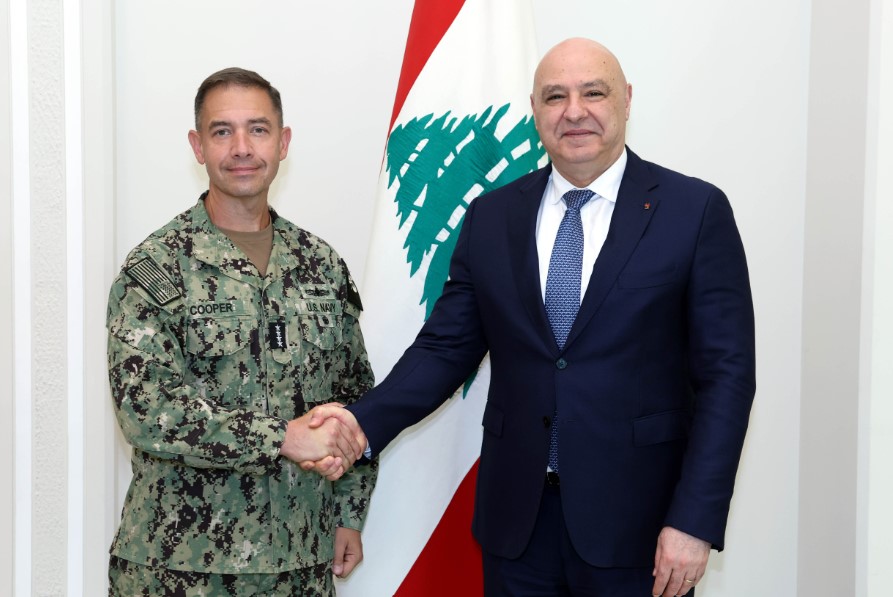
Under the trilateral framework agreement, the LAF and the Israeli military agreed on two initial “pilot zones” to begin a phased, verified redeployment of troops. In these mutually agreed areas, the LAF will assume full control once non-state armed groups are successfully disarmed and their infrastructure is dismantled.
The “pilot zone” is a US proposal that aims to restore Lebanese control in the south, by allowing the Lebanese army to step in and clear the area of Hezbollah weapons and infrastructure.
Israeli Prime Minister Benjamin Netanyahu stated that one of the pilot zones lies south of the Litani River and outside the (original) security zone. Meanwhile, the second one is a small area that Israel “does not need” located north of the Litani, within the expanded security zone that the Israeli military seized a few weeks ago.
Security Arrangements
The agreement noted that the US will facilitate the creation of a trilateral Military Coordination Group for Lebanon (MCG4L) to help Lebanon and Israel implement the framework. It also added that a non-public Security Annex, developed with the full support of the US, will detail the mechanism of Hezbollah disarmament and Israeli withdrawal.
According to the US Embassy in Lebanon, Chairman of the Military Coordination Group for Lebanon Lieutenant General Joseph Clearfield attended Cooper’s meetings with Aoun and Haykal.
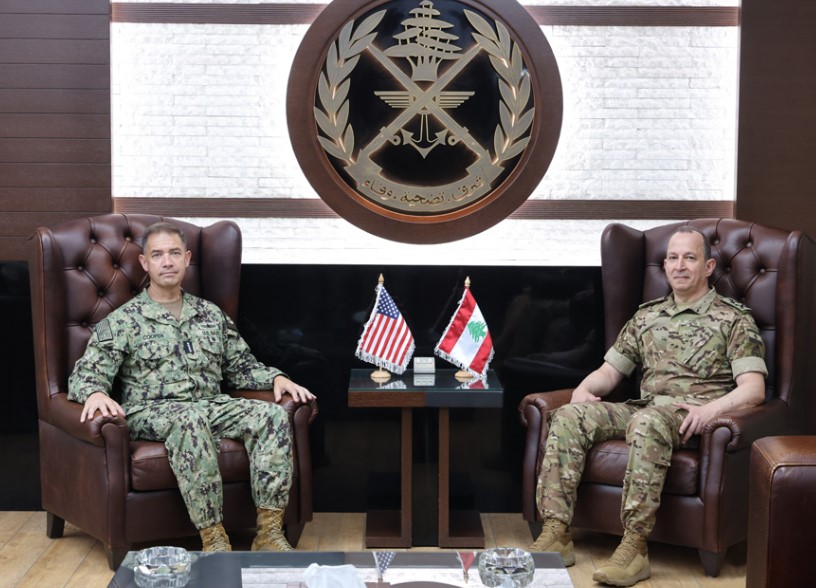
The Lebanese Army said in a statement that Haykal and Cooper discussed the latest developments in Lebanon and the wider region. They also stressed the importance of successfully executing the security annex of the framework agreement and explored avenues for strengthening future cooperation.
CENTCOM Chief in Israel
The CENTCOM statement noted that Cooper’s Middle East trip also included a stop in Israel to visit US troops deployed there.
“In Israel, Cooper also visited deployed US troops and recognized exceptional performers for outstanding mission contributions. More than 50,000 American service members are currently operating across the region – remaining vigilant and ready,” CENTCOM said.
While the statement did not provide details about Cooper’s visit to Israel, officials told the Jerusalem Post that the CENTCOM commander met with Israeli military Chief of Staff Eyal Zamir on Thursday.
Their meeting focused on increasing tactical coordination on Iran across air, sea, and defense forces, while maintaining broad joint strategic planning to assess how unilateral military actions could impact regional stability and shared bilateral interests to avoid operational problems.
On the Lebanon front, the two commanders played a key role in shaping the rules of engagement for handling Hezbollah ceasefire violations and defining the conditions under which the Lebanese Army would assume control of areas evacuated by Israeli forces.