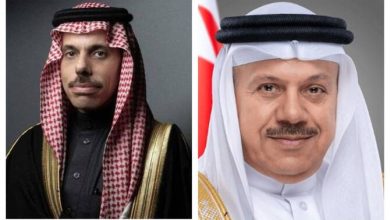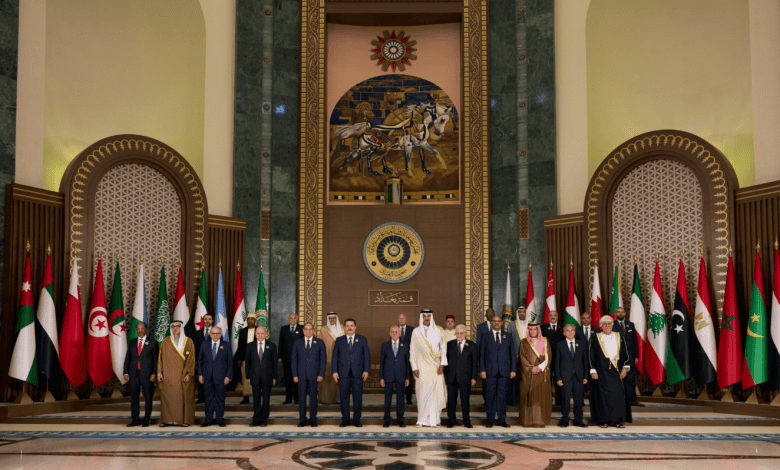
Arab leaders convened on Saturday in the Iraqi capital, Baghdad, for the 34th Arab League Summit, which took place amid pressing challenges facing the region.
In its final communique, known as the Baghdad Declaration, Arab leaders reaffirmed the centrality of the Palestinian cause, called for an inclusive national dialogue in Syria, and the formation of an elected civilian government in Sudan.
Gaza Crisis
The Arab League Summit focused on tackling the situation in Gaza, as the Strip faces a worsening humanitarian crisis. In the Baghdad Declaration, Arab leaders urged for an immediate cessation of war in Gaza and an end to all hostile acts against civilians.
They also called for the international community to step up pressure to stop the bloodshed, ensure the delivery of humanitarian aid, and provide political, financial, and legal support to the joint Arab-Islamic plan for early recovery and reconstruction, adopted at the extraordinary Cairo Summit in March and the Organization of Islamic Cooperation (OIC) foreign ministers in Jeddah the same month.
It also urged Palestinian factions to agree on a unified national vision and a strategic roadmap.
Two-State Solution
Furthermore, the Declaration reiterated the categorical rejection of any forced displacement or relocation of the Palestinian people from their land, saying that any such move would be a crime against humanity and an act of ethnic cleansing. They called the UN Security Council to take measures to implement the two-state solution and set a deadline for this process.

In the light of this, the communique expressed support for the International Conference for the Implementation of the Two-State Solution, which Saudi Arabia and France will co-chair in June.
The Declaration also welcomed the recognition of the State of Palestine by Spain, Norway and Ireland, and stressed support for South Africa’s legal case against Israel at the International Court of Justice (ICJ).
Syria’s National Dialogue
With regards to Syria, the Baghdad Declaration emphasized respect for the choices of the Syrian people, underscored support for Syria’s territorial integrity, and categorically rejected foreign interference in Syria’s affairs. It also condemned ongoing Israeli assaults on Syrian territories, calling the international community to pressure Israel to halt these attacks.
Moreover, the communique called for an inclusive political transition that safeguards social peace and diversity and respects the beliefs and sacred sites of all segments of the Syrian society.
The Declaration welcomed the decision of the US President, Donald Trump, to lift all sanctions on Syria, expressing gratitude for Saudi Arabia’s efforts in that regard.
Sudan Conflict
The Arab leaders stressed their support for Sudan and its people in protecting their territorial integrity and critical infrastructure, preserving Sudan’s sovereignty and independence, rejecting foreign intervention, and safeguarding its national institutions through an elected civilian government.
Additionally, the Baghdad Declaration called on all Sudanese parties to engage constructively in peace initiatives, particularly Jeddah Declaration 3, to reach a comprehensive political solution to end the conflict.
Libya, Yemen and Lebanon
The Baghdad Declaration emphasized full support for Libya, stressing the importance of resolving its crisis through national dialogue that preserves the country’s unity. It also reiterated rejection of all forms of foreign interference in Libya’s affairs and underscored the need for all foreign forces and mercenaries to withdraw from Libyan territories.
Within this context, the communique called on the Libyan House of Representatives and the High Council of State to accelerate the enactment of electoral laws that meet public demands for simultaneous presidential and parliamentary elections to end transitional phases.
On Yemen, the Arab leaders expressed full solidarity with Yemen, backing political solutions based on national dialogue to achieve security and stability and end the state of war and division.
The Baghdad Declaration reaffirmed support for Lebanon in preserving its security, stability and territorial integrity, and protecting its internationally recognized borders from any violations. In the light of this, the communique reiterated the need to implement all terms of the ceasefire agreement fully comply with the UN Security Council Resolution 1701.
Saudi Arabia’s Support for Arab Causes
The Saudi Minister of State for Foreign Affairs, Cabinet Member, and Climate Envoy, Adel Al-Jubeir, led the Kingdom’s delegation to the 34th Arab League Summit in Baghdad, according to the Saudi Press Agency (SPA).
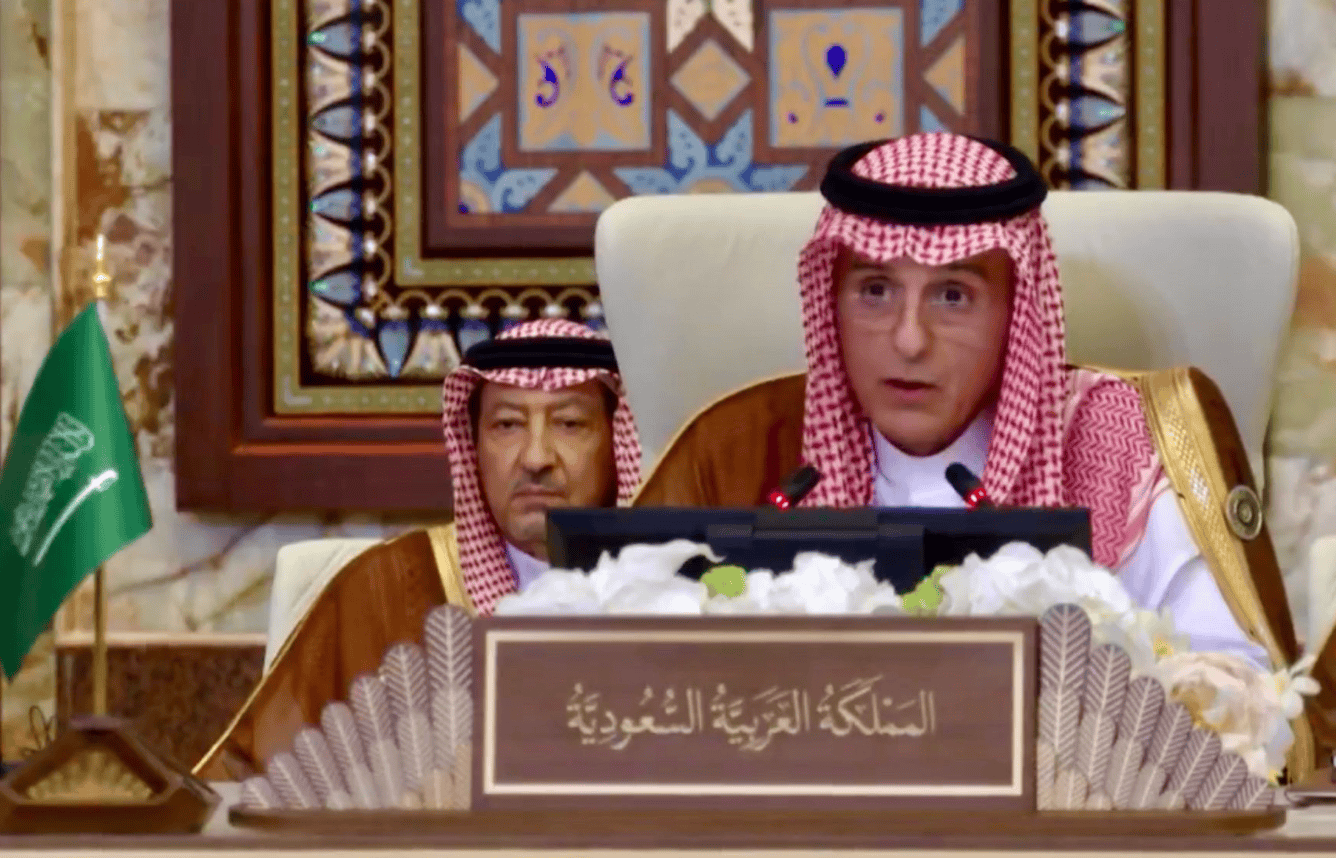
Delivering the Kingdom’s speech, Al-Jubeir called for strengthening and expanding joint Arab action to address regional challenges and advance progress and development.
He reiterated Saudi Arabia’s position on the urgency of sustaining the ceasefire in Gaza, stressing the Kingdom’s firm rejection of any attempts aimed at the forced displacement of the Palestinian people.
Al-Jubeir also emphasized Saudi Arabia’s rejection of Israeli attacks on Syrian territories, highlighting the importance of supporting Syria’s government in addressing security challenges. He also hailed Trump’s decision to lift all sanctions on Syria.
Moreover, the Saudi Minister reiterated the Kingdom’s continued support for Sudan, reaffirming the importance of dialogue between the conflict’s parties to reach a ceasefire and end the crisis.
Al-Jubeir said that the Kingdom will continue its efforts to achieve security and stability in Yemen. He also underscored the importance of securing maritime corridors and ensuring the freedom of navigation.