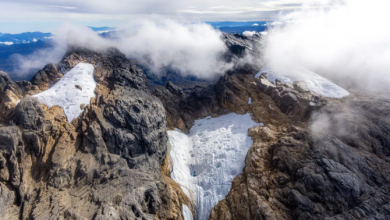
Saudi Arabia, a kingdom famous for its golden sands and intense summer heat, recently witnessed a historic and breathtaking winter phenomenon. Heavy snowfall, torrential rain, and plummeting temperatures swept across the northern and central regions, leaving citizens in a state of wonder.
While the sight of snow-capped peaks in the desert creates a beautiful scene, it also signals a shift in regional climate patterns.

Surprising snowfall blanketed the northern territories of the Kingdom, dramatically altering the rugged landscape of the mountain ranges in Tabuk Province. Specifically, the high-altitude destination of Trojena on Jebel Al-Lawz saw its peaks covered in white as temperatures dropped significantly. This mountain, rising to 2,600 meters, attracted thousands of residents who wanted to witness the rare sight of snow in the desert.

Cold Wave Grips the Central Regions
The National Centre for Meteorology (NCM) reported that the cold wave extended far beyond the northern borders into the country’s heartland. Consequently, regions such as Hail and Al-Majmaah experienced rare snow accumulation that settled on open plains and higher ground. Temperatures dipped below freezing during the early morning hours, creating the perfect conditions for this icy spectacle to remain on the earth.

Widespread rainfall accompanied the cold front, affecting major cities including Riyadh, Qassim, and various parts of the Eastern Province. Because the weather turned severe, authorities in the capital shifted all schools to remote learning to ensure the safety of students.
Furthermore, the National Centre for Meteorology spokesperson, Hussein Al-Qahtani, explained that a cold air mass interacted with rain-bearing clouds.

Although meteorologists pinpoint specific atmospheric movements for this event, the increasing frequency of such anomalies raises serious environmental questions. This rare Saudi snowfall joins a list of global weather shifts, such as recent floods in the UAE and heatwaves in Asia.
Therefore, experts believe that these events underline how climate change continues to reshape familiar weather patterns in historically arid regions.