US-Venezuela Tensions: Trump Convenes Top Advisors as Maduro Rejects ‘Slave’s Peace’
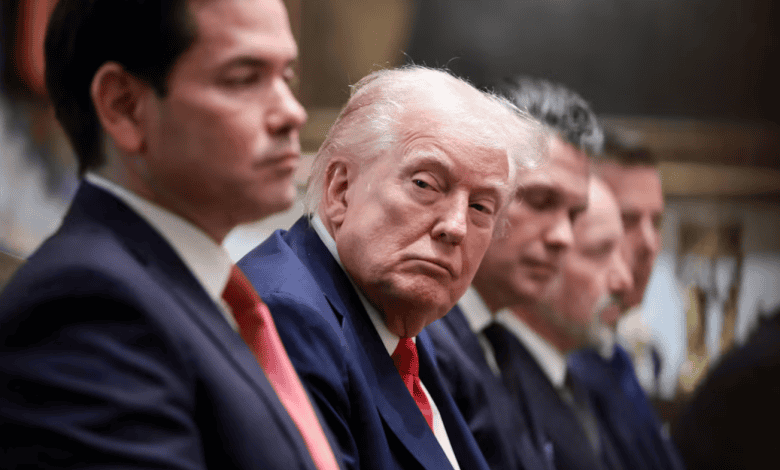
The US President, Donald Trump, met with top national security officials at the White House to discuss the next steps on Venezuela as Washington ramps up pressure on Caracas over alleged drug trafficking.
Meanwhile, the Venezuelan President, Nicolas Maduro, affirmed Caracas’ rejection of what he called a “slave’s peace” with the US amid growing fears of a military action against the South American country.
White House Meeting
Trump held talks with senior members of his national security team on Monday to discuss the pressure campaign on Venezuela, Reuters reported citing a US senior official.
The meeting came as the Trump administration ramps up pressure on Maduro, with a massive naval buildup in the Caribbean, strikes on alleged drug boats and threats of an imminent military action.
Earlier on Monday, the White House Press Secretary, Karoline Leavitt, confirmed to reporters that Trump would meet with “his national security team on this subject and on many matters” without giving details about the specifics of the meeting.
She also declined to exclude the possibility of deploying troops in Venezuela, according to AFP. “There’s options at the president’s disposal that are on the table, and I’ll let him speak on those,” she said.
Sources familiar with the matter told CNN that the meeting would likely include Secretary of Defense Pete Hegseth; Chairman of the Joint Chiefs of Staff Gen. Dan Caine; Secretary of State Marco Rubio; White House chief of staff Susie Wiles; and deputy chief of staff Stephen Miller.
US Pressure Campaign
Trump has been increasing pressure on Caracas over suspected drug-trafficking boats. In early September, the US President declared “war on drugs,” ordering airstrikes on boats smuggling narcotics through Caribbean and Pacific waters, authorizing the CIA to operate in Venezuela, and increasing military buildup near the Caribbean.

He also designated Maduro and his government allies as members of a foreign terrorist organization called “Cartel de los Soles” and floated the idea of imminent ground operations inside Venezuela.
On Saturday, Trump ratcheted up pressure by warning airlines, pilots, and criminal networks to avoid Venezuela’s airspace and consider it “to be closed in its entirety.”
Trump-Maduro Call
The US President confirmed on Sunday that he spoke with his Venezuelan counterpart, but he refused to provide details about what they discussed. “I wouldn’t say it went well or badly. It was a phone call,” he told reporters aboard Air Force One.
However, media reports suggested that the two leaders discussed a possible meeting and amnesty conditions for Maduro to step down. According to sources quoted by the Miami Herald, Trump offered Maduro, his wife and his son safe passage “only if he agreed to resign right away” and left the country immediately.
The sources added that Maduro refused Trump’s offer to step down immediately and allegedly made several demands including global immunity from prosecution and being allowed to cede political control but keep control of the armed forces.
The newspaper claimed that Maduro requested a second call after Trump’s threat over Venezuela’s airspace but he received no reply. It also said that Brazil, Qatar and Türkiye brokered the first call.
Defying US Threats
Maduro seemed defiant to Trump’s pressure campaign. On Monday, the Venezuelan leader told a rally of supporters in Caracas that Washington seeks to overthrow him, stressing that Venezuela rejects a “slave’s peace,” reported AFP.

“We want peace, but peace with sovereignty, equality, freedom! We do not want a slave’s peace, nor the peace of colonies,” Maduro stated.
The US has increased it naval presence in the region by launching “Operation Southern Spear,” amounting to around 15,000 American personnel and a dozen Navy vessels after the arrival of the USS Gerald Ford, the world’s largest aircraft carrier, to Latin American waters.
In response, Venezuela announced a “massive mobilization” of troops, weapons and equipment, in addition to conducting military exercises.