
G7 Consensus Against Houthis: How Saudi Diplomacy Safeguards Regional Stability
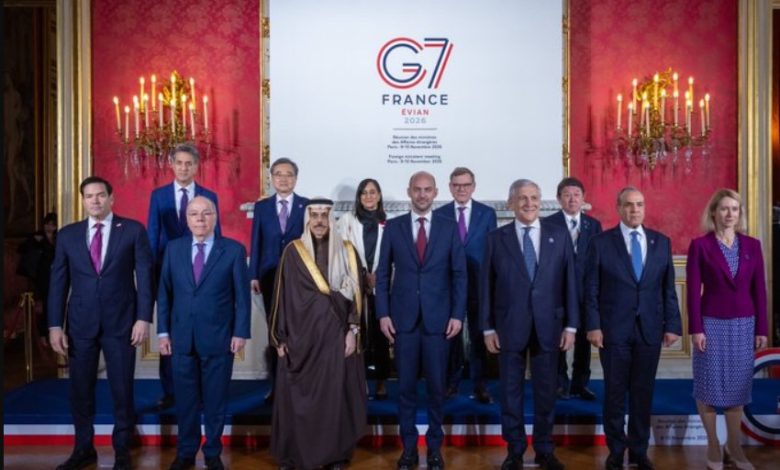
G7 foreign ministers have voiced strong condemnation of Houthi attacks against Saudi Arabia, demanding that Iran stop arming the militia.
This joint declaration followed an active Saudi diplomatic push, which crystallized in a series of high-level meetings between Foreign Minister Prince Faisal bin Farhan and his Western counterparts, in line with Riyadh’s dual-track policy of diplomacy and deterrence.
G7 Firm Stance
Driving the News: Following their meeting in Paris, the foreign ministers of Canada, France, Germany, Italy, Japan, the UK, and the US, along with the High Representative of the European Union, issued a joint statement backing Saudi Arabia against Houthi attacks.
The Big Picture: G7 foreign ministers strongly condemned the “unacceptable” continued Houthi strikes in Yemen and against Saudi Arabia’s civilians and civilian infrastructure. They expressed solidarity with the Yemeni government and the Kingdom, reaffirming the right of both nations to defend their security, sovereignty, and territorial integrity in accordance with international law.
The Backstory: Since July 2026, the Iranian-backed Houthis have launched drone and missile attacks across several Saudi cities, including Riyadh, Taif, Abha, Jeddah, Yanbu, Khamis Mushait, Jazan, and Najran. The militia has also targeted Saudi Arabia’s airports, including King Khalid International Airport in Riyadh, King Fahd Airport in Dammam, alongside Abha, Jazan, and Najran airports, killing dozens of civilians and injuring hundreds. Moreover, the Houthis have attempted to target Makkah and Madinah, the two holiest cities in Islam.
In parallel, Iranian-backed militias based in Iraq targeted Saudi oil facilities in the Eastern and Riyadh regions with drones on July 27 and July 28.
Saudi Deterrence in Action: Saudi Arabia’s air defense systems continue to demonstrate exceptional operational readiness and high efficiency in neutralizing aerial threats. Through its leadership of the Coalition to Restore Legitimacy in Yemen, the Kingdom remains committed to supporting the internationally recognized Yemeni government and restoring regional stability against non-state security risks.
A Call for Ending Proxy Support
Zoom In: The statement called on the Houthis to immediately cease all military actions and refrain from any further escalation, enabling a return to an inclusive political process. It also urged all actors, including Iran, to end their arming of and support for the Houthis, citing UN Security Council (UNSC) resolutions.
Flashback: In mid-October 2026, the UNSC issued a presidential statement condemning Houthi attacks against Saudi airports and the militia’s threats to commercial shipping in the Red Sea. The statement also reaffirmed the Kingdom’s inherent right to self-defense in accordance with international law.
Moreover, it underscored the importance of implementing relevant resolutions, including:
- UNSC Resolution 2216 (2015) on Yemen, which imposes a targeted arms embargo on the Houthis and calls on the militia to immediately and unconditionally withdraw from seized territories, including the capital Sanaa.
- UNSC Resolution 2722 (2024) on freedom of navigation in the Red Sea, which calls on the Houthis to immediately cease all attacks on merchant and commercial vessels.
Advocating for Maritime Security
Between the Lines: The G7 foreign ministers reiterated the need to protect maritime safety and security in the Red Sea and the Bab al-Mandab Strait. They also highlighted the positive contribution of the EU maritime defensive operations EUNAVFOR ASPIDES and EUNAVFOR ATALANTA to restore maritime security and protect international shipping and the lives of seafarers in the Strait of Bab al-Mandab, the Red Sea and the Gulf of Aden.
The Context: The Iranian-backed Houthi militia has escalated threats to commercial shipping in the Red Sea, disrupting freedom of navigation and maritime shipping in this global trade artery, which handles 10% to 15% of all global trade annually.
The EU launched the EUNAVFOR ASPIDES naval operation in 2024 in response to Houthi attacks against commercial shipping in the Red Sea, Gulf of Aden, and the Indian Ocean. Meanwhile, the EUNAVFOR ATALANTA military operation, launched in 2008, is aimed at deterring piracy, protecting World Food Program vessels, and securing international shipping lanes off the coast of Somalia and across the Western Indian Ocean.
A Saudi Diplomatic Offensive
State of Play: As an invited country, Saudi Arabia leveraged its participation in the G7 Foreign Ministers’ meeting in Paris to engage with the top diplomats of Western powers.
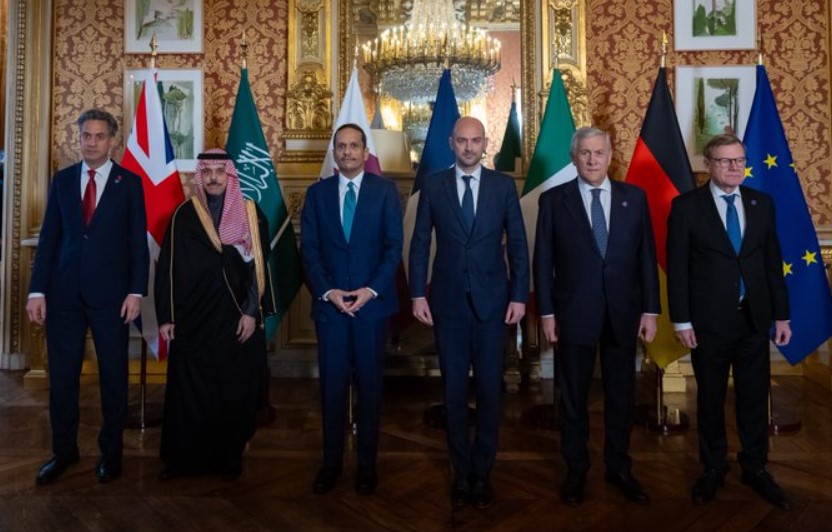
High-Level Meetings:
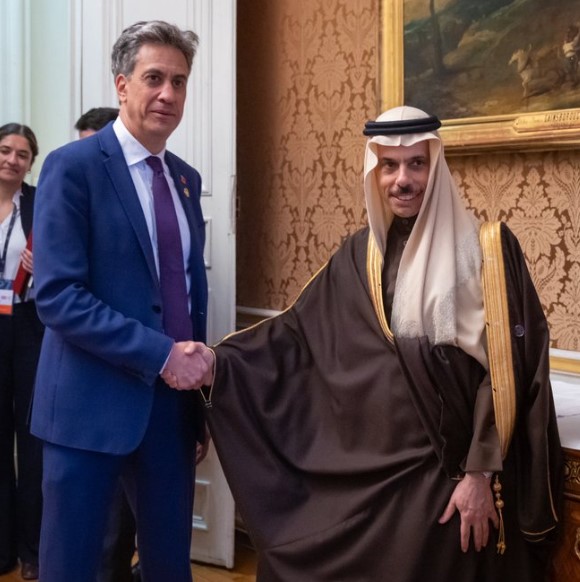
- The UK: Saudi Foreign Minister Prince Faisal bin Farhan met with British Foreign Secretary Ed Miliband. The two officials reviewed bilateral relations and discussed recent regional developments and joint efforts to ensure maritime security, safeguard shipping routes, and restore security and stability in the region.
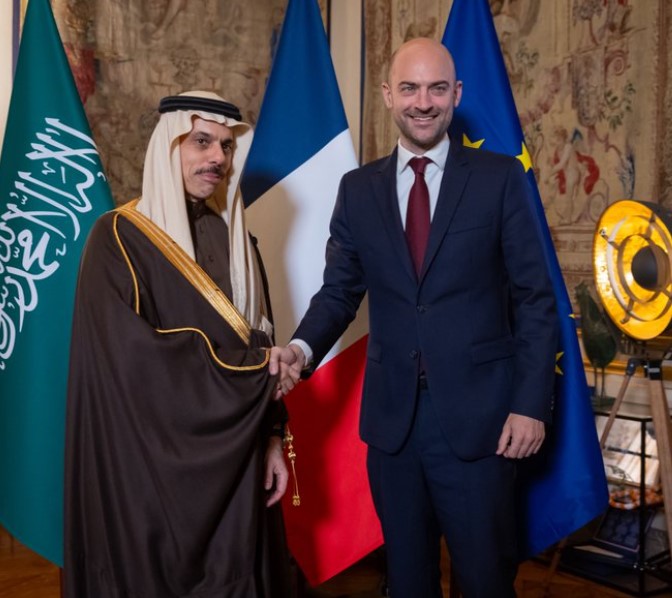
- France: Prince Faisal and his French counterpart Jean-Noël Barrot discussed Houthi attacks on Saudi Arabia. They also discussed efforts to safeguard waterways, ensure freedom of navigation, and contain regional crises and mitigate their repercussions.
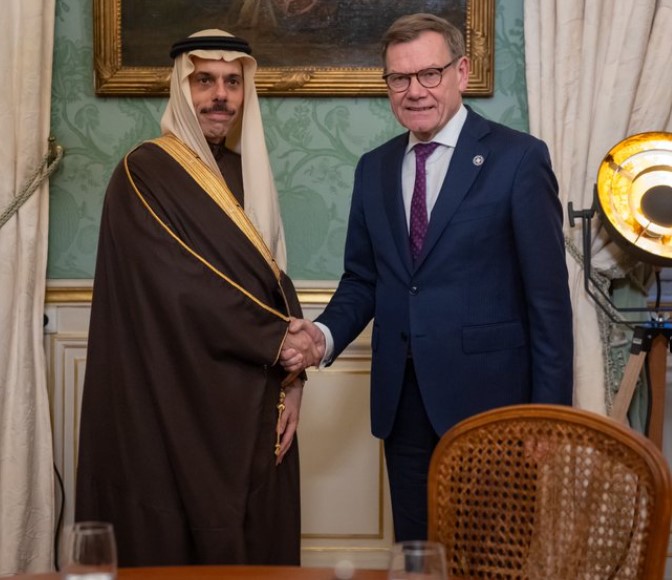
- Germany: In a bilateral meeting, Prince Faisal bin Farhan and German Foreign Minister Johann Wadephul reviewed bilateral relations and discussed regional developments. They explored diplomatic efforts aimed at maintaining regional security and stability and ensuring freedom of navigation and the safety of maritime corridors.
- The E4: The Saudi Foreign Minister took part in a ministerial meeting alongside his counterparts from Qatar and the E4 (France, Germany, Italy, and the UK). Discussions focused on the latest regional developments, continued Houthi attacks against Yemen and Saudi Arabia, and their implications for regional security. The meeting also reviewed diplomatic efforts to support mediation between the US and Iran, contributing to de-escalation and crisis resolution. Moreover, the meeting highlighted the importance of strengthening international coordination to secure regional maritime corridors, ensuring the smooth flow of trade and global supply chain resilience.
The Takeaway: The G7 Foreign Ministers’ joint statement reflects a growing international consensus on the grave threats posed by Iranian-backed militias to regional stability and maritime security. It also underscores Saudi Arabia’s diplomatic leverage that aligns partners and allies on de-escalation and freedom of navigation, positioning Riyadh as a central driver of long-term stability.