Female representation on corporate boards across the Gulf Cooperation Council (GCC) has reached 7%, marking steady, if gradual, progress toward more inclusive leadership in the region, according to the latest Gender Diversity Index report released on Tuesday.
The report, published jointly by Heriot-Watt University and Aurora50, is the third edition of what remains the only unified benchmark tracking board composition across all GCC stock exchanges. It offers a comprehensive analysis of women’s participation on the boards of publicly listed companies across the six Gulf states.
Gradual but consistent gains
As of January 2026, women occupy 7% of board positions across the GCC, up slightly from 6.9% in 2025—an annual increase of 1.4%. While growth remains incremental, the findings point to sustained momentum in advancing gender diversity.
The index now covers 759 listed companies across the region. Over the past year, the total number of board seats rose by 1.5%, from 5,668 to 5,755.
Women currently hold 403 board positions, up from 390 in 2025, with 341 individual women serving on boards compared to 334 the previous year.
This reflects a 2.1% increase in the number of women directors and a 3.3% rise in the total seats they occupy. Some women hold multiple board roles, signaling broader participation at the leadership level.
At the country level, the United Arab Emirates continues to lead the region for the third consecutive year, with women holding 15% of board seats across its three stock exchanges, up from 14.7% in 2025.
Bahrain ranks second at 10.5%, followed by Oman at 7%. Kuwait reports 5.6%, while Qatar and Saudi Arabia trail at 3.2% and 2.9%, respectively.
Sector breakdown highlights financial dominance
This year’s report also includes a sectoral analysis spanning 12 industries. The UAE and Saudi Arabia are the only countries where women are represented on boards across all sectors.
The financial sector accounts for the largest share of female-held board seats, followed by the industrial sector.
In the UAE, women hold:
86 out of 564 board seats in financial services
35 out of 214 in the industrial sector
15 out of 94 in consumer staples
In Saudi Arabia, the top sectors are:
Financial sector: 18 out of 392 seats
Consumer staples: 5 out of 207
Materials: 4 out of 368
Leadership voices: progress and potential
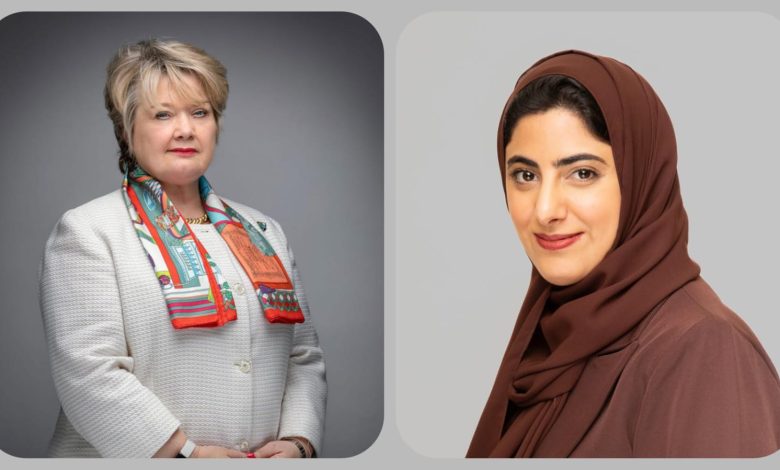
Sheikha Shamma bint Sultan bin Khalifa Al Nahyan, Chair of Aurora50, welcomed the findings, noting that female board representation in the UAE has surged from 3.5% in 2020 to 15% in 2026.
“This progress reflects the UAE leadership’s vision to advance gender equality in the workplace,” she said, adding that women’s presence on boards enhances governance, broadens perspectives, and supports institutional growth.
Professor Heather McGregor, Provost and Vice Principal of Heriot-Watt University Dubai, described the index as a “critical reference point” for understanding boardroom evolution in the GCC.
“While the UAE sets a strong example, there remains a clear opportunity to accelerate progress across the region,” she said. “Transparent, high-quality data is essential to driving meaningful outcomes.”
A data-driven approach
Supported by Board Intelligence, AlixPartners, and Grant Thornton, the index is built on detailed, company-level data. Each firm and board member is uniquely identified to ensure accuracy and avoid duplication, particularly where companies are cross-listed or directors hold multiple roles.
The report is intended as a reliable resource for policymakers, researchers, and industry stakeholders, helping to track progress and promote greater gender balance in corporate leadership.
The full 2026 GCC Gender Diversity Index report is available on Heriot-Watt University Dubai’s website.