Negotiations between the US and Iran are expected to take place in Türkiye, as regional powers push to avert a military confrontation.
Meanwhile, Israel is preparing for “any possible scenario” amid reports that Israeli officials want the US to attack Iran and eliminate its missile program.
Ankara Meeting
As part of a diplomatic effort to de-escalate tensions, Türkiye, Egypt and Qatar are trying to arrange a meeting between the US Special Envoy, Steve Witkoff, and senior Iranian officials in Ankara, reported Axios citing two regional officials.
The meeting is expected to take place later this week. “It is moving. We are doing our best,” one of the officials said.
According to sources, the three countries have been coordinating efforts to facilitate the talks, in an attempt to avert a regional war.
During an interview with CNN on Sunday, Iran’s Foreign Minister, Abbas Araghchi, said that “friendly countries” are trying to build confidence between Washington and Tehran, describing these efforts as “fruitful.”
“I see the possibility of another talk if the US negotiations team follows what President Trump said: to come to a fair and equitable deal to ensure there are no nuclear weapons,” Araghchi added.
De-escalation Efforts
Egypt, Qatar and Türkiye previously cooperated with US President Donald Trump to achieve the Gaza ceasefire agreement between Hamas and Israel.
Against the backdrop of mounting tensions between Washington and Tehran, the three countries have intensified diplomatic efforts to bring the US and Iran to the negotiating table.
On Saturday, the Egyptian President spoke with his Iranian counterpart, Masoud Pezeshkian, and urged him to pursue negotiations, stressing that diplomacy is the only viable path to resolve the crisis and avoid further tension and instability in the Middle East.
On the same day, the Qatari Prime Minister and Minister of Foreign Affairs, Sheikh Mohammed bin Abdulrahman Al Thani, visited Tehran and met with the head of Iran’s Supreme National Security Council, Ali Larijani, to discuss ongoing efforts to de-escalate tensions in the region.
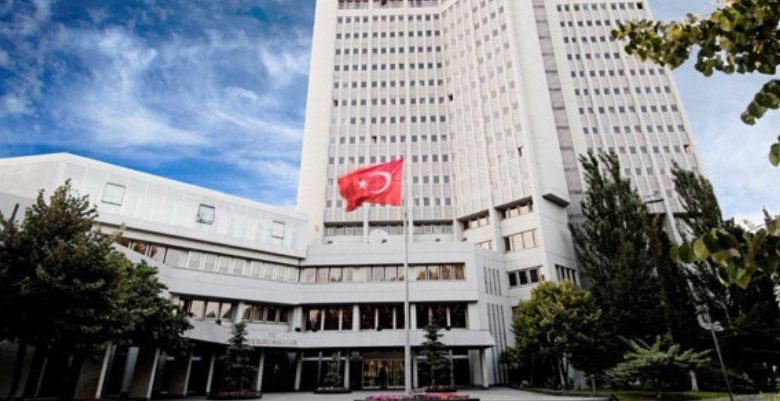
A day earlier, the Turkish Foreign Minister, Hakan Fidan, hosted Araghchi in Ankara to discuss the possible location and agenda for a potential meeting with US officials.
War of Words
Trump has been ramping up pressure on Iran amid the brutal crackdown on anti-government protests. He noted that a “massive armada” is heading toward Iran, threatening military action if a nuclear deal is not reached.
Despite the massive US military buildup and reciprocal threats, Trump later suggested that Iran wants to make a deal, while Larijani talked about “progress” towards a framework for negotiations.
But, on Sunday, the Iranian Supreme Leader, Ayatollah Ali Khamenei, warned that if the US attacked Iran, the war would spread across the whole region.
“America should know that if it starts a war, this time it will be a regional war,” Khamenei said, emphasizing that Iran “will deliver a strong blow” in case of any US attack.
Commenting on Khamenei’s remarks, Trump said that the US has a powerful fleet near Iran. “Why wouldn’t he say that? Of course he is going to say that. We have the biggest, most powerful ships in the world over there, very close, a couple of days,” he said.
However, the US President kept hope for diplomacy alive. “Hopefully, we’ll make a deal. If we don’t make a deal, we’ll find out whether or not he was right,” Trump told reporters.
Israel Pushes for Attack
Israel, a close US ally that fought a 12-day war with Iran in June 2025, is closely monitoring the situation. Against this backdrop, senior US and Israeli officials met at the Pentagon on Friday, reported Reuters citing two US officials.
The closed-door discussions involved Israeli Army Chief of Staff, Eyal Zamir, and the Chairman of the US Joint Chiefs of Staff, Dan Caine.
Israel’s state-run broadcaster KAN reported that the main goal of Zamir’s trip to Washington was attempting to persuade the US to carry out a strike against Iran.
Following his return from Washington, Zamir met with the Israeli Defense Minister, Israel Katz, on Sunday to review the regional situation and the military’s “operational readiness for any possible scenario,” according to Katz’s office.
Later that day, the Israeli Prime Minister, Benjamin Netanyahu, held a high-level security meeting with Katz, Zamir and Mossad Director, David Barnea.
According to Israeli media, officials emphasized their preference for a US strike, citing concerns over Iran’s nuclear and missile programs. They also warned that refraining from action would have “consequences.”
Furthermore, Zamir expected that a US military strike on Iran would happen “within two weeks to two months,” describing the current situation as a “period of uncertainty,” according to Army Radio.