The UN Security Council (UNSC) imposed sanctions on four senior members of the paramilitary Rapid Support Forces (RSF) for committing atrocities in El-Fasher, the capital city of North Darfur state.
Furthermore, the UNSC voiced “deep concern” over escalating violence in Sudan, particularly in Kordofan and Darfur, calling for an immediate halt to fighting.
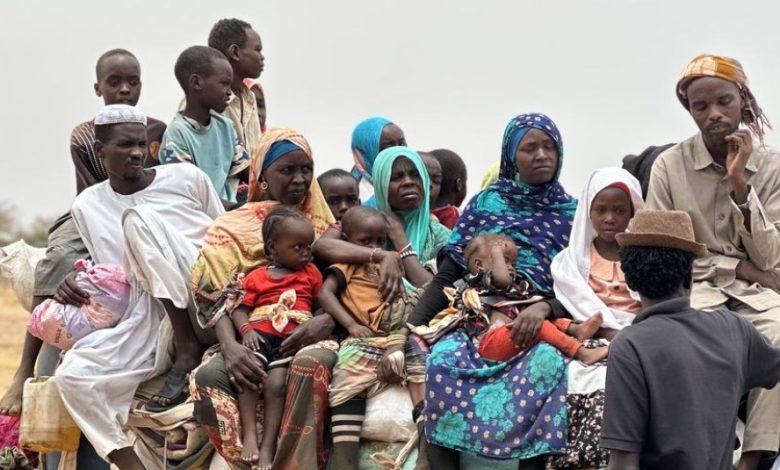
The war in Sudan broke out in April 2023 between the Sudanese Armed Forces (SAF) and RSF, triggering the world’s largest humanitarian and displacement crisis and pushing parts of the country into famine amid cholera outbreaks.
RSF Commanders Under Sanctions
On Tuesday, February 24, 2026, the UNSC announced the addition of four individuals to its sanctions list for atrocities committed during the capture of El-Fasher in late October 2025. The sanctions include asset freezes and travel ban.
The added members are the RSF deputy leader, Abdelrahim Hamdan Daglo; and the RSF commander for the North Darfur section, Gedo Hamdan Ahmed.
A video footage shows Abdelrahim Daglo, the brother of the group’s current head Mohamed Hamdan Dagalo, instructing his fighters to “not take captives but to kill everyone,” the sanctions announcement said.
He is subject to sanctions from the US, the UK and the European Union (EU), according to AFP.
The UNSC also added the paramilitary group’s Brigadier General al-Fateh Abdullah Idris and field commander Tijani Ibrahim to the sanctions list.
Idris, also known as Abu Lulu, gained infamy as “the Butcher of El-Fasher” after sharing graphic footage he personally filmed during the city’s capture.
“Abu Lulu has filmed himself smiling and killing people while they begged for mercy, as well as videos where he makes ethnically targeted executions,” according to the UNSC.
Last week, the US slammed Idris, Ahmed and Ibrahim with sanctions for the “ethnic killings, torture, starvation and sexual violence” committed in El-Fasher.
RSF Atrocities in El-Fasher
The UNSC sanctions, approved by a special committee with representatives of all 15 Member States, followed a UN probe that concluded that the RSF atrocities in El-Fahser show “hallmarks of genocide” against non-Arab communities.
In its report, the Independent International Fact-Finding Mission for the Sudan said that the RSF committed at least three out of five acts of genocide, carrying out a “coordinated campaign of destruction against non-Arab communities in and around El-Fasher,” specifically the Zaghawa and Fur.
These crimes include the prolonged siege, starvation and denial of humanitarian assistance, mass killings, rape, torture and enforced disappearance, and systematic humiliation.
Similarly, an earlier report by the UN Human Rights Office (OHCHR) found that the RSF committed “widespread atrocities that amount to war crimes and possible crimes against humanity” during its takeover of El-Fasher.
UNSC Alarm
In a statement on Tuesday, the UNSC members expressed “deep concern” over the escalating violence in Sudan, including in Kordofan and Darfur, urging an immediate end to the fighting.
Furthermore, they strongly condemned the repeated drone attacks on civilians, civilian infrastructure, and humanitarian workers, including multiple strikes targeting the World Food Program (WFP) since the beginning of February 2026.
The UNSC statement reiterated that deliberate attacks against humanitarian workers and their property may constitute war crimes. It called for safe, unhindered humanitarian access and the free movement of civilians, stressing that starvation must not be used as a weapon of war.
The statement also condemned the RSF ongoing assaults and destabilization of the Kordofan region, denouncing all forms of abuses against the Sudanese population.
Bringing Perpetrators to Justice
In their statement, the UNSC members condemned reports of arbitrary detention and conflict-related sexual violence, emphasizing that these acts may amount to war crimes and crimes against humanity.
They also denounced the reported RSF atrocities in El-Fasher, including systematic killing, mass displacement, summary executions, and ethnically motivated targeting.
Importantly, the UNSC members called for holding all perpetrators of violations and abuses accountable, demanding that all parties protect civilians, comply with their obligations under international law and adhere to the commitments outlined in the Jeddah Declaration.
No Foreign Interference
The UNSC members identified a permanent ceasefire and a Sudanese-led political process as their “top priorities” for ending the conflict. They signaled that any future political transition must be inclusive and reflect the aspirations of the Sudanese people rather than the interests of the warring factions.
In light of this, the UNSC members urged all Member States to refrain from any external interference that seeks to fuel conflict and instability in Sudan, calling for support of efforts aimed at achieving a lasting peace.
Additionally, they unequivocally reaffirmed their steadfast commitment to the sovereignty, independence, unity, and territorial integrity of Sudan, reiterating their categorical rejection of the establishment of any parallel governing authority in areas controlled by the RSF.