Sudan Crisis: UN Warns of Dire Conditions for Millions of Displaced, Returnees
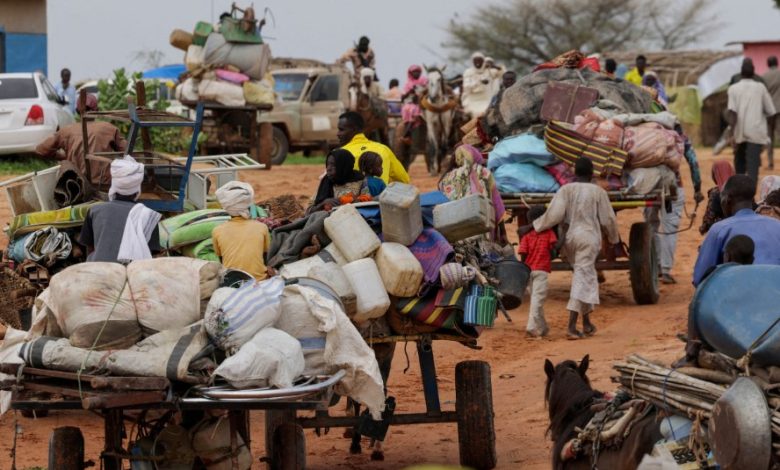
The humanitarian situation in Sudan has reached a critical tipping point as the country faces a deepening crisis, where millions remain internally displaced while others return to war-torn zones.
Recent data from UN agencies reveals that the number of internally displaced persons (IDPs) has surged to 9.5 million, while the number of returnees to Sudan has surpassed three million amid the lack of basic services and vital infrastructure.
Internal Displacement
The UN Children’s Fund in the Middle East and North Africa (UNICEF MENA) warned on Thursday that Sudan is enduring the world’s largest internal displacement crisis, where 9.5 million people have been displaced across 18 states.
The UN previously declared that the war in Sudan triggered the world’s largest humanitarian and displacement crisis, with over 15 million people forced to flee their homes both within the country and to neighboring countries.
In April 2023, a brutal war broke out between the Sudanese Armed Forces (SAF) and the paramilitary Rapid Support Forces (RSF), driving the country toward effective partition amid spreading famine and cholera outbreaks.
Children Bear the Brunt
In a statement on X, the UNICEF MENA warned that the nearly three-year conflict is taking a heavy toll on Sudanese children, where three out of every five IDPs are children.
“For nearly three years, the children of Sudan have been suffering – and continue to suffer – from a humanitarian catastrophe caused by conflict, displacement, disease, and hunger,” it said.
The agency highlighted its efforts on the ground in Sudan, where it collaborates with partners to deliver life-saving basic services to affected children and families. These services include health and nutrition care, access to safe water, psychosocial support and education.
However, the crisis in Sudan lacks adequate media coverage and funding, the UNICEF warned, stressing that the children of Sudan need lasting peace and stability.
Violence in Kordofan
As the battles shifted to Kordofan, concerns grow over worsening humanitarian conditions in the region. The UN Spokesperson, Stephane Dujarric, warned on Wednesday that the situation in Dilling, the second largest city in South Kordofan state, remains “highly volatile.”
The SAF announced on Monday that it had successfully broken a long-running siege of Dilling following decisive military battles with the RSF and their local allies.
However, Dujarric noted that humanitarian operations remain limited as access routes are cut off, and the city’s prolonged isolation has pushed conditions to “crisis levels.”
“Our partners report that half of Dilling’s civilian population fled last year, while those who remain face critical shortages of food, healthcare and other basic needs,” he said.
According to the International Organization for Migration (IOM) estimates, over 88,000 people were displaced between late October and mid-January across Kordofan as a result of the conflict.
Meanwhile, civilians in North Darfur state are enduring dire humanitarian conditions amid drone strikes. “People continue to flee into the locality of Tawila. A field visit yesterday by our teams and partners saw families arriving after fleeing El-Fasher. They need food, they need shelter, they need water, sanitation, hygiene and nutrition support,” Dujarric said.
Returnees Crisis
On Thursday, the IOM noted that more than 3 million Sudanese have returned to their home regions in Sudan. However, they face destroyed homes and lack of vital infrastructure.
“Many families are arriving to destroyed houses, limited services and uncertain futures, and without predictable support, return risks becoming another chapter of hardship rather than a path to recovery,” IOM Director General, Amy Pope, said.
The IOM’s latest data showed that more than 1.3 million people returned to Khartoum state, while Al-Jazirah state follows as the second-highest region for returns.
Of all returnees, 83% came from internal displacement, while 17% returned from neighboring countries such as Egypt, South Sudan, and Libya, as well as from the Gulf States.
The growing number of returnees necessitates the reconstruction of homes and the restoration of essential infrastructure, including water systems, health facilities, and schools.
In light of this, the IOM reaffirmed the urgent need for sustained humanitarian funding to address the immediate needs of returnees and displacement-affected communities, while supporting longer-term recovery and durable solutions.