US President Donald Trump announced that an agreement with Iran to end the war has been “largely negotiated” following a high-level conference call with regional leaders.
However, the diplomatic breakthrough faces immediate headwinds, particularly over the Strait of Hormuz; while Trump claimed the deal would reopen the strategic waterway, Tehran swiftly insisted it would maintain an absolute monopoly over its control.
Deal Announcement
Trump announced on Saturday that a memorandum of understanding (MoU) with Iran is being finalized, possibly paving the way for ending the war that broke out in late February 2026.
“An Agreement has been largely negotiated, subject to finalization between the United States of America, the Islamic Republic of Iran, and the various other Countries,” he posted on Truth Social.
“Final aspects and details of the Deal are currently being discussed, and will be announced shortly,” Trump added.
The announcement came shortly after Trump issued a stern warning to Iran, telling Axios that it is a “solid 50/50” split whether the U.S. will secure a “good” deal or instead “blow them to kingdom come.”
“I think one of two things will happen: either I hit them harder than they have ever been hit, or we are going to sign a deal that is good,” he said.
Regional Discussions
Trump’s announcement followed a joint call with the leaders of Saudi Arabia, Pakistan, Egypt, Qatar, the UAE, Türkiye, Bahrain and Jordan, during which they discussed the MoU.
The leaders supported the proposed deal, reported Axios citing three sources familiar with the matter.
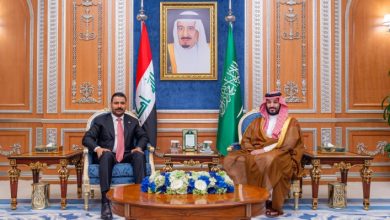
Saudi Crown Prince and Prime Minister Mohammed bin Salman took part in the conference call. During the call, the leaders reviewed the latest regional developments, expressing deep appreciation for President Trump’s leadership and his commitment to consultation and coordination with regional leaders, according to the Saudi Press Agency (SPA).
The leaders also praised Pakistan’s mediation efforts as well as Qatar’s endeavors to reach an agreement that prevents escalation and establishes regional security and stability.
Pakistan’s Army Chief Asim Munir and Interior Minister Mohsin Naqvi were in Tehran as part of Islamabad’s extensive mediation efforts to secure a peace deal. Furthermore, a Qatari negotiating team visited Iran on Friday in coordination with the US to help advance a deal.
Trump said he also held a separate phone call with Israeli Prime Minister Benjamin Netanyahu, which “went very well.”
Proposed Deal
According to Axios, the draft agreement involves a 60-day ceasefire extension, during which the Strait of Hormuz will be open with no tolls and Iran will agree to clear the mines it deployed in the Strait to let ships pass freely.
The US, in return, will lift its naval blockade on Iranian ports and issue some sanctions waivers to allow Iran to sell oil freely.
Moreover, the MoU includes commitments from Iran to permanently renounce nuclear weapons, freeze its uranium enrichment program, and dismantle its highly enriched uranium stockpile through upcoming talks.
Washington will negotiate over lifting sanctions and unfreezing Iranian funds during the 60-day period. US troops in the region will remain until a final deal is reached.
The MoU clearly states that the war in Lebanon between Hezbollah and Israel will end.
Hormuz Dispute
While Trump said that the Strait of Hormuz “will be opened” under the agreement, Iran said that these claims were “inconsistent with reality.”
Iran’s Fars News Agency said in a report that the waterway will remain under Iranian management. “Although Iran has agreed to allow the number of passing vessels to return to pre-war levels, this in no way means ‘free passage’ as it existed before the war,” it said.
The news outlet also noted that the nuclear issue has not been discussed at this stage.
Iranian Foreign Ministry Spokesperson Esmaeil Baghaei struck a similar tone, saying that the Strait of Hormuz “has nothing to do with America.”
Baghaei confirmed that Tehran and Washington are finalizing an MoU to end the war. “The topics being discussed at this stage focus broadly on ending the war, halting the US naval aggression – what they themselves have labeled a ‘naval blockade’-, and issues related to the release of Iran’s blocked assets,” he said in a televised interview.
He added that the MoU includes the most important issues necessary to end the war, with other issues – including the nuclear program – to be negotiated at a later stage. “Subsequently, within a reasonable timeframe of 30 to 60 days, the two sides would discuss the details of these issues and ultimately reach a final accord,” he explained.
“In later stages – within 30 days, 60 days, or whatever timeframe is ultimately agreed upon – we can discuss the nuclear issue or other mutually agreed matters separately. But at this stage, as stated, all our focus is on ending the war,” Baghaei noted.