Iran Deal at Risk as Supreme Leader Reportedly Blocks Enriched Uranium Transfer
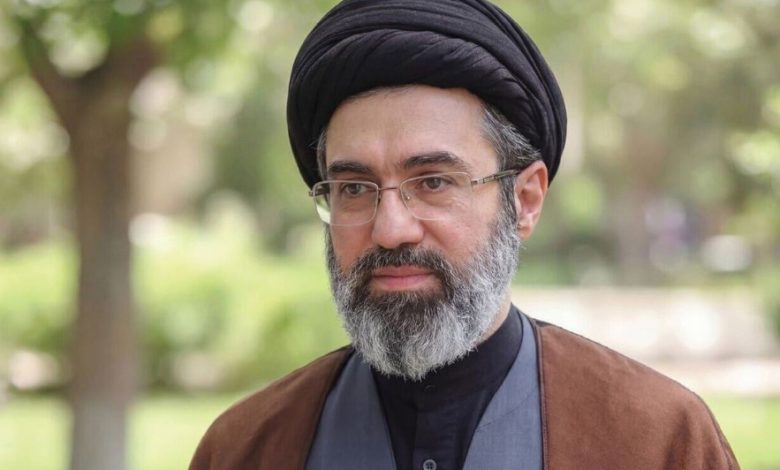
Iranian Supreme Leader Ayatollah Mojtaba Khamenei has ordered enriched uranium stockpile must remain in country, Reuters reported, citing two senior Iranian sources.
Tehran’s stockpile of enriched uranium is one of the main sticking points in the ongoing talks to reach a deal that brings the current US-Israeli war with Iran to an end.
Stockpile Remains in Iran
According to Iranian sources cited by Reuters, Mojtaba Khamenei issued a directive stressing that Iran’s stockpile of 60% enriched uranium must not be transferred abroad.
“The Supreme Leader’s directive, and the consensus within the establishment, is that the stockpile of enriched uranium should not leave the country,” one of the Iranian sources said.
Senior Iranian officials believe that sending the material abroad will expose the country to future strikes by the US and Israel.
Tehran has sought an agreement that ends the war and provides guarantees that the US and Israel will not launch future attacks, while delaying negotiations on its nuclear program to a later stage.
Iran’s Enriched Uranium
The UN International Atomic Energy Agency (IAEA) estimates that Iran possesses more than 440 kilograms of 60% enriched uranium – a technical hairsbreadth from the 90% weapons-grade purity. The US, Israel and Western States have long accused Iran of seeking a nuclear weapon. However, Tehran maintains that its program is for civilian purposes only.
Before the war, Iran said it was ready to remove half of its uranium stockpile out of the country, but changed position after US President Donald Trump’s repeated threats to strike the country.
Trump bombed Iran’s key three nuclear facilities – Natanz, Fordo, and Isfahan – in June 2025, and it remains unclear how much of the stockpile has survived the attack.
IAEA Director-General Rafael Grossi believes that the majority of Iran’s highly enriched uranium (over 200 kg) is probably still stored at the Isfahan nuclear facility, while some of it remains at Natanz.
Point of Contention
As talks are underway to bridge the gaps between the US and Iran, the nuclear issue is one of the most sticking points in negotiations. The two sides remain divided over the recognition of Tehran’s right to enrichment and the fate of its enriched uranium stockpile.
Although Iran has rejected shipping its stockpile out to the US, media reports said it proposed diluting part of it and sending the rest to a third country. Russia, for its part, signaled willingness to receive the Iranian uranium.
The Iranian sources told Reuters there were “feasible formulas” to resolve the issue. “There are solutions like diluting the stockpile under the supervision of the International Atomic Energy Agency,” one of the sources said.
A US Deal-breaker
Trump has vowed to get Iran’s “nuclear dust,” referring to the country’s enriched uranium. On Wednesday, he warned that the US would resume attacks on Iran if Tehran did not agree to a peace deal.
“Believe me, if we don’t get the right answers, it goes very quickly. We’re all ready to go,” he told reporters, adding that Washington could wait a few days before opting to military action.
Israeli officials told Reuters that Trump assured Tel Aviv any final peace deal must mandate the removal of Iran’s weapon-grade uranium stockpile from the country.
Furthermore, Israeli Prime Minister Benjamin Netanyahu insists the war will not end without the removal of Iran’s enriched uranium, an end to its proxy support, and the elimination of its ballistic missiles.
US-Iran Talks
Regional powers have been ramping up efforts to secure a deal that ends the US-Israeli war with Iran. Saudi Arabia, Qatar and the UAE have successfully averted an imminent US attack on Iran, asking Trump to give the ongoing negotiations a chance.
Pakistan, the primary mediator, is intensifying diplomatic efforts to reach a breakthrough. The Pakistani Interior Minister, Mohsin Naqvi, landed in Tehran on Wednesday, after Iran submitted its latest proposal to the US this week.
Iranian state media reported that Pakistan’s Army Chief Asim Munir will visit Iran on Thursday for consultations.
However, Iranian officials suspect that the temporary ceasefire is a tactical deception by the US to create a sense of security before it renews attacks, sources told Reuters.
On Wednesday, Iran’s Parliament Speaker and top negotiator Mohammed Bagher Qalibaf said that “obvious and hidden moves by the enemy” signaled the US was preparing new attacks.
The Iranian Revolutionary Guards also warned against renewed strikes. “If aggression against Iran is repeated, the promised regional war will extend beyond the region this time,” they said in a statement.