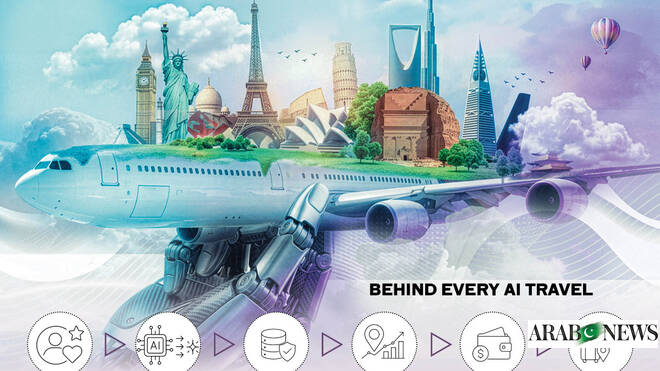
Artificial intelligence is becoming a cornerstone of Saudi Arabia’s tourism transformation, reshaping how visitors discover destinations, plan journeys, and interact with travel services as the Kingdom advances its Vision 2030 ambitions.
While travelers are increasingly experiencing AI through personalized recommendations and smarter booking platforms, industry leaders say the technology’s greatest impact is taking place behind the scenes, where it is improving software development, streamlining operations, and strengthening the digital infrastructure supporting one of the Kingdom’s fastest-growing sectors.
Saudi Tourism
The shift is also being driven by government policy. Earlier this year, Saudi Arabia’s Ministry of Tourism unveiled its AI Tourism Vision, a national framework designed to accelerate the adoption of artificial intelligence across the tourism ecosystem. The initiative aims to improve visitor experiences, support tourism businesses with advanced digital tools, and strengthen the Kingdom’s position as a global destination for tourism innovation. As part of the strategy, the ministry also introduced TourismX, a digital platform that provides AI-powered services and insights for investors and tourism operators.

For Muzzamil Ahussain, CEO of Almosafer Travel and Tourism Co., Saudi Arabia’s leading omnichannel travel platform, AI is helping solve one of modern travel’s biggest challenges: information overload.
“The real problem was never having too few options; it was having too many irrelevant ones,” Ahussain told Arab News. “AI shifts that equation by understanding intent first — who is traveling, with whom, for what purpose, at what budget, and with what cultural preferences.”
Rather than simply presenting thousands of destinations or hotel options, AI can identify choices that best match a traveler’s preferences. Families planning holidays to The Red Sea, for example, can receive recommendations based on reviews from people with similar travel habits and interests, making the planning process faster and more relevant.

The technology is also supporting Saudi Arabia’s efforts to broaden tourism beyond its traditional destinations. By highlighting locations such as Abha, Jubail, and Tabuk alongside giga-projects including The Red Sea and Qiddiya City, AI-powered recommendation systems are encouraging visitors to explore a wider range of experiences across the Kingdom.
Ahussain said Almosafer is working with the Saudi Tourism Authority to improve the visibility of destinations through intelligent search and recommendation tools that connect travelers with experiences most relevant to their interests.
“Our models already summarize reviews and tag content to deliver relevant choices, resulting in a 22 percent increase in conversion rates,” he said. “We are moving from a click economy to a conversation economy.”
Government agencies are pursuing similar efforts through their own digital transformation initiatives. The Ministry of Tourism has been expanding AI-enabled services to enhance the visitor journey, including digital assistants and intelligent tourism platforms that provide travelers with easier access to destination information, travel planning resources, and personalized recommendations while helping businesses better understand visitor demand.
AI
The influence of AI extends well beyond the customer journey. It is increasingly embedded in the technology that powers travel platforms, accelerating software development and enabling companies to scale their digital services more efficiently.
According to Ahussain, Almosafer’s engineering platform comprises more than 250 million lines of code and a microservices architecture capable of handling around 10 billion requests each month. Around half of the company’s software code is now co-authored by AI, while approximately 85 percent of its engineering teams actively use AI as part of their daily work.
As AI becomes more deeply integrated across the travel ecosystem, industry attention is shifting toward governance, security, and maintaining customer trust.
Ayman Al-Rashed, Regional Vice President of IBM Saudi Arabia, said trust has always been fundamental to tourism because travelers routinely share personal information, payment details, and travel preferences throughout their journeys. As AI assumes a larger role across airlines, airports, hotels, and digital travel platforms, protecting that information becomes increasingly important.
IBM is helping organizations address those challenges through Sovereign Core, a software platform designed to strengthen governance, compliance, and control over cloud environments while supporting innovation.
“The biggest consideration is not the volume of data being collected, but how that data is governed throughout its lifecycle,” Al-Rashed said.

SDAIA
The focus on responsible AI is also reflected in national initiatives. The Saudi Data and AI Authority (SDAIA) and the Ministry of Tourism have partnered to establish an AI Center of Excellence aimed at accelerating the adoption of artificial intelligence across tourism services. The initiative seeks to improve decision-making through data analytics, strengthen digital capabilities, and support the Kingdom’s broader Vision 2030 objectives.
He noted that although travelers often associate AI with chatbots or personalized recommendations, those visible features represent only a small part of its role.
“What customers see is often the visible layer — a chatbot, mobile application, or personalized recommendation,” he said. “The real work happens behind the scenes, ensuring the AI is using trusted data, models are governed, systems are monitored, and humans can intervene when needed.”
That shift reflects a broader evolution across Saudi Arabia’s tourism industry, where AI is becoming an essential layer of digital infrastructure rather than simply another customer-facing technology.
The convergence of government policy, private-sector investment, and advances in artificial intelligence is reshaping the Kingdom’s tourism landscape. While companies are deploying AI to personalize travel and improve operational efficiency, national initiatives are providing the digital infrastructure and governance frameworks needed to support long-term growth.

As Saudi Arabia continues to expand its tourism sector under Vision 2030, artificial intelligence is expected to play an increasingly central role in strengthening competitiveness, improving visitor experiences, and supporting sustainable tourism development. Together, these efforts are laying the foundations for a smarter, more connected, and resilient tourism ecosystem.
Related Topics :
SDAIA VP Reaffirms Saudi Arabia’s Global AI Leadership, Ethical Commitment at UNGA 80
SDAIA President, Chinese Ambassador Visit UNESCO’s AI Ethics Center in Riyadh
Riyadh Book Fair Inspires Children’s Passion for Reading, Creativity
Hajj 2025: SDAIA Boosts Makkah Route Initiative with Technical Services