The Saudi Arabia Railways (SAR) CEO, Bashar bin Khalid Al-Malik, recently clarified the future of the Kingdom’s most ambitious rail project. During his appearance on the television program Fi Al Surah (“In the Picture”) on Monday, Al-Malik announced that the Landbridge project linking Riyadh and Jeddah will reach completion before 2034.
The CEO confirmed that SAR did not reach a final agreement with a Chinese alliance for the Landbridge implementation, specifically citing the consortium’s failure to meet strict local content requirements as the primary reason for this decision. Consequently, the Kingdom will now deliver this strategic rail project through a new mechanism and in distinct phases.
Al-Malik emphasized that this shift ensures the project aligns with national economic goals while maintaining a steady construction timeline. “The strategic rail project will be delivered through a new mechanism and in phases,” Al-Malik stated during the broadcast.
Operational Upgrades and Urban Quality of Life
Beyond the Landbridge, Al-Malik outlined broader developments within the SAR rail strategy to improve the lives of residents, noting that SAR successfully relocated freight train operations away from Hofuf last year to enhance the local quality of life. This move demonstrates how the Kingdom balances massive infrastructure expansion with the immediate needs of its local communities.
When addressing the distance of Al-Jouf station from Sakaka city, the CEO provided historical context regarding the railway’s original purpose. He explained that engineers originally designed the route to serve the mining sector, though the company integrated passenger services later.
The CEO expressed immense pride in the Kingdom’s ability to manage seasonal transport during the demanding Hajj pilgrimage season. He highlighted that SAR operated the Mashaaer Train with 100 percent Saudi manpower during the most recent Hajj season. This achievement follows a specific mandate from the Council of Ministers to oversee these critical religious transport links.
“The Mashaaer Train is among the largest in the world,” Al-Malik said, noting each train carries approximately 3,000 passengers. This massive capacity remains vital for transporting millions of pilgrims safely and efficiently between the holy sites every year.
High-Speed Regional Connectivity
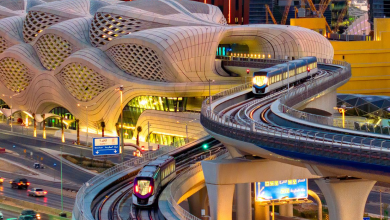
The conversation then shifted to regional integration, specifically the high-speed rail service currently linking the capitals of Saudi Arabia and Qatar. Al-Malik described the Riyadh–Doha train as the first of its kind in the region to connect two different countries. This 785-kilometer network serves Dammam and Hofuf while reaching impressive speeds of up to 300 kilometers per hour.
Furthermore, this project integrates air and rail travel by connecting King Salman International Airport with Hamad International Airport in Doha. This integration strengthens the economic and logistical ties between the two capitals and the major cities along the corridor.
SAR continues to champion the role of women within the transportation sector, particularly regarding the Haramain High Speed Railway. Al-Malik highlighted that Saudi women have demonstrated exceptional efficiency and skill while operating some of the world’s fastest trains.
“We launched training programs for Saudi women to operate high-speed trains, and we were very surprised by the strong turnout,” he shared.
Looking toward the future, SAR is currently developing the Eastern Railway Network to meet the growing demand for public transport. The organization plans to introduce a new fleet of trains to double the current passenger capacity by late 2027.