Saudi Arabia’s Public Health Authority (Weqaya) said it is closely monitoring developments related to the Ebola outbreak in the Democratic Republic of the Congo (DRC) and Uganda, as well as the Hantavirus, in coordination with international health organizations.
In light of this, Weqaya affirmed the full preparedness of Saudi Arabia’s epidemiological surveillance system and preventative protocols to handle any potential health risks and safeguard citizens, residents, and pilgrims.
According to Weqaya, strict health screenings and elevated readiness levels remain active at all border entries and medical facilities, complemented by robust tracking and public awareness campaigns.
To date, zero confirmed or suspected cases have been detected, and authorities emphasize that the health environment for Hajj pilgrims remains entirely secure and continuously monitored.
On May 17, 2026, the World Health Organization (WHO) declared the Ebola outbreak as a “Public Health Emergency of International Concern.”
In response to the evolving situation, Weqaya emphasized that the Kingdom’s precautionary measures regarding the DRC have been strictly enforced since July 2019, when entry visas from outbreak-hit zones were first suspended.
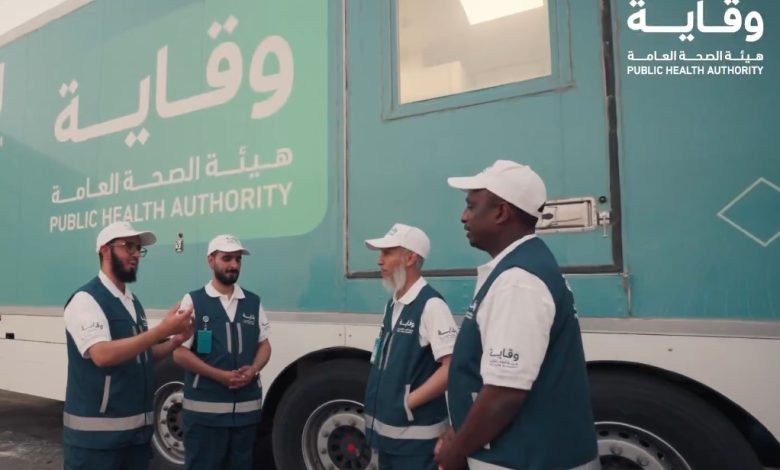
وحدات الأمراض المعدية المتنقلة تعزز جهود #وقاية في المشاعر المقدسة، ضمن منظومة وقائية متكاملة لخدمة ضيوف الرحمن.#حياكم_الله #حج_بصحة #هيئة_الصحة_العامة pic.twitter.com/KdPddkvUNt
— هيئة الصحة العامة (@Saudi_PHA) May 22, 2026
Additionally, Weqaya has issued heightened health guidelines that focus specifically on arrivals from neighboring nations, including Uganda, South Sudan, Rwanda, Burundi, Tanzania, and the Republic of the Congo.
Medical facilities stand fully equipped to manage suspected cases under verified guidelines, complemented by targeted daily health checks directly at the lodgings of pilgrims from these neighboring countries.
Meanwhile, Weqaya has classified the Hantavirus as a minimal risk to both the Kingdom and the Hajj season, maintaining active surveillance solely to ensure rapid response capabilities.
The authority has stressed it remains in constant coordination with both domestic and international agencies, tracking global health updates around the clock to implement any required preventative measures.