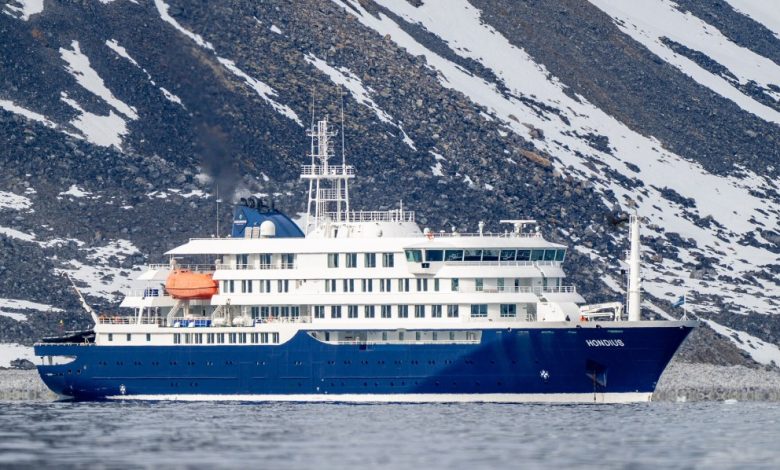
The hantavirus-hit cruise ship, MV Hondius, is closing in on the Canary Island of Tenerife, where Spanish health authorities will begin evacuation of passengers.
Meanwhile, the World Health Organization (WHO) reported six confirmed cases and two suspected cases tied to the Dutch-flagged ship, as more probable cases emerge elsewhere.
Hantavirus spreads by contact with rodents or their urine, saliva or droppings, particularly when the material is disturbed and becomes airborne. It can also spread between people in rare cases and cause serious respiratory illness.
Ship Evacuation
Spanish authorities are preparing to receive passengers and crew members aboard the MV Hondius cruise ship stricken by a suspected hantavirus outbreak.
Carrying more than 140 people, the ship is expected to arrive at the Spanish Canary Island of Tenerife, off the coast of West Africa, early on Sunday, according to Reuters.
“They will arrive at a completely isolated, cordoned-off area,” Spain’s head of emergency services, Virginia Barcones, said on Thursday.
Upon arrival, passengers and crew will undergo screenings before boarding special flights to their home countries under guidelines still being finalized by the WHO and other health agencies.
Furthermore, WHO Chief Tedros Adhanom Ghebreyesus is expected to arrive in Tenerife Island on Saturday to “ensure coordination between administrations, health control, and the application of the planned surveillance and response protocols,” AFP reported citing Spanish sources.
Outbreak Unfolding
The Dutch-flagged MV Honduis cruise ship left Argentina in March with over 140 passengers and 70 crew members on board. Its ultimate destination was Spain’s Canary Islands on the other side of the Atlantic.
The cruise ship made stops in the Antarctic Peninsula, the Falkland Islands, and other locations on its way to Cape Verde, an island nation in the Atlantic west of Africa, where some passengers showed severe respiratory illnesses that were first reported to the WHO on May 2.
At that time, 34 passengers had left the ship, which briefly docked at Cape Verde before departing for Canary Islands on May 6.
According to the WHO, the initial infection likely occurred during travel in Argentina and Chile, later spreading among passengers once the ship departed.
Reported Cases
The WHO has put the tally of people who caught illness on board the cruise ship at eight, including six confirmed hantavirus cases and two suspected cases. Out of this figure, three cases have died – a Dutch couple and a German national.
Four other confirmed cases include two Britons, a Dutch person and a Swiss national, who are receiving treatment at hospitals in the Netherlands, South Africa and Switzerland.
The cruise operator, Oceanwide, said there were 17 US nationals onboard. In light of this, the Centers for Disease Control and Prevention (CDC) said it is closely monitoring the situation and plans to evacuate American passengers aboard the ship on a “medical repatriation flight” to Omaha, where they will be quarantined at the University of Nebraska.
Virus Spread
More recently, two suspected cases were reported in Spain and the south Atlantic island of Tristan da Cunha, raising concerns over the spread of the virus.
Hantaviruses are zoonotic viruses that naturally infect rodents and can occasionally spread to people.
Here’s what you need to know about #hantavirus: What they are, how they spread, the symptoms, and how to prevent infection pic.twitter.com/pduUjlwl2j
— World Health Organization (WHO) (@WHO) May 8, 2026
Spanish health authorities said that a woman showed symptoms consistent with a hantavirus infection after sitting near an infected Dutch cruise passenger on a plane.
Meanwhile, Britain’s Health Security Agency said that a British man was suspected of having hantavirus on Tristan da Cunha, the world’s remotest inhabited island where the MV Hondius made a stop from April 13-15.
No High Risk of Outbreak
According to tests conducted to reported cases aboard the cruise ship, the outbreak involves the Andes virus, which is common in South America and is the only strain to reportedly have person-to-person transmission through close and prolonged contact.
WHO puts the fatality rates among infected people in the US at up to 50%. However, the UN health organization’s officials have downplayed the risk of hantavirus outbreak to the general public as the virus is not transmitted easily.
“This is a dangerous virus, but only to the person who’s really infected, and the risk to the general population remains absolutely low,” WHO spokesman Christian Lindmeier told reporters on Friday, adding that “the virus is not that contagious that it easily jumps from person to person.”
Similarly, WHO technical officer for viral threats Anais Legand said that the risk is low. “Based on the dynamics of this outbreak, based on how it is spreading and not spreading amongst the people on the ship, the people who have disembarked, as well, we continue to consider the risk as low for the general population,” the official said in an online briefing.
Saudi Arabia Safe
Saudi Arabia’s Public Health Authority (Weqaya) affirmed that the risk of hantavirus entering the Kingdom remains very low, according to the Saudi Press Agency (SPA).
Weqaya said it is closely monitoring the situation concerning hantavirus infections aboard the cruise ship, in coordination with international health authorities.
“Current assessments indicate a low risk level and a very low probability of the virus entering Saudi Arabia,” Weqaya stressed, citing the Kingdom’s early warning systems, epidemiological surveillance tools, and strong border monitoring systems.
In this context, the Saudi health authority urged travelers to adhere to general preventive measures, follow health guidelines issued by official authorities, and maintain food and water safety as well as personal hygiene.
It also advised travelers to avoid contact with rodents and unsafe environments and to have adequate health insurance coverage during their travel.