Saudi Arabia Is Building the Middle East’s Next Tourism Powerhouse
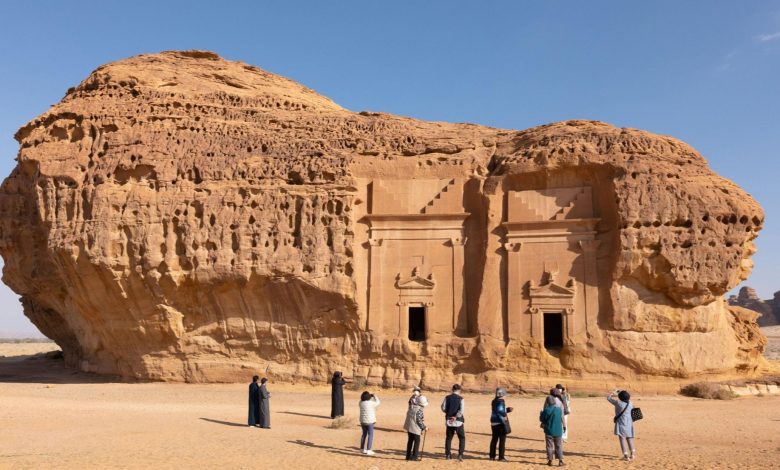
Saudi Arabia’s tourism drive is steadily transforming into one of the most striking embodiments of Vision 2030.
Saudi Tourism Enters a New Growth Era
The Kingdom is currently undergoing a new chapter of tourism growth, with the sector anticipated to expand dramatically over the next decade as investment accelerates and major destinations are taking shape.
Fueled by the objectives of Saudi Vision 2030, a diverse lineup of tourism projects is reshaping the Kingdom’s landscape while creating new opportunities across hospitality, infrastructure, transportation, entertainment, and destination development.
In the light of these efforts, tourism is emerging as a strategic pillar of Saudi Arabia’s economic diversification, reinforcing the Kingdom’s position at the center of the Middle East’s rapidly evolving tourism industry.
How Big Is Saudi Arabia’s Tourism Bet?
To capture a glimpse into the scale of Saudi Arabia’s tourism ambitions, the World Travel & Tourism Council (WTTC), in its latest Economic Impact Research: Global Trends Report, puts Travel & Tourism’s contribution to the Kingdom’s GDP at approximately 14.1 percent.
Remarkably, this momentum clearly signals a broader regional shift, as Middle Eastern governments are investing heavily in tourism infrastructure, connectivity, destination development, and visitor experiences to diversify their economies.
Yet Saudi Arabia’s leading drive stands out for its scale and pace. As a testament, Travel & Tourism investment in the Kingdom surged to19.4 percent in 2025, driven by Vision 2030, investor-friendly reforms, and an expanding pipeline of major tourism projects designed to draw capital from both domestic and international investors.
Can the Middle East Become the World’s Tourism Growth Leader?
The region’s tourism projections reflect a decade of resilience and accelerating growth.
While the Middle East is challenged by short-term disruptions, the WTTC expects its travel and tourism industry to become stronger, retaining its position among the world’s most dynamic tourism markets.
More tellingly, the Middle East is poised to become the world’s fastest-growing travel and tourism region between 2026 and 2036, with the sector’s GDP forecast to expand at an annual rate of 6.3 percent and reach $605 billion by 2036.
This outlook underscores the potential diversity of opportunities and the pivotal role of tourism as a catalyst for the region’s economic future.
Saudi Tourism Sets Its Sights on the World
The next decade is expected to bring an even greater inflow of international spending into Saudi Arabia’s tourism economy.
More boldly, the WTTC anticipates that international visitor spending in the Kingdom will more than double as a natural consequence of the rapid expansion of the sector and the continued development of destinations, infrastructure, transportation networks, and visitor experiences.
In addition to fostering tourism revenues, this growth is solidifying the sector’s vital role in Saudi Arabia’s broader economic vision for cutting oil dependency, diversifying its economy, and increasing its contribution to GDP.
Enhancing this momentum, major projects, high-profile events, and an expanding portfolio of destinations are effectively translating the ambitions of Saudi Vision 2030 into a tourism ecosystem capable of drawing large numbers of visitors from around the world.
What Gives Saudi Tourism Its Long-Term Edge?
What sets Saudi Arabia’s tourism transformation apart is not just the accelerating pace of growth, but the outstanding long-term strategy that fuels it.
In this context, the WTTC notes that the Kingdom’s sustained investment encounters short-term disruptions with greater resilience and thoughtful visions, paving the way for continued tourism growth through 2036.
Saudi Arabia has been firm in taking this ambition to an exceptional scale. Travel and Tourism investment grew by 19.4 percent in 2025, underpinned by Vision 2030, investor-friendly reforms, and an extensive pipeline of tourism projects.
Can Middle East Tourism Withstand Geopolitical Shocks?
Despite the mounting challenges disrupting the region, the Middle East’s tourism sector has repeatedly proved its ability to withstand challenges.
Gloria Guevara, President & CEO of the WTTC, underscored this resilience, emphasizing that Travel & Tourism remains particularly sensitive to any geopolitical developments.
“The Middle East is facing a challenging period, and Travel & Tourism is often among the first sectors to feel the impact of geopolitical disruption. But history repeatedly shows that our sector is remarkably resilient, and few regions have demonstrated that resilience more clearly than the Middle East,” Guevara said.
Related Topics:
Desert Skies Unlocked: How RSG Drives Saudi Arabia’s New Era of Astrotourism
Saudi Tourism Boom: Turning Regional Turmoil into Domestic Economic Resilience
Jeddah Rises as Key Sports, Tourism Hub during AFC Champions League Elite Knockouts