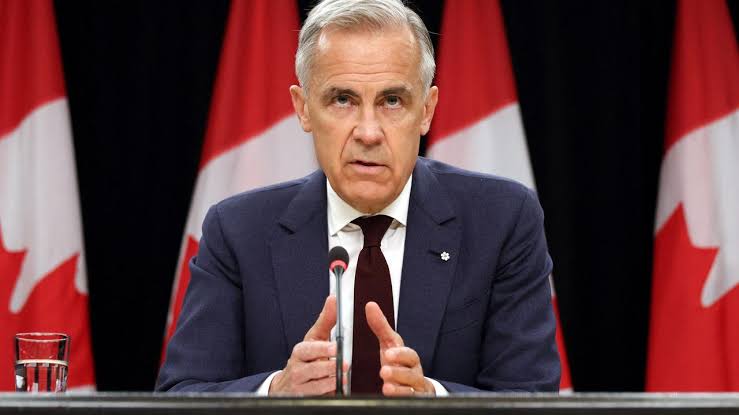
Canadian Prime Minister Mark Carney will travel to Saudi Arabia from 8 to 10 July, marking the first visit by a Canadian premier to the Kingdom in 26 years. The trip follows his participation in the NATO Summit in Ankara and therefore carries considerable symbolic and strategic weight for both nations.
In Riyadh, Carney will hold his first in-person meeting with Crown Prince and Prime Minister Mohammed bin Salman. Consequently, the two leaders aim to deepen cooperation across energy, critical minerals, defence, infrastructure, and investment.
As Carney previously put it, “Canada and Saudi Arabia have important opportunities to deepen our partnership and advance economic growth, regional security, and global stability.”
Why Carney’s Saudi Visit Matters
The visit builds on a deliberate, months-long strengthening of ties. Ottawa restored full diplomatic relations with Riyadh in 2023 and has since sent a steady stream of senior officials to the Kingdom, including Trade Minister Maninder Sidhu in January, AI Minister Evan Solomon in February, and Foreign Minister Anita Anand in March.
Notably, relations warmed further after Canada recognised the State of Palestine last September, alongside the UK, France, Australia, and Portugal. Saudi Arabia publicly welcomed the move, and Riyadh had co-hosted, with Paris, the UN conference on the two-state solution that accompanied the wave of recognitions. This shared alignment on the Palestinian question has since become an important pillar underpinning the broader Canada-Saudi relationship.
Carney has also increasingly positioned the Gulf at the center of Canada’s foreign policy, having already visited Qatar and the UAE over the past year, and having praised Saudi Arabia’s role in urging restraint and de-escalation during a period of heightened regional tension.
Deepening Economic and Defence Ties
Trade sits at the heart of the visit, as Saudi Arabia is Canada’s second-largest Gulf trading partner, with bilateral commerce reaching $3.5 billion in 2025. Consequently, officials aim to expand cooperation across several priority sectors, including mining, artificial intelligence, cleantech, agriculture, tourism, infrastructure, and life sciences.
Notably, Canada’s expertise in clean energy and AI aligns closely with the kingdom’s Vision 2030 diversification goals, opening the door to potential joint ventures in green energy and advanced manufacturing.
Defence cooperation will also feature prominently on the agenda. Ottawa recently launched its Defence Industrial Strategy and is advancing the new Defence, Security and Resilience Bank, an institution designed to mobilise private capital for collective security.
Carney underscored this ambition directly, stating that “Canada is rebuilding, rearming, and reinvesting in the Canadian Armed Forces,” and adding that “Canadian leadership is no longer defined by just the strength of our values, but also by the value of our strength.” His government has simultaneously met NATO’s 2% defence spending target for the first time since the Cold War ended, while working toward the alliance’s new 5% target by 2035.
A Milestone Partnership
Ultimately, Carney’s Riyadh trip represents far more than a courtesy call. Instead, it signals Canada’s clear intent to position itself as a trusted, reliable partner for Saudi Arabia at a moment when both countries are actively broadening their global alliances. Given the scope of investment and cooperation under discussion, analysts expect the visit to pave the way for enhanced energy security agreements and closer people-to-people ties between the two nations.
Looking ahead, this landmark visit establishes a modern framework for future collaboration. Both countries are moving decisively past old friction points to build a resilient, mutually beneficial alliance, one that could shape the trajectory of Canada-Gulf relations for years to come.