On June 13, 2025, Israel launched a surprise attack on Iran to eliminate its nuclear program and prevent it from acquiring a nuclear weapon. As a result, both countries exchanged intensified aerial and missile attacks for 12 days.
Then on June 22, the US intervened in the conflict by striking three nuclear facilities in Iran, namely Fordo, Natanz and Isfahan, using bunker-buster bombs and Tomahawk missiles.
Although the US President, Donald Trump, has insisted that the US strikes had set Tehran’s nuclear program back “decades,” adding that Iran’s key nuclear enrichment facilities have been “completely and totally obliterated,” there are reports suggesting the Israeli and US strikes have not completely destroyed Iran’s nuclear program.
In this context, the Former Senior Military Advisor to US Department of State, Colonel (Ret.) Abbas Dahouk, said that the US strikes caused massive damage to Iran’s nuclear program but has not completely destroyed the program, emphasizing that the Iranian nuclear issue will be settled through negotiations.
US Strikes Impact
Speaking to Al-Arabiya, Col. Dahouk pointed to the damage inflicted by the US strikes on Iran’s nuclear sites. “It seems like the political messaging from all parties go beyond realty on the battlefield,” he said.
“The US strikes on three nuclear sites, Fordo, Natanz and Isfahan, were highly effective and managed to undermine these sites. The US used the most powerful non-nuclear weapon in the world,” Col. Dahouk noted.
“There is a massive damage, but when we talk about the entire Iranian nuclear program, it has not been completely destroyed. There is no way to destroy knowledge or ideology by military power,” he added.
Return to Negotiations
Col. Dahouk said that the only way to resolve Iran nuclear issue is through negotiations. “All this has to come to the negotiating table. Battles do not end on battlefields, they end on the negotiating table,” he noted.
“The US will win if Iran returns to negotiations to reach some sort of a deal. Trump may agree to something like that, but it seems that Israel perhaps may have a veto to this process because it wants to completely destroy Iran’s nuclear program. So, we will see the outcomes of the next round of negotiations,” Col. Dahouk said.
New Round of Talks
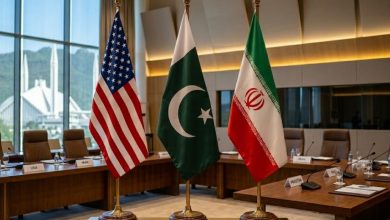
Washington is preparing for the first direct meeting with Tehran since the US strikes on Iran’s nuclear sites, in Oslo next week, Axios reported citing two American officials. The US Special Envoy, Steve Witkoff, will meet with the Iranian Foreign Minister, Abbas Araghchi, to resume talks.
Commenting on the choice of Oslo as the location for the talks, Col. Dahouk, said: “I think, not exactly sure why in Oslo, maybe because it is a neutral location and both parties agreed to it. The most important thing here is war and peace.”
He pointed to the importance of building trust between the US and Iran. “The most important thing is trust, which must be established between the US and Iran in the diplomatic process. We have to wait and see what Iran will agree to after the 12-day war, which has not ended in any form. There is a ceasefire, which means a temporary pause in the war and each party may be regrouping and assessing its position. We have to wait and see what Iran will agree to from the US’ terms,” he said.
Iran’s Calculations
Asked about Iran’s insistence on not compromising and coming to the negotiating table, Col. Dahouk said that it depends on Iran’s calculations. “It is up to Iran. They are the only ones who can provide the reasons behind all this, and their calculations and ideologies,” he said.
“But the Iranian regime knows what happened to other countries when they gave up their nuclear capabilities, such as Libya, Ukraine, Iraq and Syria. It also knows what happened to countries which kept their nuclear programs, such as Pakistan and North Korea,” he added.
“Therefore, they consider the nuclear program the last line of defense and once they lose it, they will lose a lot of political and deterrence capabilities. This could end the Iranian regime. If the regime wants to protect itself, it must protect the nuclear capabilities. This is what they are fighting for,” Col. Dahouk said.
Resumption of War
Regarding the possibility of the resumption of war between Iran on one side and the Israel and the US on the other side, the Former Senior Military Advisor to US Department of State expected this could happen if negotiations failed.
“We are in a ceasefire. And during ceasefires, warring parties regroup and rearrange their political and economic capabilities. If the talks are not held, there might be another strike or more attacks,” Col. Dahouk noted.