Digital Breadcrumbs: Phone Data Exposes Colombian Mercenaries in Sudan’s War: Report

A groundbreaking report has revealed that a network of Colombian mercenaries backed by the United Arab Emirates provided critical military support to Sudan’s paramilitary forces, enabling the Rapid Support Forces (RSF) to capture the city of El-Fasher last year.
The Conflict Insights Group (CIG) conducted the investigation by tracking the mobile phone data of these foreign fighters. While the UAE denies supporting the RSF, this data provides the first concrete evidence of a direct link to Abu Dhabi.
Security analysts followed over 50 mobile phones belonging to Colombian operatives between April 2025 and January of this year. “This is the first research where we can prove UAE involvement with certainty,” says CIG director Justin Lynch. Consequently, the report details a logistics pipeline stretching from Emirati training facilities to the front lines of Darfur.
The investigation shows mercenaries involved with drones traveling from a UAE base to Sudan before the fall of El-Fasher. Furthermore, these operatives even named their private wi-fi networks after their specific units, linking them to UAE-operated companies. Colombian President Gustavo Petro previously called these men “spectres of death” and described their recruitment as a form of human trafficking.
Digital Footprints in the Desert
Investigators tracked one specific device from Colombia to Abu Dhabi’s Zayad International Airport before it arrived at a training facility. Later, that same phone traveled to the RSF capital of Nyala and logged into a network named “ANTIAEREO.” Analysts discovered more than 40 Spanish-language devices in this hub, where mercenaries serve as drone pilots and artillery instructors.
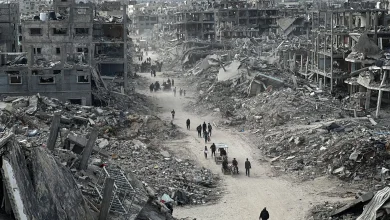
The fall of El-Fasher involved mass atrocities that UN investigators described as bearing the unmistakable “hallmarks of genocide.” The CIG report argues that the UAE-Colombian network bears shared responsibility for these outcomes. “The scale of atrocities wouldn’t have happened without the drone operations the mercenaries provided,” Lynch explains regarding the brutal 18-month siege.
The mercenaries operate as part of the “Desert Wolves” brigade, led by a retired and sanctioned Colombian army colonel. Evidence suggests a UAE-based company with ties to senior government officials employs and pays these specialized foreign fighters. Despite the mounting evidence from digital tracking and satellite imagery, the Emirati government continues to reject these “unfounded allegations.”
International observers agree that foreign intervention remains the primary driver of Sudan’s catastrophic and expanding civil war. Meanwhile, the US Treasury Department has sanctioned Colombian nationals for these activities but has not yet formally blamed Abu Dhabi.