By: Dr. Atef Alshabrawy
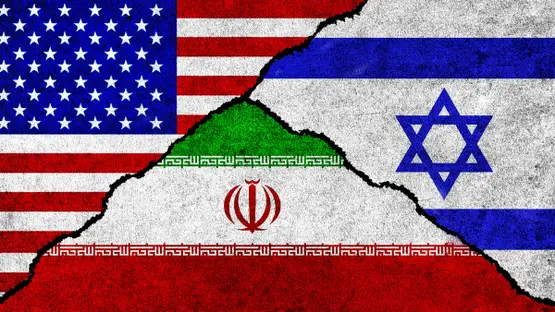
The ongoing conflict between the United States and Israel on one side, and the Islamic Republic of Iran on the other—a war into which the Gulf Cooperation Council (GCC) states have been involuntarily drawn—represents a rare instance of multi-party warfare with no clear objectives or stakes for most of its parties.
On one side, the two aggressors, the United States and Israel, have struggled to introduce a specific rationale for their actions, instead relying on unconvincing pretexts and presenting the campaign as “preemptive strikes.”
This strategy has deep historical roots, dating back to 1685, when Britain launched attacks against rebels in the US under the guise of preemptive self-defense. Over time, the concept became closely linked to US military policy, particularly in the aftermath of September 11, 2001, when the United States launched attacks on several countries citing the prevention of imminent threats. This doctrine lies completely outside the framework of international law and has no legitimate legal foundation.
On the other side, Iran has been unable to justify its blatant aggression against the Arab Gulf states, or its apparent license to target civilians and civilian infrastructure in neighboring, brotherly Muslim countries, thereby drawing the Gulf states into the conflict.
This was compounded by the dual betrayals of both sides: the United States, which attacked Iran despite repeated warnings from Gulf leaders, and Iran, which targeted the Gulf states as adversaries despite the historic March 2023 agreement—brokered under Chinese auspices—to resume diplomatic relations and reopen embassies between Saudi Arabia and Iran. This agreement represented a milestone and a major shift after years of estrangement.
These hostilities unfolded despite extensive efforts by GCC countries, especially Qatar and the Sultanate of Oman, to mediate with the West and to dissuade the United States from engaging in what became the “Twelve Days’ War” in June 2025, marked by a direct and unprecedented military confrontation between Israel and Iran.
However, the United States entered the conflict this time, ignoring repeated calls for de-escalation, and in doing so, plunged the region into a devastating war that has an unpredictable scale.
Despite the great destruction caused by Iran’s blatant aggression against the GCC countries—both in human and material losses, including damage to civilian, defense, and energy infrastructure—winning the war and controlling the course of the conflict are no longer the main focus.
Today, everyone is thinking about how to handle “the day after” the fighting ends, and how to leverage from the lessons and consequences of this conflict.
Firing—and then silencing—cannons across a region the size of the Arabian Gulf is no easy matter and should not be taken lightly. This region carries immense global cultural and economic significance, mirrored not only in the Gulf’s leadership in energy and oil, but also in its growing role in global investment, emerging technologies, artificial intelligence, massive data centers, and tourism.
Halting the bombings in the GCC countries should not be seen as merely a truce, but as a moment of reckoning, compelling Gulf capitals to undertake a comprehensive and bold review of their strategic options. Wars, with all their tragedies, offer a rare opportunity to rearrange the internal affairs of the country.
Compiling a list of lessons and priorities for the region’s leaders in the “day after” the guns fall silent is no easy task, since the war has been imposed on the Gulf states unexpectedly, taking everyone by surprise.
Therefore, many aspects must be taken into consideration—not only defensive readiness, which showed capabilities that even the West had underestimated, but also inter-state and international relations.
The post-war phase calls for a deep review of four vital areas:
Purifying Inter-Gulf Relations: This requires addressing past grievances and resolving disputes. If fragmentation remains a vulnerability that allows crises to emerge, then a “Gulf Union” becomes not only more likely but an existential necessity, with a special focus on both economic and defense integration.
Purifying Regional Relations: Realizing that geography is an unchangeable reality, relationships with neighboring countries—such as Iran, Turkey, and others—must be based on equality, mutual respect, and direct economic interests with the GCC, rather than dictated by alliance politics.
Purifying International Relations: The war revealed the diminished priority the United States places on the security of Gulf citizens. This fact requires a shift from the role of “security consumer” to that of “strategic partner.”
Gulf countries must reposition themselves as economic powers capable of shaping the terms of the emerging world order away from traditional dependencies. This is particularly urgent in light of China’s rise and Russia’s success in its war with Ukraine, which together are reshaping the global balance of power after five decades of US-dominated structures.
Developing a Self-Reliant Regional Security System: The GCC countries are among the world’s major centers for energy, oil, investment, transportation, and logistics. They are global players in industries such as aluminum, steel, petrochemicals, fertilizers, and gold production. Moreover, they serve as hubs for travel and tourism and are home to millions of expatriate workers.
This vast spectrum of activities demands security and stability, which can only be ensured through a robust risk-management and protection system. A strong deterrent, supported by advanced offensive weapons and missile capabilities like those possessed by the region’s countries, is equally vital.
While all GCC members have signed on the Treaty on the Non-Proliferation of Nuclear Weapons, while upholding international law, and seeking to establish a zone free of weapons of mass destruction, this does not prevent them from maintaining the weapons necessary to safeguard their citizens and deter any potential aggressor.
Recent conflicts have shown that “external alliances” founded solely on military grounds or aimed at countering regional actors often cause more tension than stability.
In the post-war era, GCC leaders must embrace a “zero-crisis” vision, distancing themselves from alliances that turn the region into a stage for settling international scores. While such alliances may provide temporary protection, they compromise sovereignty and leave the region vulnerable to the fluctuations of Washington or other Western capitals.
The alternative is to establish “a self-reliant regional security system,” anchored in Gulf forces, fostering direct dialogue with neighboring countries, and turning hostilities into fair and constructive economic competition.
The day after the guns fall silent should not see budgets simply redirected toward arms and weapons purchases under the same old logic. Instead, it should witness large investment in people, technology, and the development of self-defense systems for the GCC countries.
If the GCC has already achieved a high level of social welfare and built a stable social contract based on citizenship and public services, then the true guarantee against a recurrence of such externally imposed wars lies in a shift toward self-empowerment, regional integration, unity, and innovation in both policy and tools.
To conclude, while the guns may fall silent by the political decisions of those who fired them, true peace in the Arabian Gulf will depend on the courage of Gulf leaders to abandon failed partnerships and destructive alliances. Instead, they must pursue strategies that unleash the region’s own strategic capabilities and build a strong Gulf Union, leading the region into a new era of sovereignty and stability. Today, the Gulf has a historic opportunity to become the “heart of the world,” pulsing with progress, rather than a “powder keg” waiting to ignite.
Related Topics:
Iran Apologizes to Gulf Neighbors, Defies Trump’s ‘Unconditional Surrender’ Demand
Gulf Energy Crisis: Qatar Warns of Global Supply Collapse as War Escalates
Iran to Target US-Israeli Financial Interests as UNSC Moves to Condemn Gulf Attacks