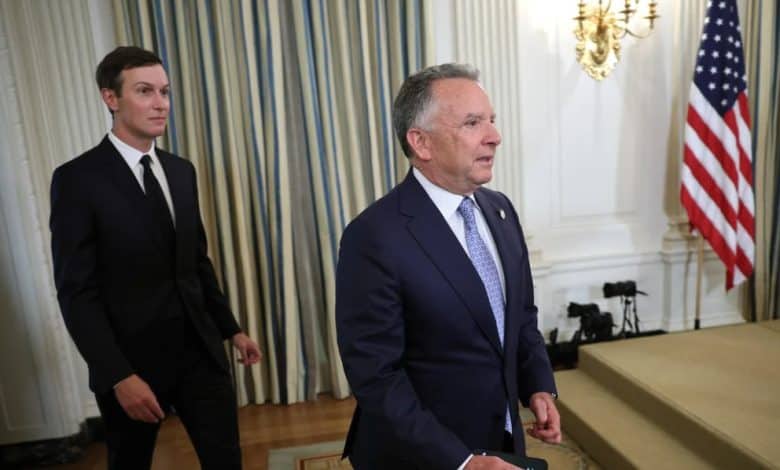
US Special Envoy, Steve Witkoff, and Donald Trump’s son-in-law, Jared Kushner, visited Israel on Monday and met with Prime Minister, Benjamin Netanyahu, in an attempt to shore up the ceasefire in Gaza.
The visit followed the recent violence flare-up, threatening the fragile deal between Hamas and Israel and highlighting obstacles to the next phases of Trump’s 20-point peace plan.
US Diplomatic Pressure
Witkoff and Kushner arrived in Israel on Monday to bolster the shaky ceasefire agreement and to follow up on the implementation of the peace plan’s second phase.
The visit came a day after Israel launched airstrikes on Gaza, accusing Hamas of killing two Israeli soldiers in Rafah. However, it was scheduled before the outbreak of violence, Reuters reported citing US and Israeli sources.
During their meeting with Netanyahu, they discussed “developments and updates in the region,” according to a spokeswoman for the Israeli Prime Minister’s Office. She did not provide further details about the meeting.
As the architects of the Gaza ceasefire agreement, Witkoff and Kushner’s visit to Israel is part of a concerted diplomatic effort to keep the fragile deal from collapsing.
Moreover, the US Vice President, JD Vance, and his wife are due to arrive in Israel on Tuesday and will stay for a few days, during which they will meet with Netanyahu, the spokeswoman said. The Israeli Prime Minister noted that he and Vance will discuss “regional challenges and opportunities.”
Trump’s Renewed Threats
The US President, Donald Trump, renewed his warnings to Hamas if it violates the ceasefire deal while giving them a chance to honor the agreement.
“We made a deal with Hamas that they’re going to be very good, they’re going to behave, they’re going to be nice. And if they’re not, we’re going to go and we’re going to eradicate them, if we have to. They’ll be eradicated, and they know that,” he told reporters at the White House on Monday.
He also threatened Hamas with consequences if they did not stop violence against rivals. “They got very rambunctious, and they did things that they shouldn’t be doing, and if they keep doing it, then we’re going to go in and straighten it out, and it’ll happen very quickly and pretty violently,” Trump said.
He suggested that dozens of countries that have agreed to join an international stabilization forces for Gaza would “love to go in” and handle the situation, as well as Israel.
“But right now, we haven’t said that. We’re going to give it a little chance, and hopefully there will be a little less violence. But right now, you know, they’re violent people,” he noted.
Hamas Delegation in Cairo
A delegation led by Hamas senior official Khalil al-Hayya arrived in Cairo on Monday to meet with officials from mediator countries Egypt and Qatar to discuss the next phases of the ceasefire agreement.
The talks involve the formation of a technocratic body to run Gaza without the participation of Hamas, according to a Palestinian official.
Al-Hayya reaffirmed Hamas’ commitment to the ceasefire deal. “The Gaza agreement will hold, because we want it to and our will to abide by it is strong,” he told Egypt’s Al-Qahera News.
Trump’s peace plan for Gaza involves the formation of an international technocratic body to run the Strip and the disarmament of Hamas.
However, Hamas insists on a Palestinian-led transitional body and its leaders have long rejected calls for laying down arms – raising uncertainty over the plan’s next phases.
Ceasefire at Risk
On Sunday, violence erupted in Gaza after the Israeli military accused Hamas fighters of launching an anti-tank missile and firing at its troops in Rafah city, killing two soldiers.
The Israeli military responded by launching a wave of airstrikes across the enclave, striking Hamas targets including field commanders, gunmen, a tunnel and weapons depots. The strikes killed 44 Palestinians, according to Gaza’s health authorities.
In an address to the Israeli Knesset on Monday, Netanyahu said that Israel dropped 153 tons of bombs on Sunday on targets in Gaza.
However, Hamas and its military wing, the Al-Qassam Brigades, emphasized their commitment to the ceasefire agreement, saying they were unaware of clashes in Rafah and had not been in contact with groups there since March.
Later on, the Israeli military said that it would resume the enforcement of the ceasefire and an Israeli security official confirmed that aid into Gaza would resume on Monday under US pressure.