The US President, Donald Trump, laid out on Monday a 20-point peace plan for Gaza, which got the support of the Israeli Prime Minister, Benjamin Netanyahu, as well as key Arab and world leaders.
The plan, which Trump called a “Comprehensive Plan to End the Gaza Conflict,” proposes an immediate end to Israeli military operations in Gaza, the release of the remaining hostages within 72 hours, and the demilitarization of Hamas. It also calls for a temporary governing authority to run the enclave and leaves the door open for an eventual Palestinian State.
20-Point Peace Plan
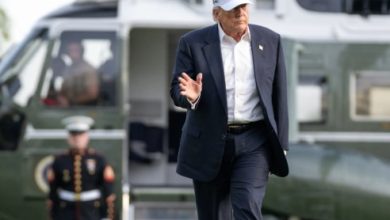
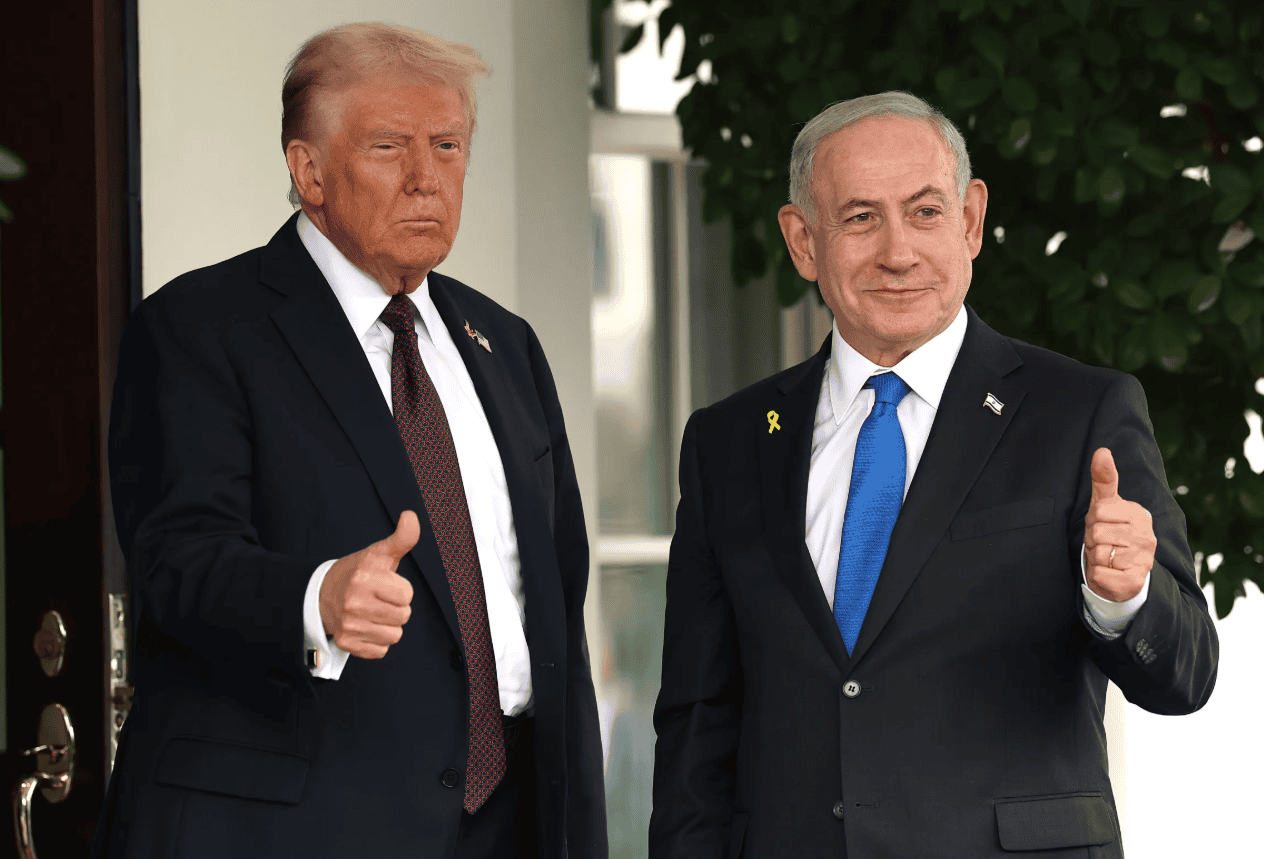
The plan was announced following a meeting between Trump and Netanyahu at the White House. Speaking at a joint press conference, Trump said it was a “historic day for peace,” warning that if Hamas does not accept the plan, Israel will have US backing to “finish the job of destroying the threat of Hamas.”
The new roadmap, published by the White House, calls for an immediate end to the war and the “deradicalization” of Gaza into a “terror-free” zone that does not pose a threat into Israel. The Strip will also undergo a redevelopment process for the benefit of its people.
Ending the War
Once put into effect, Israel will suspend all military operations and begin a gradual withdrawal to the agreed upon lines. Meanwhile, all hostages, alive and deceased, will be returned within 72 hours, in exchange for hundreds of Palestinian prisoners.
The plan allows Hamas members who want to give up their arms and peacefully co-exist to remain in Gaza and receive amnesty. It also provides safe passage for Hamas members who want to leave the enclave.
Humanitarian aid to the Strip will increase and be distributed through the UN and its agencies, and the Red Crescent, in addition to other international institutions not affiliated with either party.
Gaza Governance
Under the plan, a “Board of Peace” will be formed to govern Gaza temporarily, headed by Trump alongside other members and heads of State, including Former British Prime Minister, Tony Blair.
This international transitional body will oversee a technocratic, apolitical Palestinian committee – made up of qualified Palestinians and international experts – which will handle delivering the day-to-day running of public services and municipalities for the people in Gaza.

Moreover, it will establish the framework and manage the funding for the Strip’s redevelopment until the completion of the Palestinian Authority (PA) reform program, in line with Trump’s peace plan in 2020 and the Saudi-French proposal.
The plan explicitly states that Hamas will not have any role in Gaza’s governance in any form and their military infrastructure, including tunnels, will be destroyed. The enclave will also be demilitarized under the supervision of independent monitors. Regional partners will provide a guarantee that Hamas complies with its obligations and Gaza poses no threat to its neighbors.
Maintaining Security
The US, Arab and international partners will cooperate to form a temporary International Stabilization Force (ISF) for immediate deployment in Gaza. The ISF will train and provide support to vetted Palestinian police forces in Gaza, and will consult with Jordan and Egypt who have extensive experience in this field. This force will be the long-term internal security solution.
Most importantly, the plan assures that Israel will not occupy or annex Gaza. It also states that no one will be forced to leave Gaza, and those who wish to leave will be free to do so and free to return.
As the ISF establishes control and stability, the Israeli military will progressively hand over the Gaza territory it occupies to the ISF according to an agreement they will make with the transitional authority until their complete withdrawal from Gaza. This excludes a security perimeter presence that will remain until Gaza is properly secure from any resurgent terror threat.
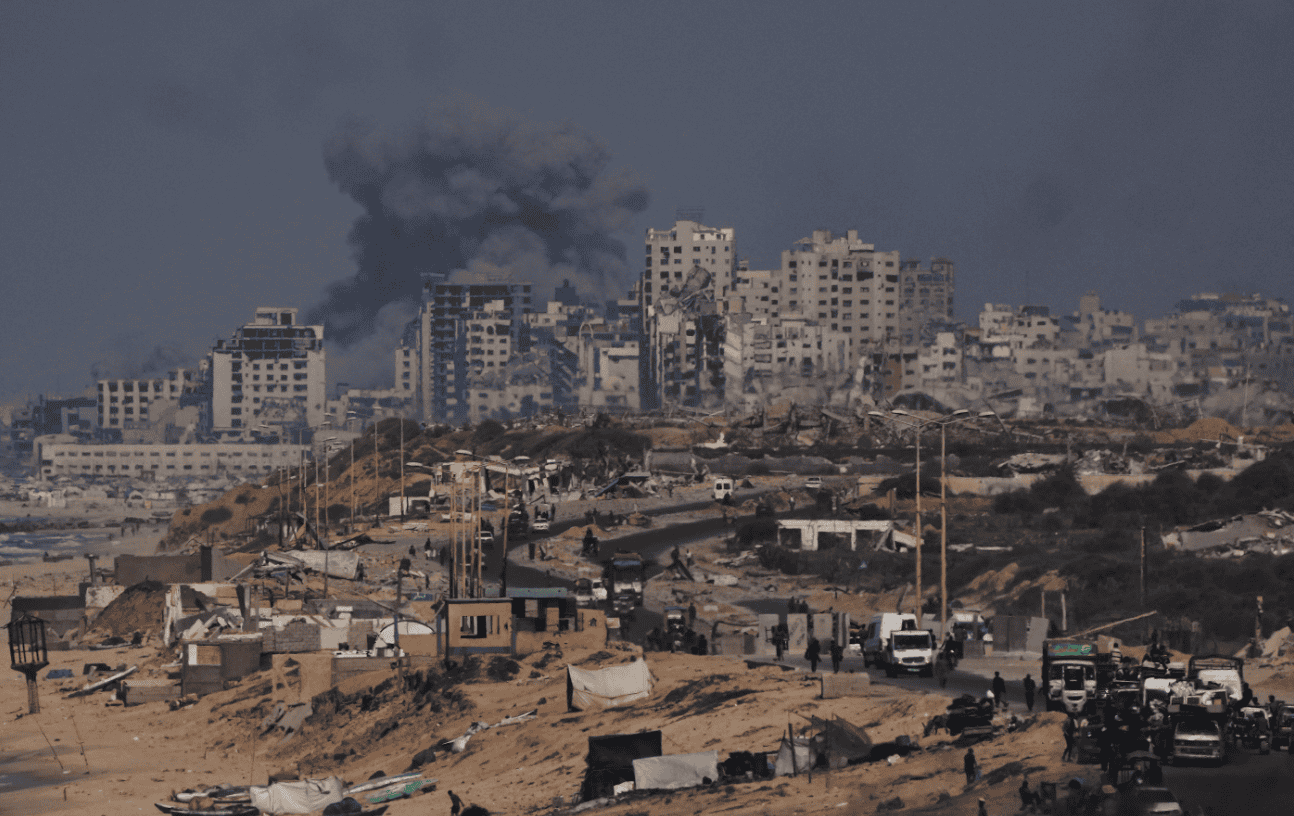
Upon the completion of the PA reform program, the plan says that the conditions may finally be in place for a credible pathway to Palestinian self-determination and statehood.
Economic Development
For the economic development of Gaza, the plan calls for the creation of a panel of experts who will consider several thoughtful investment proposals and exciting development ideas submitted by well-meaning international groups to synthesize the security and governance frameworks to attract and facilitate these investments that will create jobs, opportunity, and hope for future Gaza.
Furthermore, a special economic zone will be established under the plan, with preferred tariff and access rates to be negotiated with participating countries.
Finally, the US will establish a dialogue between Israel and the Palestinians to agree on a political horizon for peaceful and prosperous co-existence.
Israel & Hamas Responses
During a joint press conference, Netanyahu voiced support for the plan, but warned that “Israel will finish the job by itself,” if Hamas rejects the proposal or acts counter to it. He also rejected any role of the PA in ruling Gaza “without undergoing a radical and genuine transformation.”
On the other hand, Hamas has not given its official response. According to a person familiar with the matter, quoted by the Associated Press (AP), Qatar’s Prime Minister and Egypt’s intelligence chief shared Trump’s plan Monday evening with Hamas negotiators. The Hamas negotiators said they would review it in good faith and provide a response.
Meanwhile, the PA commended the plan, renewing its “joint commitment to work with the United States, regional states, and partners” to end the war on Gaza, ensure sufficient delivery of humanitarian aid to Gaza, and the release of hostages and prisoners,” it said in a statement.
Arab & Global Reactions
Following the release of Trump’s peace plan, the foreign ministers of Saudi Arabia, Egypt, Qatar, the UAE, Jordan, Türkiye, Indonesia, and Pakistan welcomed Trump’s “leadership and his sincere efforts to end the war in Gaza.” They stressed readiness to work with the US to finalize and implement the agreement, which they said should lead to a “two state solution, under which Gaza is fully integrated with the West Bank in a Palestinian state.”

The UK Prime Minister, Keir Starmer, praised the plan, calling on all sides to cooperate with the US administration to finalize the agreement. Similarly, French President Emmanuel Macron said that France is ready to contribute to peace efforts to end the war.
Italy’s Prime Minister, Georgia Meloni, urged all parties to seize this opportunity and accept the plan, which “could represent a turning point in this process,” she said in a statement.
The European Council President, Antonio Costa, urged all parties to “seize this moment to give peace a genuine chance.” Meanwhile, Tony Blair, who will take part in Gaza’s transitional governance body, described the plan as “bold and intelligent.”