
The US President, Donald Trump, on Saturday ordered a “decisive and powerful” military action against the Houthis in Yemen.
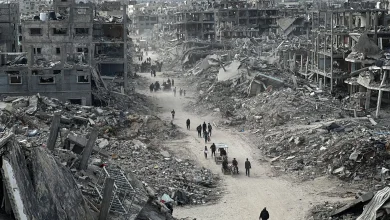
The US strikes have so far killed at least 31 people and injured 101 others, Reuters reported citing the Houthi-run health ministry.
US Strikes against Houthis
Trump cited the Houthi attacks against US ships, aircraft and drones as the main drive behind the military campaign. In a post on his Truth Social platform, the US President told the Houthis that their “time is up,” warning them that if they do not stop their attacks “hell will rain down upon you like nothing you have never seen before.”
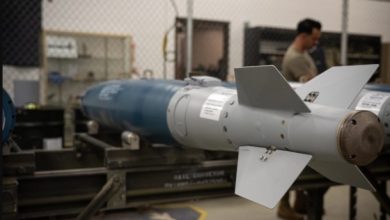
The US President noted that Washington will not tolerate the Houthi attacks on American vessels, saying that the US will use “overwhelming lethal force” to achieve its objectives. This includes aerial strikes on the Houthis’ bases, leaders and missile defenses, he added.
More power against Houthis
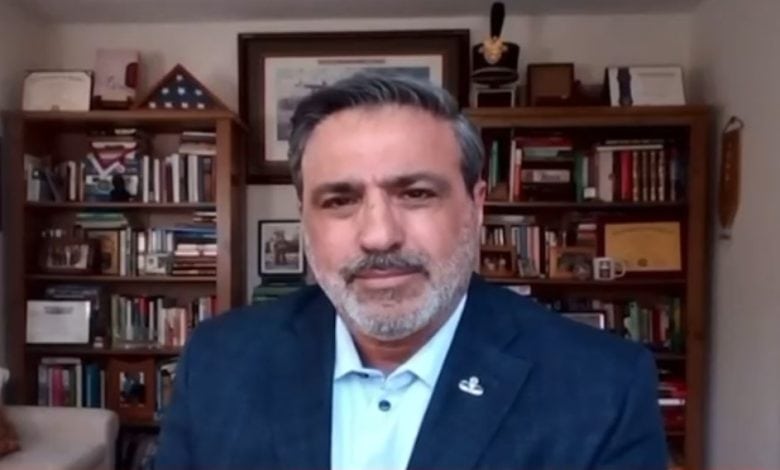
The Former Senior Military Advisor to US Department of State, Colonel (Ret.) Abbas Dahouk, said that it is clear that the Houthis are in big trouble under the Trump administration.
Speaking to Al-Arabiya, Col. Dahouk said that Trump’s designation of the Houthis as a terrorist organization means that “he has given more authority to US military to use more force against the Houthis.”
Col. Dahouk noted that the current mission could be completely different from those launched by the former US President, Joe Biden. “During Biden’s term, the mission aimed to undermine the Houthis’ capabilities, not to defeat them. Now, it is completely different,” he said.
“Trump is ordering overwhelming power to destroy the Houthis as a terrorist organization and to destroy any military capabilities they could use against the shipping lines in the Red Sea or military assets in the region,” Dahouk added.
Trump Operation vs. Biden Operations
Col. Dahouk explained the difference between this military operation and those launched during Biden’s term. “The difference here is more power against the Houthis and the final outcome could be destroying whatever the US can, not only to deny the Houthis the ability to use their capabilities against the US interests, but also to prevent Iran from supporting the Houthi attacks in the Red Sea,” he said.
“The mission has changed to destroying all the military capabilities of the Houthis, and the centers of command and control could be part of the targets. So, the mission has become clearer under the Trump administration,” he added.
Significant Damage
Moreover, Col. Dahouk expected that the Houthis will incur substantial damage as a result of the US aerial strikes. “It is clear that the Houthis will suffer significant damage that makes it hard for them to regroup or launch any attacks against maritime shipping lines or US assets,” he said.
He also expected that the strikes will continue in the coming days, with more damage assessments to identify more targets or strike the same locations.
Target Selection
Commenting on the mechanism of target selection, Col. Dahouk said that “this is an operational decision made by the command on the ground and the US Carrier which has a target bank and a priority list regarding these targets.”
He added: “Based on these initial strikes, there will be reassessments and changes. But as a pure military decision, there could be a political dimension. But it is up to the military commanders on the ground when it comes to target selection.”
Scale of Strikes
In terms of the operation’s scale and duration, Col. Dahouk said: “The mission has changed completely. Under Biden, there was a fear of escalation and the missions were given to military forces to weaken the Houthis’ capabilities in the first place. However, this mission is of a different nature and aims to destroy the military capabilities, i.e. destroying more military assets and military targets.”
Col. Dahouk noted that the Houthis’ designation as a terrorist organization “has given the US military forces, and the US President, more authority to launch military operations without consulting with the Congress.”
According to Col. Dahouk, the operation “could last either until the military commanders on the ground decide that the Houthis’ capabilities are somewhat destroyed or until the political objective is achieved, which is not only related to the Houthis and shipping lines, but is related to communicating with Iran about its nuclear program.”
“So, there is a mix of military and political decisions. When we combine them, there will be an assessment regarding the continuation of the military strikes against the Houthis or ending them,” Col. Dahouk said.