The development of Saudi Arabia’s coffee industry is gaining momentum, with two new Arabica projects in Asir and Baha marking another step towards expanding local production and improving the quality of homegrown beans.
Investing in Local Coffee Growers
Valued at over SR15 million ($4 million), the projects seek to support smallholder farmers while contributing to rural economic development and food security, in line with the ambitious objectives of Saudi Vision 2030.
Reef Saudi has transferred their operation to the Reef Foundation, which will oversee the next phase of their development.
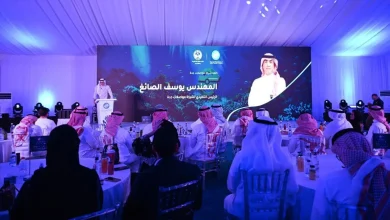
The projects will focus on cultivating the skills and resources available to local coffee growers. According to Reef Saudi spokesperson Majed Al-Buraikan, the nurseries will supply seedlings to smallholder farmers, while demonstration plots will give young people practical exposure to modern cultivation techniques.
Growers, meanwhile, will also receive training in efficient water management and improved post-harvest practices, which play an important role in maintaining bean quality.
Building a Competitive Coffee Industry
These improvements could translate into higher yields and better returns for farmers, allowing them to secure more competitive prices for their produce.
Al-Buraikan said the projects could also help reduce dependence on imported coffee, broaden export opportunities and draw investment across the sector, including roasting and cafes.
They are also expected to create opportunities for local producers to promote their own brands and reach international markets.
Jazan Leads Saudi Arabia’s Coffee Production
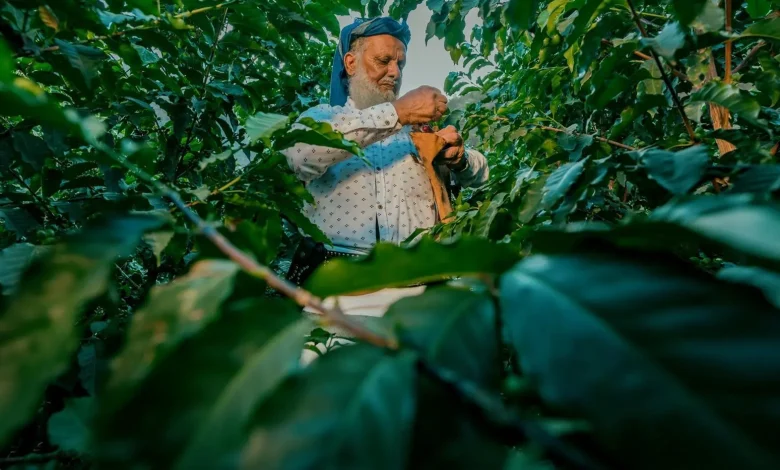
Saudi Arabia’s coffee production is rooted in its southwestern highlands, where generations of farmers have cultivated coffee on mountain terraces.
The Kingdom produces over 870 tonnes of green coffee beans annually, with Jazan accounting for the largest share.
The region boasts more than 966,000 fruit-bearing coffee trees and produces over 640 tonnes a year.
Its coffee-growing tradition dates back more than three centuries, with farmers continuing to cultivate the crop across its mountainous landscapes.
Production also extends to Asir, Baha, Makkah and Najran. In Asir alone, more than 243,000 fruit-bearing trees generate over 175 tonnes of coffee beans annually, according to the Ministry of Environment, Water and Agriculture.
The region’s production base has also expanded in recent years, with more than 634,000 coffee trees planted between 2022 and 2025.
Across 14 governorates, the Kingdom now has over 1,400 active coffee farms covering more than 7,000 hectares, ministry figures show.
What Will Drive Saudi Arabia’s Coffee Ambitions?
Preserving this agricultural heritage is emerging as a significant part of Saudi Arabia’s broad plans to expand coffee production.
In 2022, UNESCO added the knowledge and practices associated with cultivating Khawlani coffee beans to its Representative List of the Intangible Cultural Heritage of Humanity, recognising a tradition passed down through generations.
This expansion is also supported by efforts to train younger growers in modern agricultural techniques, helping preserve traditional knowledge while adapting cultivation practices to changing production needs.
The Kingdom’s ambitions also extend to building a commercially integrated coffee industry. In May 2022, the Public Investment Fund launched Saudi Coffee Co., committing SR1.2 billion over 10 years to develop the sector across cultivation, processing, roasting, marketing and exports.
In this context, the company aims to increase annual production from 300 tonnes to 2,500 tonnes and plant 5 million coffee trees by 2030.
Taking Saudi Coffee to the Global Stage
More boldly, the Ministry of Environment, Water and Agriculture has also set a target of planting 1.2 million coffee trees by 2026, alongside plans to develop 15 southwestern governorates into Arabica production hubs.
Saudi Arabia has also taken steps to strengthen its presence in the global coffee sector. In February 2024, the Kingdom signed the International Coffee Agreement 2022 in London, marking its first formal entry into the International Coffee Organization.
Related Topics:
How Is Saudi Arabia Cultivating a World-Class Arabica Coffee Industry?
A Booming Harvest: Inside Saudi Arabia’s Rise as a Coffee Production Hub
Mountain Roots: The Rise of Asir’s Mountain Coffee Economy