
Learn Workplace Arabic in 48 Hours: Saudi Arabia Opens Registration for Wisal Arabic Course
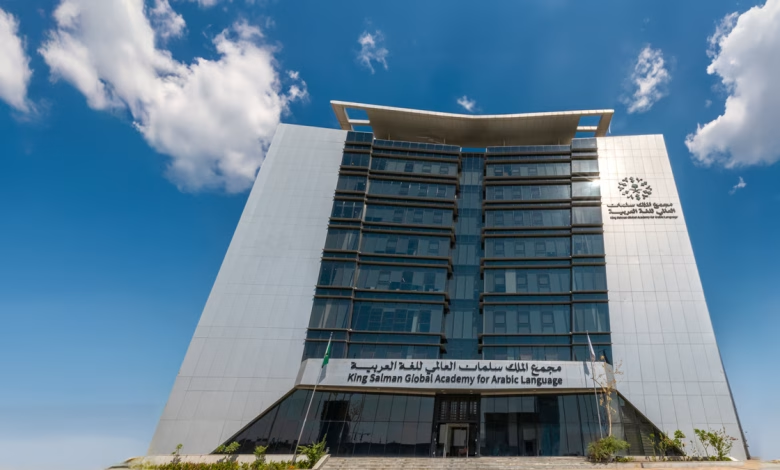
Driving the news: Saudi Arabia’s King Salman Global Academy for Arabic Language has opened registration for the fourth edition of Wisal, its Arabic course for foreign professionals in Riyadh.
Why it matters: The program teaches non-Arabic speakers the language they need at work. Moreover, it supports Saudi Arabia’s drive to place Arabic at the center of professional life.
The program targets employees in Riyadh’s government and private sectors. Meanwhile, the Abjad Center for teaching Arabic delivers it.
Candidates must be non-native Arabic speakers aged 18 to 55. Additionally, applicants must hold a work residency permit. The Academy sets admission criteria and costs, and it publishes both on the Wisal page.
Zoom in: Wisal builds language and communication skills for real workplace situations. In addition, it explains the cultural and social contexts behind the language. Finally, it pairs language learning with workplace application.
How the Course Works
Specifically, the Academy uses a blended model. Participants attend in-person lessons at the Academy’s headquarters and join live online sessions, while cultural activities introduce them to Arab culture.
Overall, the course lasts two months and totals 48 training hours. Learners spend six hours a week across two days. They study three hours in person every Saturday. They then spend three hours online on a day that trainers and trainees agree on. Together, the in-person and online sessions give learners steady practice.
The big picture: The fourth edition is the first Abjad Center program to follow its new educational model. Ultimately, the model aims to improve the learner experience and strengthen program sustainability. It delivers specialized content that meets the needs of each target group. In turn, this approach supports the Human Capability Development Program, a Vision 2030 initiative. The Academy also wants to broaden the base of learners it serves.
Flashback: At launch, the Academy designed Wisal to fit into employers’ corporate training plans. The launch version ran for three months at the Academy’s Riyadh headquarters on a flexible schedule that respected working hours. Importantly, one Academy official said Wisal gives foreign workers communication tools, boosts their performance and deepens their ties to national culture.
By the numbers:
- 48 hours: total training time over two months.
- 6 hours a week: three in person on Saturdays, three online.
- 160 teaching hours per level, across four levels aligned with the Common European Framework of Reference for languages.
- 18 to 55: eligible age range.
- 4th edition of Wisal, the first under Abjad’s new model.
- 50 learners joined the Academy’s second Language Immersion program.
- SAR200,000 ($53,333): award for each winner in the Academy’s Arabic language prize.
- Course fees: the announcement gave no figure; the Wisal page lists costs
- 1973: the year the United Nations adopted Arabic as an official language.
- 18 December: World Arabic Language Day, which commemorates that decision.
- 400 million+: the number of Arabic speakers worldwide, a figure UNESCO often cites.
- 2020: the year the Saudi Cabinet approved the Academy’s creation.
Saudi Arabia’s Wider Push
Zoom out: Wisal is one piece of a larger Saudi effort to promote Arabic among learners worldwide.
The Academy runs a Language Immersion program for non-native speakers. Meanwhile, the Abjad Center has offered study programs for non-native speakers in Riyadh since at least 2024. Its third program opened applications in February 2025 and set Sept. 1 as the start date for in-person classes.
In addition, the Academy takes Arabic abroad. It staged an Arabic Language Month in Spain in April 2025, with Casa Árabe in Madrid hosting the first activities. Similarly, it launched an Arabic Language Month program in Mexico with Tecnológico de Monterrey’s school of international relations.
At the 2026 Kuala Lumpur International Book Fair, the Academy showcased its Arabic-language resources. Those included the Riyadh Dictionary, the Hamza proficiency test and the Ahlan wa Sahlan platform. Notably, these efforts span classrooms, exhibitions, tests and digital platforms.
Furthermore, the Academy rewards excellence. Its Arabic language prize, whose fourth edition ran in 2025, includes a branch on teaching and learning Arabic. Beyond classrooms, the Academy also promotes Arabic on the global stage. In December 2025, it marked World Arabic Language Day at the United Nations in Geneva.
Between the lines: Practical Arabic helps foreign professionals work with Saudi colleagues, clients and government offices. As a result, employers gain staff who communicate more confidently in daily operations. Meanwhile, the course links language skills to culture, which helps newcomers understand the society around them. Moreover, the flexible blended format lets professionals study without leaving their jobs.
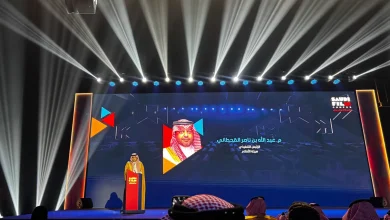
What’s next: The Academy invites prospective participants to review admission terms and costs. Applicants then register through the Wisal page, which lists fees and criteria. Saad Al-Qahtani, who heads the Academy’s educational programs sector, confirmed plans to expand Wisal to other Saudi cities. He pointed to the success of its first two courses. Looking ahead, the planned expansion could bring Arabic classes to professionals outside the capital. For now, registration targets Riyadh, so applicants should check eligibility first. Learners seeking another route can explore the Academy’s Language Immersion program for non-native speakers. Therefore, Wisal fits a broader strategy rather than a single course.
The bottom line: Wisal gives foreign professionals a practical route to workplace Arabic, and the Academy keeps widening access.