
Regional Security Defined: Inside the GCC’s Approach to a Unified Defense Architecture
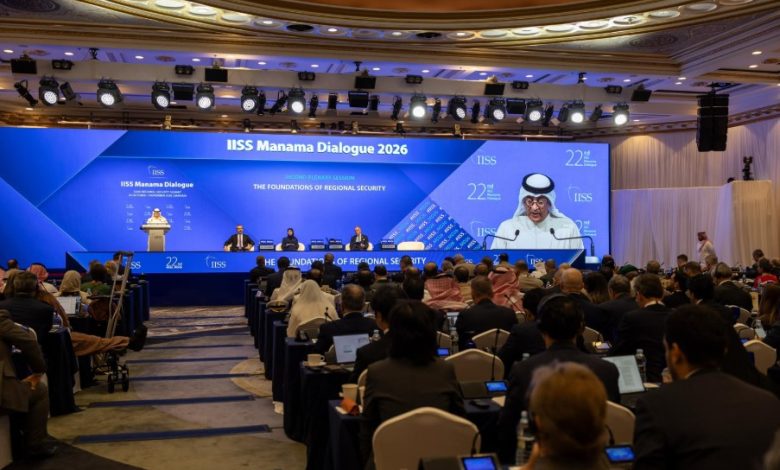
In a highly volatile security environment, the Gulf Cooperation Council (GCC) countries are rapidly moving toward a comprehensive regional defense framework.
The core elements of this unified defense architecture were outlined at the IISS Manama Dialogue 2026 and the 23rd meeting of the GCC Armed Forces Chiefs of Staff, both held in Bahrain, highlighting the Gulf’s high-level diplomatic policy and practical military readiness.
A Challenging Security Landscape
Driving the News: GCC Secretary-General Jasem Albudaiwi reiterated that the security of the GCC member states is indivisible, calling for the establishment of a stable and sustainable regional security framework.

The Big Picture: Speaking at a plenary session titled “Pillars of Regional Security” at the 22nd Manama Dialogue on October 31, 2026, Albudaiwi highlighted security challenges facing the Gulf since the outbreak of the US-Iran conflict on February 28, as Iran attacked GCC countries and their civilian infrastructure. Tehran has also disrupted traffic in the Strait of Hormuz, affecting energy prices, shipping and insurance costs, and global supply chains.
Moreover, Albudaiwi condemned Houthi attacks against Saudi Arabia, including attempted attacks on Makkah and Madinah, stressing that this aggression represents a dangerous escalation threatening regional security and stability.
GCC Vision for Regional Security
State of Play: In his speech, Albudaiwi laid out his approach for a unified and sustainable regional security architecture, which is based on five main pillars:
- International Law and State Sovereignty: Grounding regional security in strict adherence to good-neighborliness, non-interference in internal affairs, and the peaceful settlement of disputes.
- Collective Defense and Military Integration: Emphasizing the high operational readiness of GCC armed forces in neutralizing threats and accelerating the completion and deployment of the regional early warning ballistic missile network.
- Diplomacy and Peaceful Dispute Settlement: Leveraging GCC strategic partnerships with key global powers such as the US, Europe, China, India, and Asian nations, alongside maintaining open diplomatic communication channels with neighboring states, including Iran, to achieve diplomatic success.
- Security of Maritime Navigation and Energy Supplies: Safeguarding key maritime lanes crucial for energy security and international trade, including the Red Sea, the Bab al-Mandab Strait, and the Arabian Gulf, as a shared international responsibility.
- Development and Global Partnerships: Utilizing the GCC’s combined economy of nearly $2.4 trillion to promote regional and global stability. This includes steadfast support for Yemen’s legitimate government, a comprehensive political resolution based on agreed references in Yemen, and a just, comprehensive solution to the Palestinian cause based on the two-state solution. It also includes support for the security, sovereignty, and stability of Iraq, Syria, and Lebanon, as well as strengthening water and food security and addressing climate challenges.
Regional Ownership
Zoom In: The GCC chief reiterated the need for a security architecture shaped by regional states. In light of this, he reaffirmed the GCC’s readiness to contribute to this framework under the GCC Regional Security Vision launched in 2024.
Regional Alignment: Albudaiwi’s five-pillar security approach closely mirrored the vision of Egyptian Foreign Minister Badr Abdelatty, signaling a strong strategic alignment and a cross-regional consensus on a unified defense architecture shaped by the region’s countries.
Activating Joint Military Cooperation
Between the Lines: Albudaiwi’s remarks built on operational discussions involving GCC military chiefs in Bahrain to activate joint military cooperation.
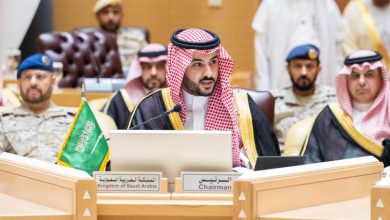
Go Deeper: On October 29, the Supreme GCC Military Committee held the 23rd meeting of the GCC Armed Forces Chiefs of Staff in Bahrain, with the participation of Saudi Arabia’s Chief of the General Staff Gen. Fayyad Al-Ruwaili, to explore ways to boost coordination and strengthen defense relations amid the ongoing Houthi threats and regional instability.

What He Said: “The unprecedented acts of aggression require full solidarity, close coordination and joint cooperation to confront threats to the security and stability of GCC countries.” – Lt. Gen. Theyab bin Saqr Al-Nuaimi, Bahrain’s Chief of Staff.
GCC’s Collective Defense Framework
The Catalyst: Formerly known as the Peninsula Shield Force, the GCC Unified Military Command (UMC) is a joint military organization based in Riyadh, working under the umbrella of the GCC Joint Defense Council. The UMC coordinates collective defense, intelligence sharing, and regional security among the six GCC members.
In September 2025, the GCC Joint Defense Council directed the UMC to take the necessary executive measures to activate joint defense mechanisms and Gulf deterrence capabilities under the Joint Defense Agreement.
These measures included:
- Enhancing intelligence sharing through the UMC.
- Integrating air situation data into all GCC operation centers’ systems.
- Accelerating the work on the GCC Joint Task Force for the Early Warning System against Ballistic Missiles.
- Updating collective defense plans in coordination with the Operation and Training Committee.
- Conducting joint exercises between air defense and operation centers within three months, with a live air exercise to follow.
Flashback: The Peninsula Shield Force played a pivotal role in the liberation of Kuwait in 1991, the defense of Kuwaiti territory during Iraq liberation in 2003, and the protection of security and order in Bahrain in 2011.
Saudi Arabia: The Defense Anchor
The Context: Saudi Arabia’s advanced military and defense capabilities, coupled with its status as a diplomatic heavyweight, have positioned it as an anchor of regional defense, securing critical coastlines along the Red Sea and the Arabian Gulf, as well as crucial energy supplies.
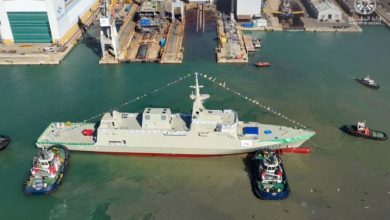
Defense Modernization: Under Vision 2030, Saudi Arabia targets a localization rate of more than 50% of its military spending by the end of the decade. These efforts are spearheaded by the General Authority for Military Industries (GAMI), alongside Saudi Arabian Military Industries (SAMI). By the end of 2025, the localization rate of military spending in Saudi Arabia reached 27.3%, up from 24.89% in 2024.
The Bottom Line: By pairing strategic diplomacy at the Manama Dialogue with concrete joint military talks, the GCC is establishing a unified defense architecture capable of safeguarding regional stability and driving long-term economic prosperity.