Amid energy and trade disruptions caused by the ongoing regional tensions, Saudi Arabia has proven unmatched operational agility, stepping in to stabilize global markets.
Recent data shows that Saudi oil shipments to Asia have jumped to its highest level since the outbreak of the US-Iran conflict, in a strong testament to the Kingdom’s operational resilience and logistical capacity, driven by its energy giant Aramco.
Crude Exports at Their Peak
Driving the News: Bloomberg reported that Saudi Arabia’s crude shipments to Asia climbed to nearly 100 million barrels in mid-September. These shipments are due to be delivered in October and November through the Strait of Hormuz. Purchasers include state-owned and independent refineries in China, alongside buyers from India, Japan, and South Korea.
The Big Picture: This surge comes as Asian refineries face mounting pressure from rising oil prices, declining Iranian flows due to the US embargo, and heightened geopolitical risks associated with Russian crude.
Why It Matters: The Kingdom is the world’s largest supplier of seaborne oil exports. Disruption caused by the conflict has driven Brent crude futures to $105 per barrel. Traders are closely monitoring Saudi Arabia’s exports. These recent shipments represent a more-than-doubling of recent Saudi oil flows to Asia via Hormuz.
Meeting Global Demand
State of Play: According to Bloomberg data, Saudi Arabia’s oil exports in September stood at 5.28 million barrels a day (bpd) – the highest rate since the conflict erupted in late February 2026.
Between the Lines: Before the conflict, about 90% of Saudi crude exports were shipped through the Arabian Gulf. However, the Kingdom avoided using this route for months, pivoting to its Red Sea ports through the East-West Pipeline.
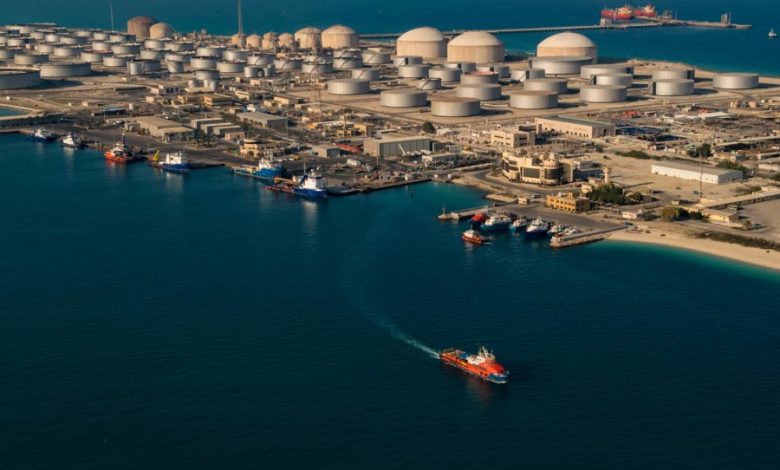
The Pivot: After a temporary precautionary closure following a drone attack that targeted the East-West pipeline in the Madinah and Riyadh regions, Saudi Arabia ramped up oil exports through Hormuz. According to data from TankerTrackers.com, Saudi Aramco loaded around 14 million barrels on seven supertankers near Ras Tanura port on the Arabian Gulf on September 20.
Resilience on Display
The Context: With the Strait of Hormuz – through which around a fifth of daily global oil and LNG supplies pass – turning into a key flashpoint, Saudi Arabia has actively enhanced maritime connectivity and supported supply chain resilience through the Red Sea and other alternative routes, providing a lifeline for global markets.
This has included leveraging the East-West Pipeline to maximum capacity (7 million barrels per day) in the first quarter of 2026, fueling a surge in Aramco’s net income, which reached $67.2 billion in H1 2026.
As the Iranian-backed Houthi militia threatens shipping in the Bab al-Mandab Strait, Saudi Arabia has turned to Egypt‘s Suez Canal route to transport its oil exports through the Mediterranean.
The Swift Recovery
The Backstory: Drone attacks launched by Iranian-backed militias in Iraq targeted the East-West Pipeline in the Riyadh and Madinah regions on September 10, 2026, resulting in injuries and some damage and prompting the Kingdom to shut down the pipeline as a precautionary measure. Saudi Aramco is actively working to swiftly restore the pipeline’s capacity.
Zoom In: Saudi Aramco CEO Amin Nasser underscored the company’s operational resilience and logistics capabilities to fulfill its commitments. In remarks to Nikkei Asia, Nasser reaffirmed Aramco‘s ability to manage operational disruptions and restore operations “within days, not weeks.”
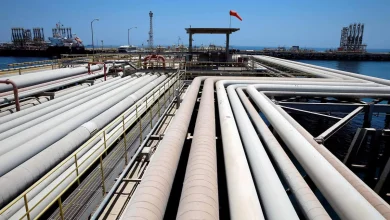
He also noted that the East-West Pipeline is not a single line, but consists of several pipelines, thereby providing greater flexibility in exporting crude oil and petroleum products.
What He Said: Nasser explained that Aramco has three main crude oil export routes, including the Strait of Hormuz, the Bab al-Mandab Strait route, and the SUMED pipeline which connects the Red Sea to the Mediterranean through Egypt. He added that the company is considering the establishment of “a fourth and a fifth route” for exporting crude, as well as the expansion of its overseas storage capacity to ensure sustainable supplies to global markets.
The Bottom Line: The surge in Saudi Arabia’s crude exports, coupled with Aramco’s robust and resilient infrastructure, cements the Kingdom’s status as an anchor of global energy security.