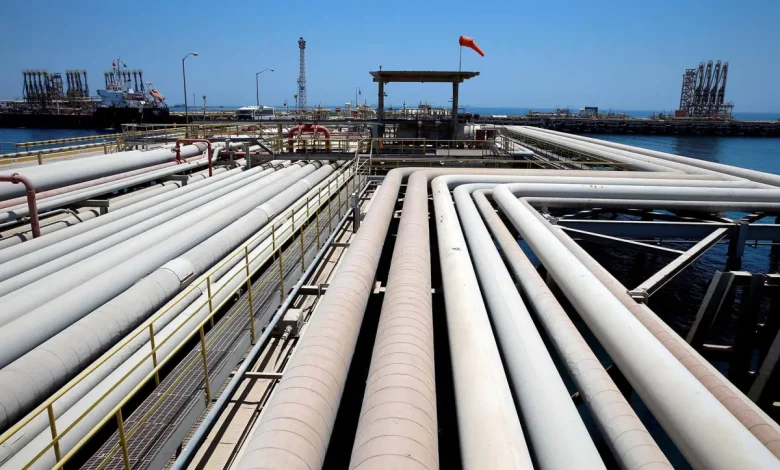
The big picture: Saudi Arabia flipped its East-West Crude Oil Pipeline back on Tuesday. Exports from Yanbu should resume later today, Reuters reported, citing three sources. Two of those sources said pumping remains slow for now. Saudi Aramco has not responded to a request for comment. “Any further developments will be announced in due course,” the Saudi Energy Ministry said when the shutdown first hit.
Why it matters: The pipeline is Saudi Arabia’s main workaround for the blocked Strait of Hormuz. Oil markets watch it closely, since it decides how much Saudi crude reaches global buyers each day. Brent crude jumped more than 3% when the shutdown first made headlines, touching $108 a barrel, while WTI hit $103. That move shows how much weight this single pipeline carries for global energy security. Saudi Arabia has leaned on the line since February, when the US-Israel war with Iran first closed most Hormuz traffic.
The pipeline runs about 1,200 kilometres from Abqaiq in the Eastern Province to Yanbu on the Red Sea. It can pump up to 7 million barrels per day at full capacity. That’s well above its original 5 million bpd nominal rate. Shipping data from Monday showed Aramco loaded 14 million barrels onto seven tankers near Ras Tanura on Sunday. That’s evidence Saudi Arabia had temporarily redirected exports back through the Gulf while the pipeline sat offline.
Bloomberg reported that crude loadings inside the Arabian Gulf jumped sharply. This surge provided the clearest indicator yet that the Kingdom redirected its export flows through the Strait of Hormuz during the pipeline disruption. Observers spotted Very Large Crude Carriers (VLCCs) capable of carrying 14 million barrels at Gulf export terminals, marking the highest level since at least last June.
Prior to the disruption, Saudi Arabia rerouted approximately 5 million barrels per day through the line to supply global refiners. Meanwhile, ship-tracking data showed that crude shipments from Yanbu halted temporarily during the repair process. Consequently, the rapid operational restart prevents severe physical oil shortages across international energy markets.
What Knocked Out the Pipeline
Drones launched from Iraq struck East-West pump stations near Riyadh and Medina on 10 September. Saudi Arabia shut the whole line the next day, calling it a precaution. The strikes sparked fires, damaged equipment and injured several people, the Saudi Energy Ministry said. No group has claimed the attack. US officials point to Iran-backed militias inside Iraq; Tehran denies any role. The closure also came as Houthi forces tightened their grip on Red Sea shipping lanes. They recently captured the port city of Mocha and the island of Perim near the Bab al-Mandeb Strait. Together, the two chokepoints briefly squeezed Saudi Arabia’s main escape routes for crude from both ends.
Saudi Arabia’s Bigger Pivot Away from Oil
The pipeline drama sits inside a much larger story. Saudi Arabia keeps shrinking its reliance on oil revenue. The kingdom has hit 93% of its Vision 2030 targets, Finance Minister Mohammed Al Jadaan said. He called 2026 the plan’s “maximizing impact” phase. Non-oil activity already generates more than half of Saudi Arabia’s real GDP, up from 45.4% back in 2016. Foreign direct investment has grown roughly five-fold over the same period. Tourism, logistics and the digital economy keep outpacing oil as growth drivers. Even amid war-driven energy headlines, the kingdom’s underlying direction stays the same: less oil, more everything else.
By the numbers:
- 7 million bpd: East-West Pipeline’s full pumping capacity, up from a 5 million bpd nominal base
- 14 million barrels: Crude Aramco loaded onto seven tankers near Ras Tanura on Sunday
- 6%: Share of Saudi Arabia’s real GDP from non-oil activity in H1 2025, up from 45.4% in 2016
- SAR 1.15 trillion ($306 billion): Projected Saudi government revenue for 2026, up 5.1% year-on-year
- SAR 1.31 trillion ($348.9 billion): Total planned government expenditure for 2026
- $137 billion (SAR 514 billion): Saudi Arabia’s non-oil exports, a record high
- 93%: Share of Vision 2030 indicators the kingdom has achieved heading into 2026
- 4%–4.6%: Forecast real GDP growth for Saudi Arabia in 2026
What’s next: Markets will now watch two things: pumping rates, and any new attacks. Saudi Arabia restored full flow within weeks after a similar strike hit the pipeline in April. That track record gives the kingdom real credibility this time, too. Meanwhile, the broader diversification push keeps moving forward regardless of this week’s headlines. Officials frame 2026 as the year Vision 2030 shifts from building institutions to maximizing their impact.