In the hushed expanse of Saudi Arabia’s desert nights, an ecological saga quietly unfolds beneath the stars, unveiling a remarkable tale of resilience.
The Desert’s Silent Guardian
Amid rugged outcrops and sweeping open desert, a small native bird significantly preserves the Kingdom’s ecological balance.
With its small size and quiet presence across the desert landscapes of the Northern Borders Region, the little owl, known locally as Umm Quwaik or Umm Al‑Sahar, emerges as a guardian of balance.
Though quiet in presence, Umm Quwaik stands as a symbol of nature’s enduring power to maintain harmony and showcase the region’s rich biodiversity.
Born to Rule the Night
Belonging to the true owl family, the little owl (Athene noctua) stands out with its rounded head, flat crown, and long legs.
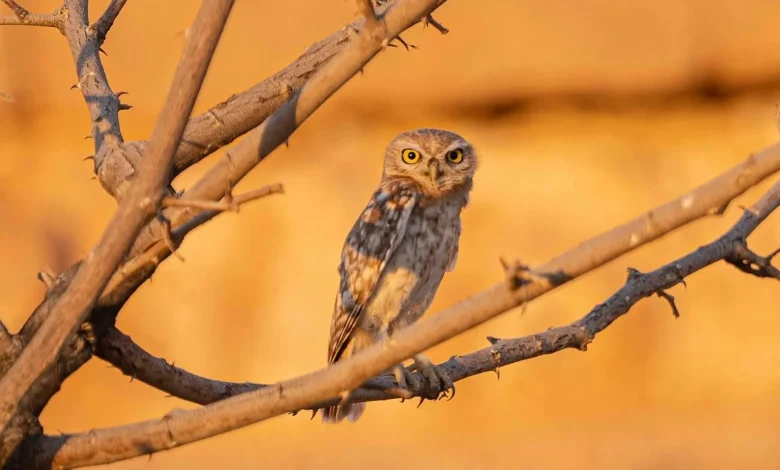
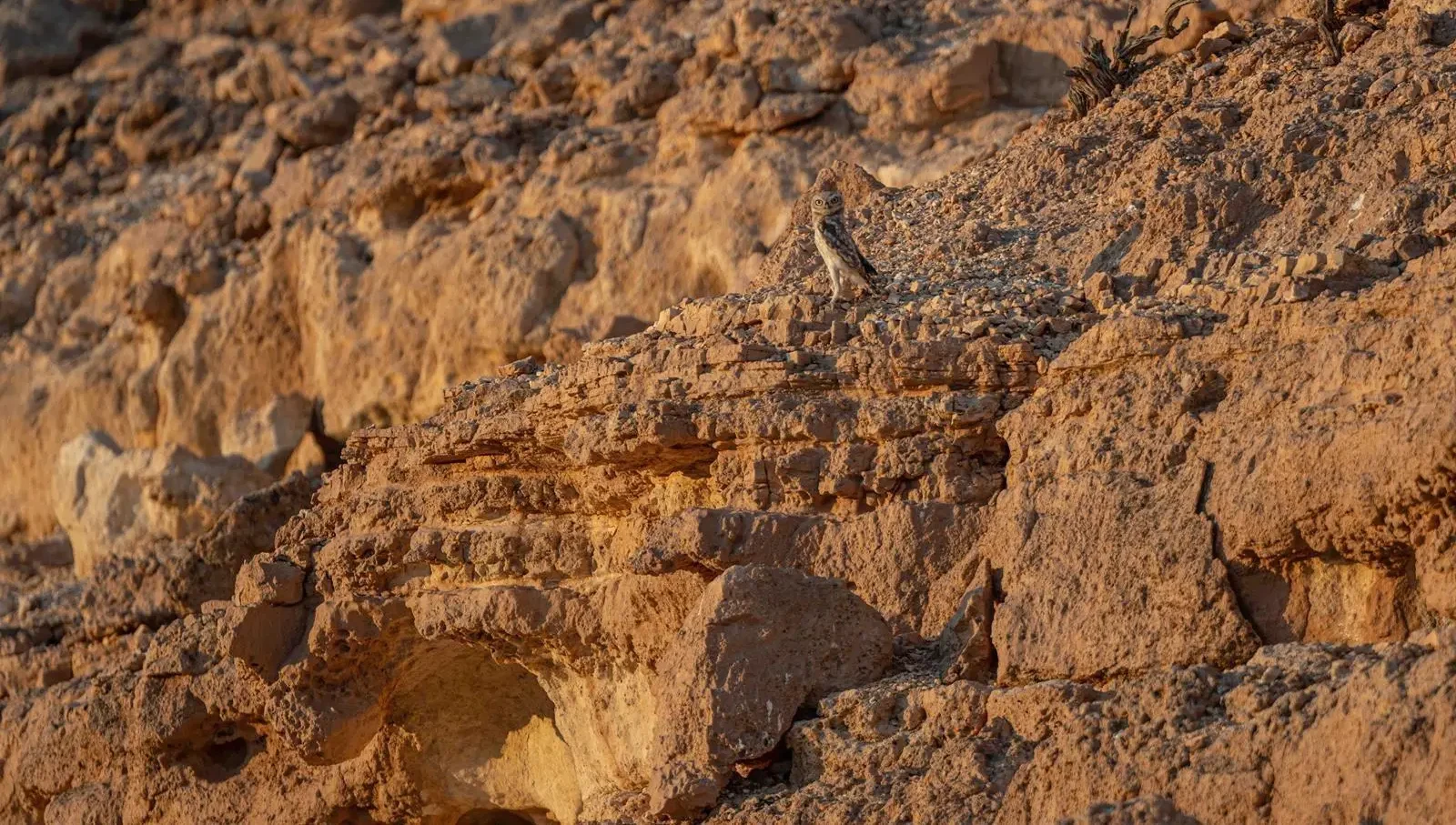
Its grayish‑brown plumage, flecked with white across the upper body, represents an armor of camouflage against the rocky desert landscape. Yet the piercing glow of its bright yellow eyes and the sharp curve of its pale beak distinguish the bird as a brilliant guardian of the night.
Measuring only 21 to 23 centimeters, the little owl shows scarcely any distinction between male and female.
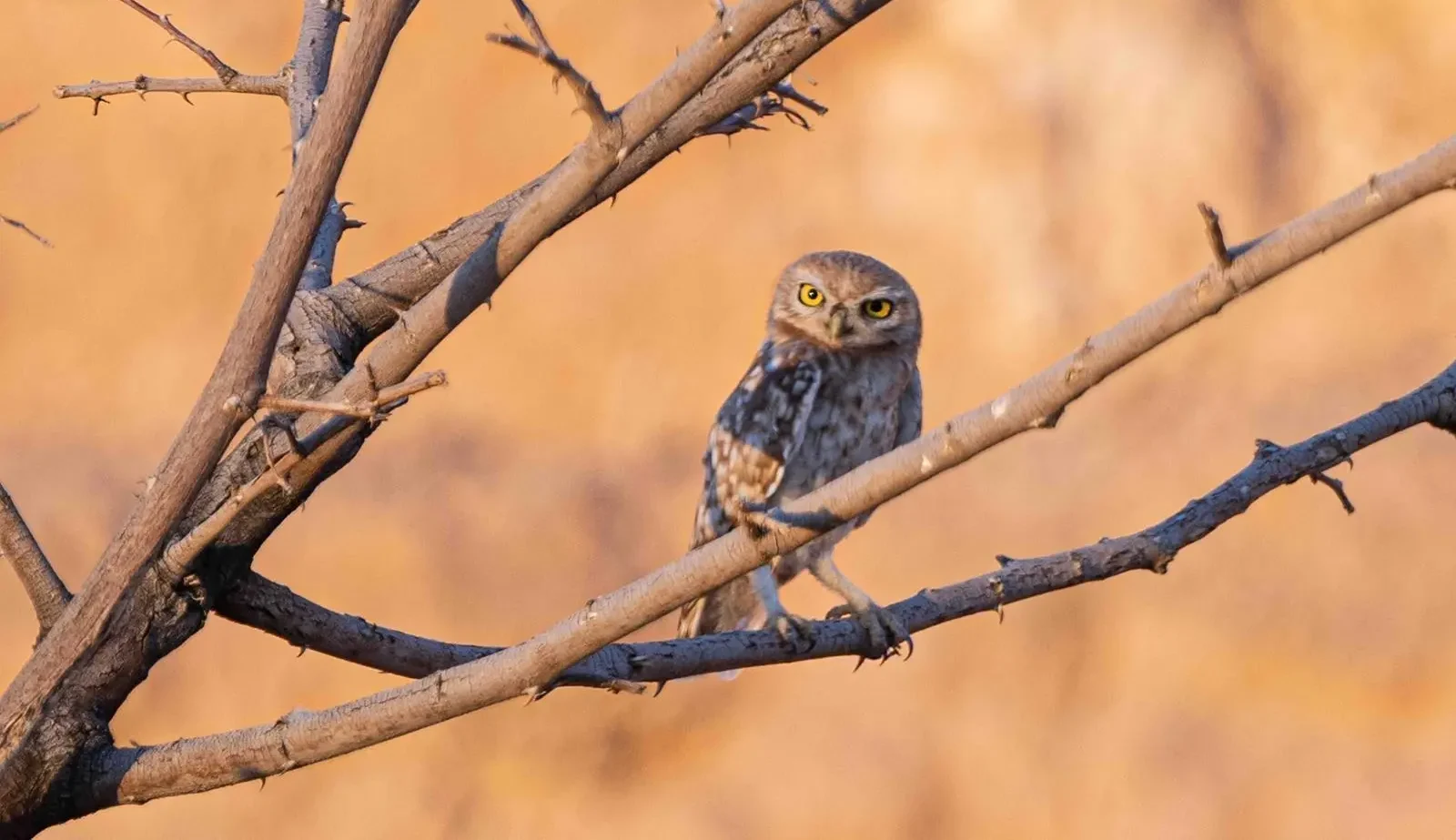
As dusk falls and the desert night deepens, this small hunter awakens. With its razor‑sharp hearing and piercing vision, the little owl can locate and capture prey with remarkable precision.
The little owl thrives in open and semi‑desert terrain, creating its nests into natural cavities of rock and tree, while also taking advantage of abandoned buildings and old burrows for shelter.
An Indicator of Nature’s Balance
Wildlife specialists commend its presence across the Northern Borders Region as a living testament to healthy ecosystems and proof of the health and stability of the Northern Borders Region’s natural habitats.
Experts also underscore the significance of safeguarding the little owl’s natural habitats and preventing practices that threaten biodiversity, reinforcing Saudi Arabia’s broader push for supporting environmental sustainability and wildlife conservation.
A Haven for Wildlife
Nasser Al-Majlad, president of the Aman Environmental Association in the Northern Borders Region, attributed the area’s rich wildlife to its diverse natural landscapes. He further noted that the region is haven to a vast array of animal species, supported by a mosaic of mountains, plateaus, plains, valleys and rocky formations, alongside an abundance of several annual and seasonal plants that provide favorable conditions for wildlife to thrive.
Related Topics:
Saudi Environment Week 2026 Showcases Diverse Landscapes and Wildlife
Saudi Wildlife Documentaries Shine at Muse Creative Awards
In Photos: Saudi Wildlife Center to Explore Caves in Northern Borders