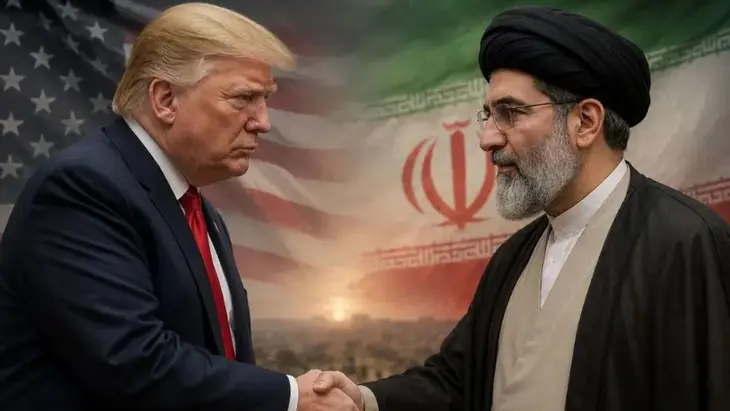
Iran confirmed on Tuesday that a new round of negotiations with the US will begin later this week, following the announcement of a memorandum of understanding (MoU) to end nearly four months of war triggered by US-Israeli strikes on Iran. The formal signing ceremony takes place Friday in Switzerland, opening a 60-day window for finalising a comprehensive agreement.
“Likely on Friday, at a location to be determined, a new round of negotiations between Iran and the United States to reach a final agreement will begin,” Iranian Foreign Minister Abbas Araghchi said. “In the final agreement, decisions will be made on the nuclear issues and the lifting of sanctions.”
Iran’s parliament speaker Mohammad Bagher Ghalibaf will lead the Iranian delegation at the signing, as Vice President JD Vance will represent the United States, and Trump himself may also attend.
A senior US official confirmed that both Trump and Vance already signed the agreement electronically, with Ghalibaf signing for the Iranian side.
Hormuz Shipping Resumes, Frozen Assets at Stake
The deal delivers an immediate economic dividend. The memorandum provides for the reopening of the Strait of Hormuz, which Iran closed after the war began, though mine-clearing and infrastructure repairs mean full access will take time.
Trump declared Monday that ships loaded with oil were already moving through the strait. Before the war, the strait handled roughly 20% of global oil and liquefied natural gas trade.
Vance told NBC that US and UN nuclear inspectors will return to Iran under the deal’s terms. “One of the core parts of the agreement is that the IAEA and the US are going to help Iran destroy the highly enriched stockpile, and that’s something that was clear in the MOU,” he said.
Separately, Iranian media reported that the US would release $12 billion in frozen assets upon signing, though Vance denied any US taxpayer funds would go to Iran.
Key Disputes and Regional Complications Remain
Weeks of indirect talks mediated by Pakistan and Qatar built momentum for the interim accord, yet crucial disagreements persist.
Washington and Israel want Iran to surrender its stockpile of highly enriched uranium, while Tehran insists on its right to enrich. Trump told The New York Times the US was still negotiating a 20-year enrichment suspension, hinting he might accept 15 years.
Iran’s military declared the accord a victory, claiming it had “humiliated” the US and Israel, with President Masoud Pezeshkian calling it “a great achievement.” Araghchi, however, struck a cautious note. “We have a history of broken commitments, a history of torn up agreements. All of this is present in our minds,” he said.
Lebanon presents a separate complication. Israeli officials confirmed they do not plan to remove forces from southern Lebanon, despite Araghchi’s insistence that ending the war on all fronts, including Lebanon, is “the most important” and “inseparable” part of the overall settlement.