Al-Naslaa: The Saudi Geological Wonder That Looks Almost Impossible
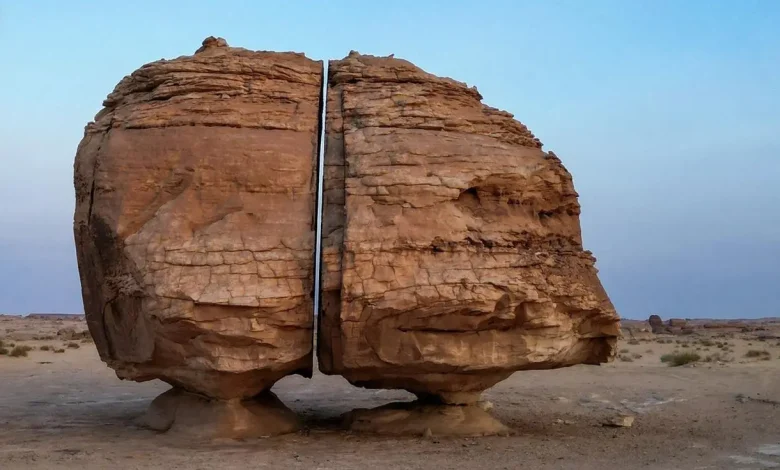
Amid the rugged landscape of southwestern Tayma Governorate in the Tabuk Region, two towering rock formations stands side by side, separated by a remarkably straight and narrow gap.
Known collectively as Al-Naslaa, the dramatic formation appears almost as though a single geological landmark that has been cleanly split in two, making it a remarkable testament to the forces that have shaped Saudi Arabia’s landscapes over time.
What Does Al-Naslaa’s Name Reveal?
Derived from the Arabic nasalat, meaning “to separate,” the name Al-Naslaa represents an apt description of the formation’s defining separation from the surrounding mountains.
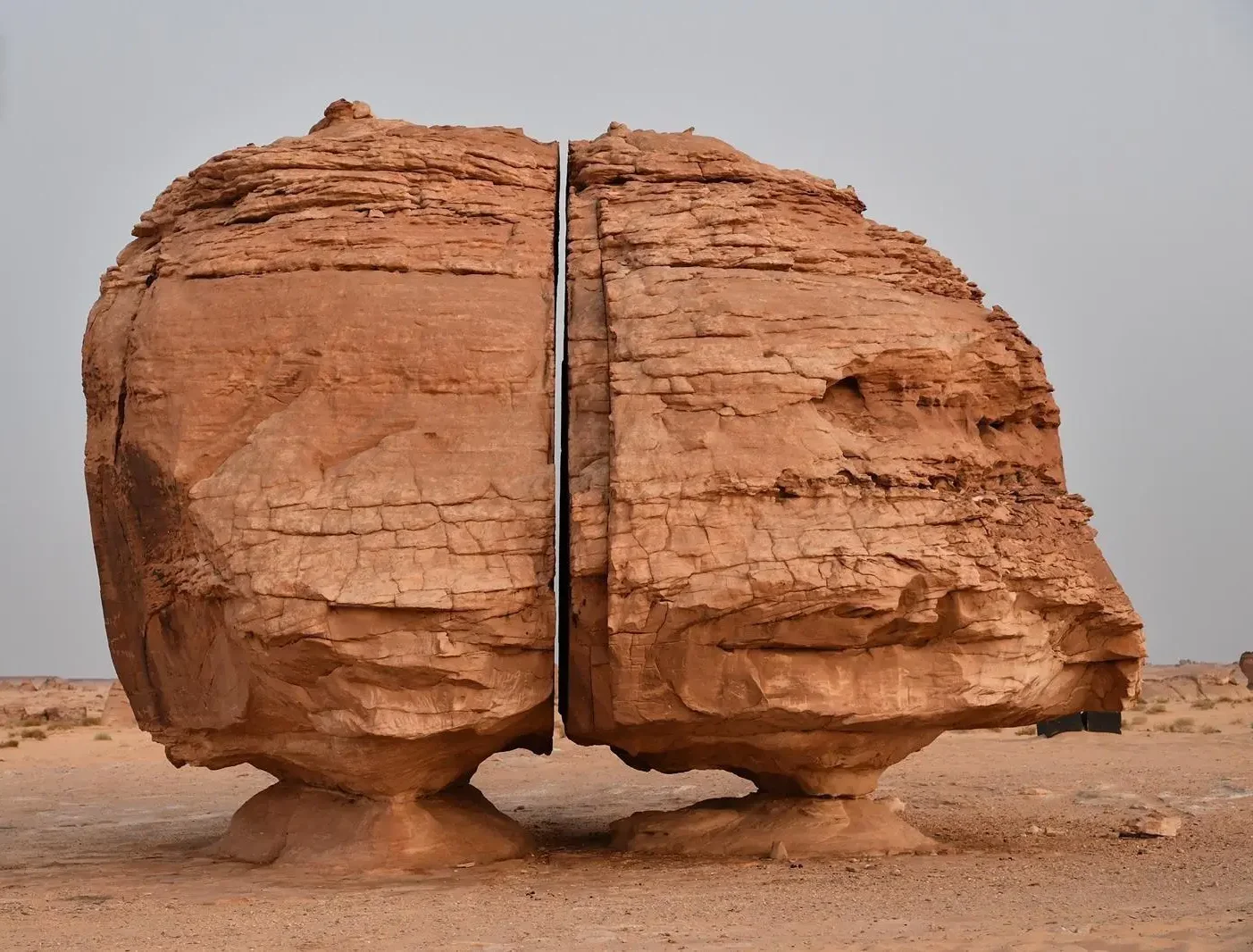
Standing approximately eight meters tall, its two sections rise from separate natural rock bases, giving the impression of a monumental structure perfectly divided in two.
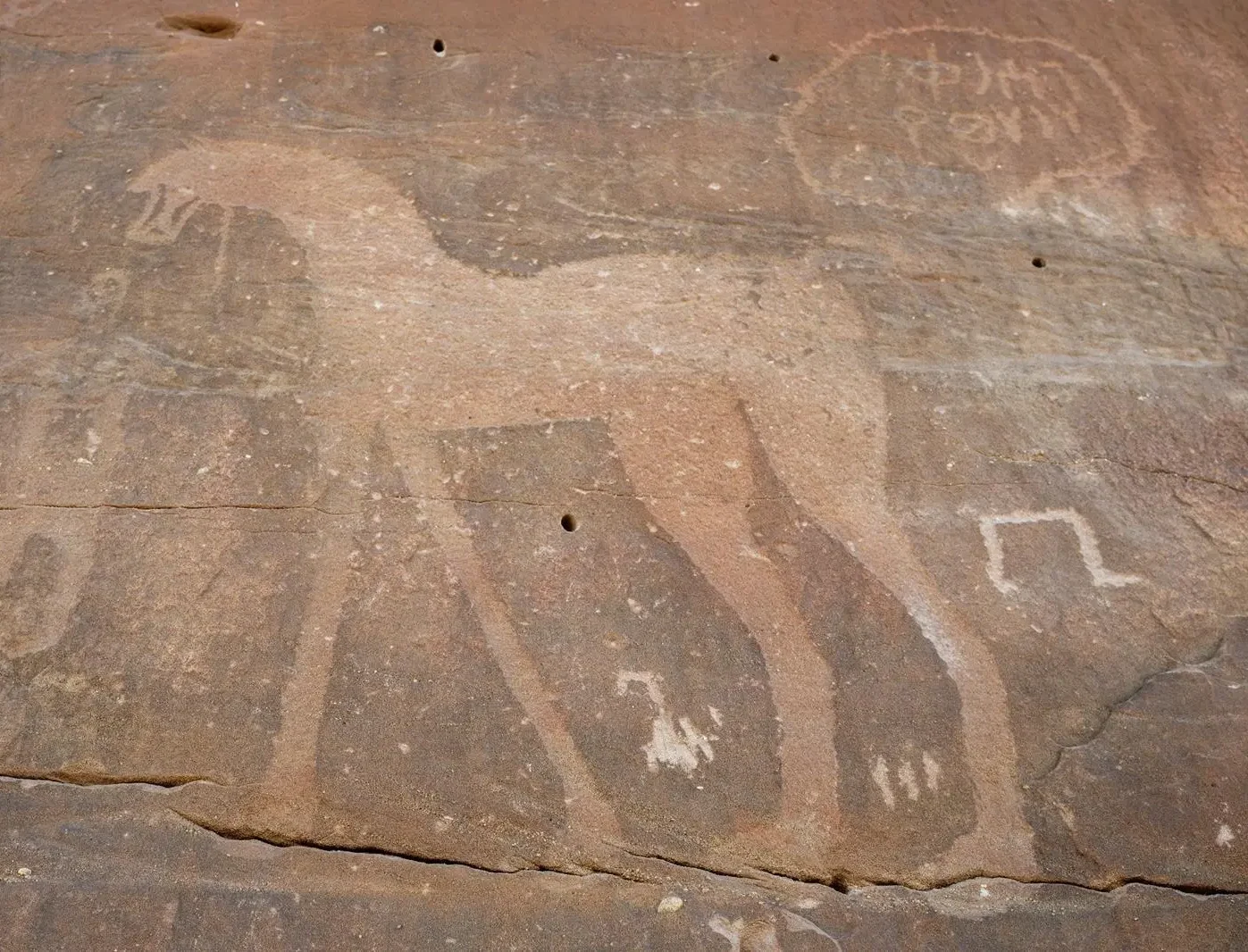
Adding to its capitative scenery are the ancient inscriptions and rock art carved into the stone, making Al-Naslaa a defining feature of Tayma’s natural and cultural landscape.
How Did Tayma Become a Historic Crossroads?
Apart from its geological appeal, Al-Naslaa forms part of an archaeological landscape marked by centuries of human movement and remnants of past civilizations.
According to the Heritage Commission, the surrounding area is home to a wealth of archaeological remains and rock inscriptions that reflect the historical weight of Tayma and the Tabuk Region.
For centuries, the ancient settlement stood along ancient trade routes crossing northwestern Arabia, connecting people and cultures across the peninsula and standing as a vital stop for travelers and merchants.
A Masterpiece Shaped by Nature
What appears to be a precise cut through solid stone is the result of millions of years of natural forces at work.
With tectonic stresses first fracturing the region’s sandstone, creating tiny cracks that gradually emerged as water entered and evaporated and minerals responded to repeated temperature changes.
As the fractures widened, sections of the rock eventually separated. Ultimately, Tayma’s relentless desert winds carried fine grains of sand across the exposed surfaces, gradually smoothing them like natural sandpaper. Therefore, the exceptional division seen today is not the work of human hands, but the result of time, temperature, water and wind.
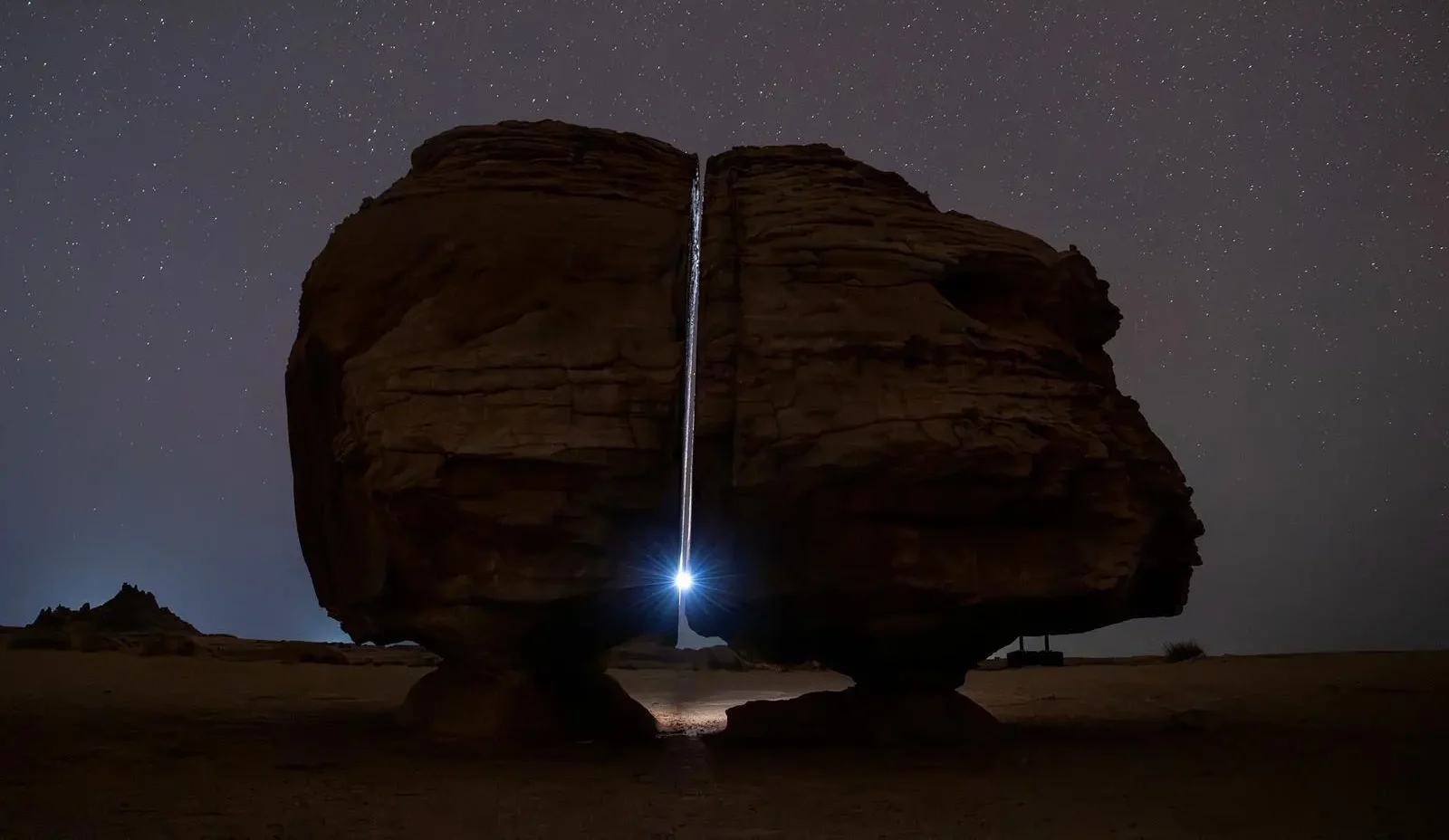
Today, the “twin” rock stands out as a vivid expression of Tayma’s natural and cultural heritage. Its striking geological form brings together two enduring legacies: the geological forces that shaped the land and the people who shaped its history.
Related Topics:
Jubbah’s Rock Art: Uncovering Saudi Arabia’s Forgotten Green Past
UNWTO Recognizes Abo Noghta Castles, Tabab among World’s Best Tourism Villages
Masterpieces of the MANN: Explore Old World’s Civilizations at Ancient Kingdoms Festival