Hidden deep within the dramatic deserts of northern Saudi Arabia, the Jubbah Rock Art site unfolds like an open window onto thousands of years of history, and an extraordinary visual record of human life etched in stone.
What Makes Jubbah So Unique?
Standing out as one of the Arabian Peninsula’s most remarkable prehistoric treasures, the Jubbah was once the shoreline of a vast ancient lake.
The site has preserved approximately 10,000 years of human expression across its towering sandstone outcrops, offering an unparalleled natural canvas that records the history of people, animals, and landscapes of the region’s distant past.
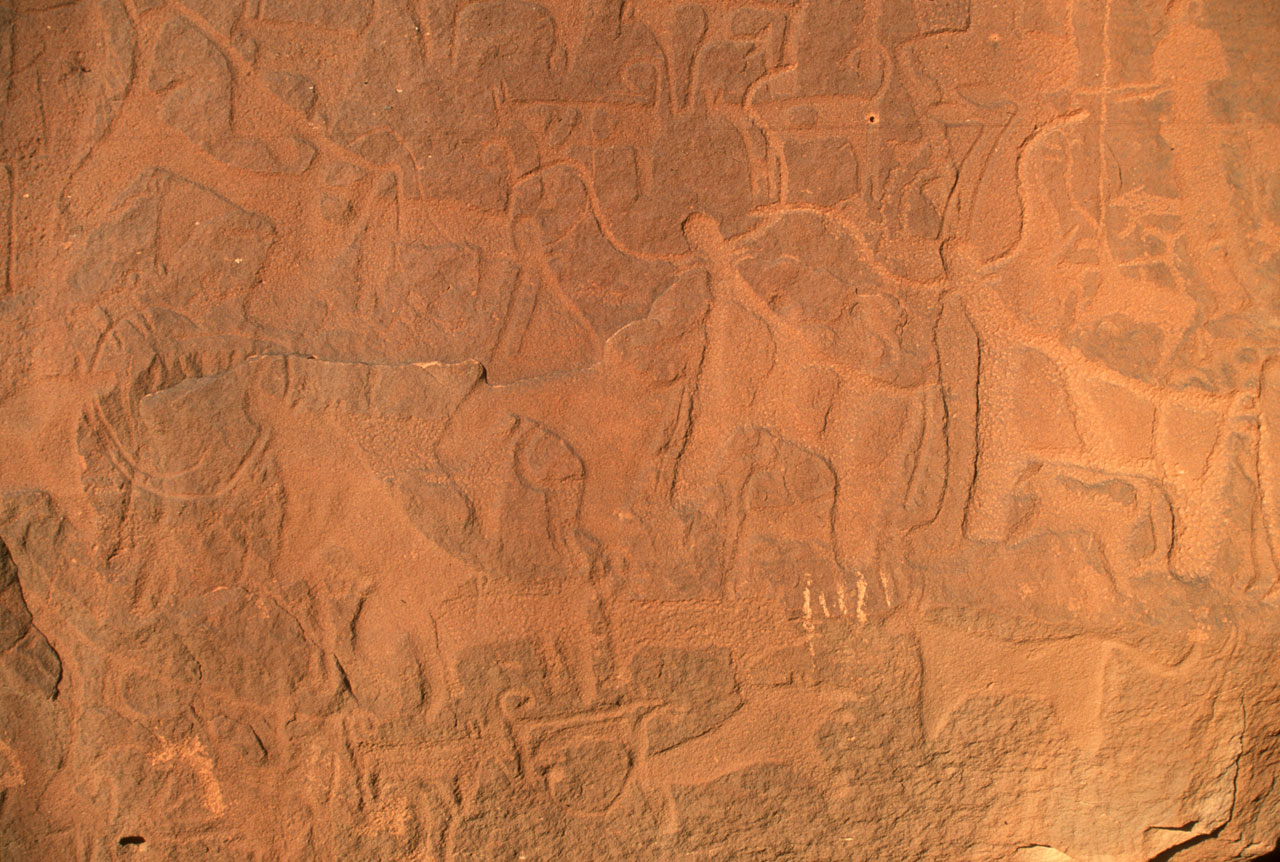
There, thousands of petroglyphs carved into Jubbah’s sandstone cliffs offer a vivid glimpse into a prehistoric landscape long lost to time. The engravings further depict now‑extinct wildlife, hunting expeditions, and pastoral communities that once thrived when the region was a fertile grassland surrounding an ancient lake.
A UNESCO Treasure Worth Exploring
Recognized as a UNESCO World Heritage Site since 2015, Jubbah represents part of the “Rock Art in the Hail Region of Saudi Arabia” inscription alongside Shuwaymis.

While both sites offer vital insights into the region’s prehistoric past, Jubbah’s accessibility has made it the most visited destination. By contrast, Shuwaymis, located about 200 kilometers to the southwest, requires a separate journey to reach its meticulous collection of rock art.
Was Arabia Once Green?
To broaden understanding of Jubbah’s remarkable rock art, it is necessary to look back to a dramatically different Arabia.
Between nearly 11,000 and 5,000 years ago, during the Green Arabia or African Humid Period, the peninsula was transformed by a far wetter climate. The vast deserts of northern Saudi Arabia gave way to a thriving landscape of lakes, rivers, and sprawling grasslands. Meanwhile, Jubbah’s towering sandstone outcrop overlooked the shores of a substantial freshwater lake.
This captivating environment, fertile and abundant, supported diverse wildlife and early human communities, paving the way for the unrivaled rock art that continues to tell the site’s compelling story.
What Do the Carvings Reveal?
For thousands of years, people regraded the shores of Jubbah’s ancient lake as safe heavens, leaving behind an enduring visual record carved into the surrounding sandstone cliffs.
Notably, many of the engravings also portray wildlife that could only have flourished in this once-lush environment, including lions and wild asses, offering strong evidence of the region’s dramatic climate shifts.

Some carvings are meticulously etched at the level of the former shoreline, providing geological proof that human activity unfolded at the water’s edge.
More vividly, several carvings appear to show people traveling in boats or simple rafts, underscoring a significant point: the lake was not only a vital source of life but also a navigable waterway used for fishing and transportation.
Planning a Visit?
Nestled about 100 kilometers north of Ha’il, Jubbah is easily reached via the paved highway leading toward the Saudi–Jordanian border. The journey takes approximately 90 minutes by car.
With no public transportation available, visitors typically travel by rental car or arrange a taxi from Ha’il.
Managed by the Saudi Heritage Commission, Jubbah offers visitors free access to one of the Kingdom’s most treasured archaeological landmarks.
After a brief registration at the site office, guests simply present a passport or Saudi ID before exploring the ancient rock art at no cost.
When Do the Carvings Come Alive?
Good news for photography enthusiasts: Visitors can photograph the site throughout the day, but the early morning and late afternoon produce the most striking images, as low-angle sunlight casts dramatic shadows across the sandstone. Be sure to plan your visit around these golden hours for a mesmerizing experience; one that allows you to fully appreciate and photograph Jubbah’s remarkable rock art.
Related Topics:
Rijal Almaa: A Living Legacy of Saudi Arabia’s Mountain Heritage
Discover the Royal Diriyah Opera House, Saudi Arabia’s New Cultural Icon
INTERVIEW: Ibrahim Al-Almaai on Three Decades of Preserving Al-Qatt Al-Asiri