Israel Imperils Lebanon Ceasefire after Beirut Strike Kills Hezbollah Commander

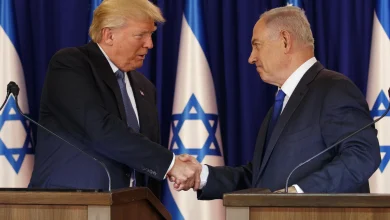
Israeli Prime Minister Benjamin Netanyahu issued a stern warning to Israel’s “enemies” on Thursday, amid a fragile US-brokered ceasefire that has largely reduced hostilities in Lebanon.
Netanyahu’s warning came a day after Israel killed a senior Hezbollah commander, in the first strike on Beirut’s southern suburbs (Dahiyeh) since the truce took effect last month.
No Immunity
In a video statement on Thursday, Netanyahu confirmed that he had approved the strike on the Lebanese capital, which eliminated the commander of Hezbollah‘s elite Radwan Force.
“Yesterday evening, we eliminated the commander of Hezbollah’s Radwan Force, in the heart of Beirut. This is the same senior terrorist who led the plan to conquer the North,” Netanyahu said.
Furthermore, the Israeli Prime Minister said there was no immunity for Israel’s enemies. “I say to our enemies in the clearest possible way: No terrorist has immunity. Anyone who threatens the State of Israel will pay the price,” Netanyahu warned.
He also noted that the Israeli military killed more than 200 Hezbollah fighters over the past month and was doing the same thing in Gaza.
Beirut Strike
The Israeli military on Wednesday launched its first strike on Beirut’s southern suburbs since the temporary ceasefire came into force on April 17.
The strike targeted the Commander of Hezbollah’s Radwan Force Unit Ahmed Ali Balout, the Israeli military declared on Thursday.
Netanyahu said that Balout thought he could continue to attack Israeli troops and citizens from his hideout in Beirut. “He likely read in the press that he had immunity in Beirut. Well, he read it and it is no longer the case,” the Israeli Prime Minister stated.
The Iranian-backed Hezbollah has not yet commented on the attack.
Hostilities Continue
Israeli strikes on southern Lebanon resumed on Thursday, reported AFP. Photos of Dahiyeh showed massive destruction of residential buildings amid ongoing search operations.
According to Lebanese media, Israeli strikes targeted several southern towns and villages, including a shopping center and residential buildings in Nabatieh.
Moreover, the Israeli military issued evacuation warnings to three villages north of the Litani River and outside the area occupied by Israeli troops after the ground invasion of the border area.
The Israeli military said that it had targeted more than 15 militant infrastructure sites in southern Lebanon on Wednesday, declaring that four soldiers were injured by an “explosive drone impact.”
Hezbollah, meanwhile, said it conducted 17 operations against Israeli forces in the south on the same day, according to Reuters.
Hezbollah-Israel Conflict
Fighting renewed between Hezbollah and Israel on March 2 against the backdrop of the US-Israeli war with Iran and the killing of Iranian Supreme Leader Ayatollah Ali Khamenei.
So far, Israeli strikes have killed more than 2,700 people in Lebanon, according to the Lebanese Health Ministry. The conflict has also displaced around 1.2 million people from their homes and is expected to drive quarter of the population into acute food insecurity, the UN warned.
The Israeli military announced that 17 soldiers have been killed in southern Lebanon, in addition to two civilians in northern Israel.
US President Donald Trump announced an initial 10-day ceasefire in Lebanon on April 16, and then extended it into three weeks, following a meeting between the Lebanese and Israeli ambassadors to Washington, despite Hezbollah’s opposition to any direct talks with Israel.
While Trump signaled a potential meeting between Netanyahu and Lebanese President Joseph Aoun in the near future, Lebanese Prime Minister Nawaf Salam said on Wednesday that it was “premature” to talk of any high-level meeting between Lebanon and Israel.
He added that consolidating the ceasefire would be the basis for any new negotiations between Lebanese and Israeli government representatives in Washington.