Hegseth Declares Global Blockade on Iran: “No Ship Sails Without Permission”
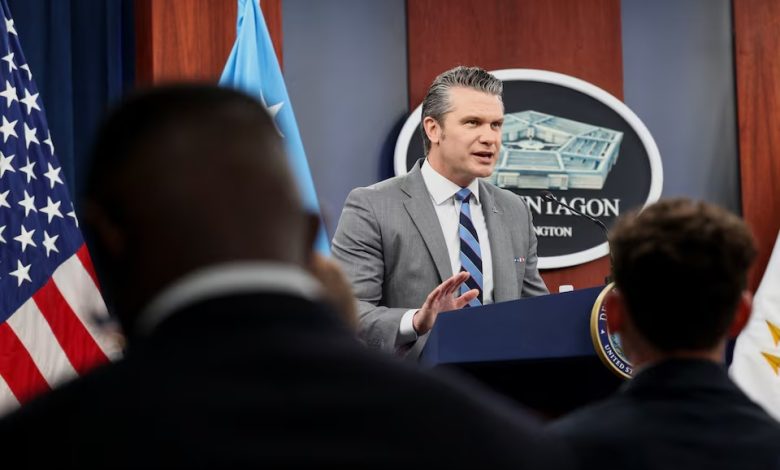
Defense Secretary Pete Hegseth announced on Friday that the United States military blockade against Iran is now expanding across the globe, emphasizing that Tehran still possesses a critical opportunity to secure a “good deal” with Washington if leadership chooses to negotiate.
“Our blockade is growing and going global,” Hegseth told reporters during a press briefing, asserting the dominance of American maritime power with a stern warning to international shipping. “No one sails from the Strait of Hormuz to anywhere in the world without the permission of the United States Navy,” he stated.
Potential for Diplomacy in Pakistan
While military pressure intensifies, diplomatic channels remain flickering but active, as three Pakistani sources told Reuters on Friday that peace talks between Iran and the United States could resume soon in Pakistan. These discussions follow a previous round of scheduled talks that fell through earlier this week.
Standing alongside General Dan Caine, Hegseth noted that the United States was “not anxious” for an immediate deal. He echoed previous sentiments from the administration, suggesting that Washington has “all the time in the world” to wait for Iranian compliance.
“Iran knows that they still have an open window to choose wisely at the negotiating table,” Hegseth explained to the press. However, he clarified the specific condition for relief. “All they have to do is abandon a nuclear weapon in meaningful and verifiable ways,” he said.
Enforcing the Maritime Perimeter
General Dan Caine confirmed that US Central Command maintains a strict blockade on every port located within Iranian territory. Consequently, the military has already turned around thirty-four ships as of Friday morning to enforce the current standing orders.
The United States military intends to continue interdicting Iranian vessels across both the Pacific and Indian oceans. “We’re enforcing the blockade across the board against any ship of any nationality that is transiting to or from an Iranian port,” Caine said.
Furthermore, Caine explained that the Navy is closely tracking specific vessels of interest that are currently moving away from Iran. “We’re prepared and postured to intercept them,” he added regarding ships that were outside the initial zone on 13 April.
Hegseth also issued a direct warning regarding the potential for Iranian retaliation in the strategic Strait of Hormuz, declaring that any attempts by Iran to lay maritime mines would constitute a direct violation of the current ceasefire.
He admitted that while transit through the Strait continues, the process involves significantly more risk than international commerce usually allows. “That’s because Iran is doing irresponsible things with small, fast boats with weapons on them,” Hegseth concluded during the Friday briefing.