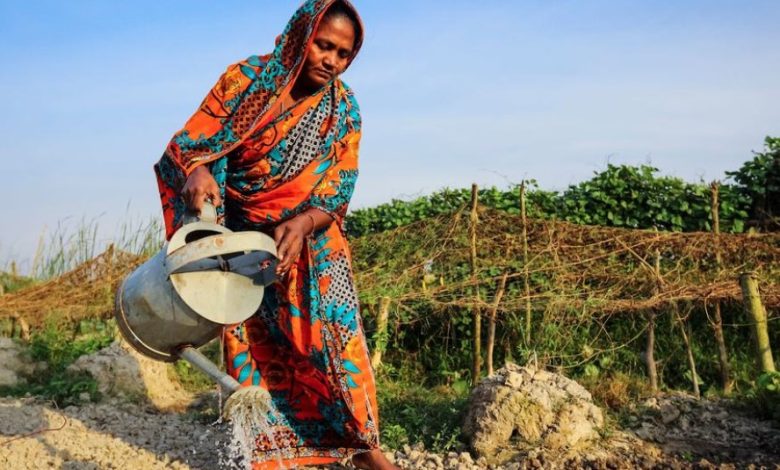
The UN Development Program (UNDP) chief warned on Thursday that the impacts of the US-Israeli war with Iran could drive more than 30 million people worldwide into poverty.
On February 28, 2026, the US and Israel launched a joint attack on Iran, sparking a regional conflict which led to exchanges of heavy missile and drone attacks, the closure of the Strait of Hormuz and a naval blockade on Iranian ports.
This, in turn, has severely disrupted global shipping through the critical maritime corridor, choking off essential supplies of fuel and fertilizer.
Poverty Threat
The UN Development Program (UNDP) Administrator and UN Under-Secretary-General, Alexander De Croo, said that the Iran war threatens to push 30 million people back into poverty due to its impacts on fuel and fertilizer supplies.
“Even if the war would stop tomorrow, those effects, you already have them, and they will be pushing back more than 30 million people into poverty,” he told Reuters.
In a report released in mid-April, the UNDP warned that the impacts are evolving from an ‘acute’ to an ‘enduring’ phase, affecting people in 162 countries, with the Gulf region, Asia, Sub-Saharan Africa, and Small Island Developing States being uniquely vulnerable.
Food Insecurity
The Strait of Hormuz is a crucial waterway linking the Arabian Gulf with the Gulf of Oman and the Arabian Sea, through which around a fifth of daily global oil supplies and LNG supplies pass.
The blockade of cargo vessels through the Strait of Hormuz has exacerbated fertilizer shortages, leading to a reduced agricultural productivity which will impact crop yields later in the year, De Croo said.
The Middle East is a main producer of fertilizers, with about 30% of global supplies passing through the Strait of Hormuz.
“Food insecurity will be at its peak level in a few months – and there is not much that you can do about it,” he noted.
Earlier this month, the World Food Program (WFP) said that the blockade of Hormuz stalled the shipping of tens of thousands of metric tons of food, warning that a prolonged conflict through June could drive an additional 45 million people to acute hunger.
Moreover, the World Bank and the International Monetary Fund (IMF) warned that the ongoing conflict will trigger a surge in food prices, placing further strain on the world’s most vulnerable communities.
According to UN recent estimates, 9.1 million additional people in Asia could face acute food insecurity if the conflict persists.
Far-Reaching Impacts
The former Belgian prime minister also said that the repercussions of shipping disruption through the Strait of Hormuz include energy shortages and falling remittances.
According to De Croo, the ripple effects of the crisis have slashed global GDP by an estimated 0.5% to 0.8%. “Things that take decades to build up, it takes eight weeks of war to destroy them.”
The UNDP report noted that the war impacts extend beyond countries directly affected by the conflict and those dependent on imported energy. The findings suggest that poorer countries not involved in the fighting will endure longer-term damage.
“The shock of the escalation of the conflict in the Middle East is not limited to the countries directly affected, but falls disproportionately on those with the least fiscal room to absorb higher energy and food prices.
“For these countries, the crisis forces impossible trade-offs between stabilizing prices today and funding health, education, and jobs tomorrow,” De Croo said, commenting on the report.
Humanitarian Crisis
Speaking to Reuters, De Croo warned that the fallouts of the war will take a heavy toll on humanitarian efforts, particularly in conflict-ridden regions such as Gaza, Sudan and Ukraine, amid a funding shortfall and mounting needs.
“We will have to say to certain people, really sorry, but we can’t help you. People who would be surviving on help will not have this and will be pushed into even greater vulnerability,” the UNDP chief said.
Since the outbreak of the conflict, several aid groups reported crippling delays in supply deliveries, including life-saving medicines, due to skyrocketing shipping costs and the necessity of lengthy maritime detours.