Saudi Arabia’s economy is poised for a sharp rebound in 2027, the World Bank says, as energy and trade flows recover from the Strait of Hormuz shock.
Driving the news: The World Bank forecasts Saudi GDP growth of 7.9% in 2027. That follows a projected 2% contraction in 2026. Roberta Gatti, the Bank’s Chief Economist for the Middle East, North Africa, Afghanistan and Pakistan, shared the outlook with Asharq Al-Awsat. She spoke as the Bank released its latest regional economic update.
Why it matters: The crisis showed that diversifying the economy and diversifying export routes work best together. Gatti said Saudi Arabia and the United Arab Emirates weathered the closure better than several neighbouring energy exporters. Both countries owned alternative routes.
Zoom in: Saudi Arabia redirected a large share of its crude through the East-West Pipeline to Red Sea ports. The UAE exported hydrocarbons through Fujairah. As a result, both countries depended less on the strait.
The big picture: The shock hit the wider region hard. The Bank projects the region’s economies will contract 2.1% in 2026, after growth of 3.3% in 2025. GCC economies will shrink 4.3%, one of the sharpest shocks since the COVID-19 pandemic. Regional output now sits 5.7 percentage points below the forecasts the Bank issued before the conflict erupted in January.
How the East-West Pipeline Cushioned the Blow
Before the war, about 15 million barrels of crude passed through Hormuz every day. Iran effectively closed the strait after the regional conflict began, which trapped roughly a fifth of the world’s oil and liquefied natural gas supplies. Crude prices then surged above $100 a barrel, or about SAR 375.
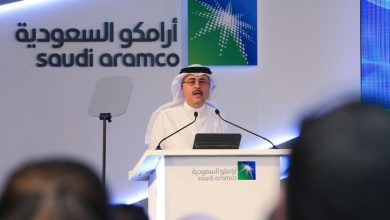
Saudi Arabia moved quickly, however. Aramco CEO Amin Nasser told reporters in March that the East-West Pipeline would reach full capacity within days. Bloomberg then reported on 28 March that the line pumped 7 million barrels a day. Crude exports through Yanbu reached about 5 million barrels a day. The Kingdom also shipped 700,000 to 900,000 barrels a day of refined products. Refineries at home took the remaining 2 million barrels.
The pipeline stretches more than 1,000 km from the eastern oil fields to the Red Sea. Analysts note it only partly offsets the loss of Hormuz volumes. Still, it kept oil prices below the crisis highs of earlier supply shocks.
Gatti credits three strengths for Saudi resilience. First, the Kingdom holds substantial financial reserves. Second, its diversification drive continues. Third, it can reroute a significant share of exports through Red Sea ports. She stressed that the economy would have suffered far more without those alternatives. In her view, the crisis reinforced the case for diversification rather than weakening it.
The regional picture explains why that matters. Oil tanker traffic through the Gulf fell by more than 50%. Regional oil output dropped from about 26 million barrels a day to 16 million in March. The Bank expects every GCC economy except Oman to contract in 2026. It projects the following declines:
- Qatar: 20.9%
- Kuwait: 14.6%
- Iraq: 12.4%
- Bahrain: 2.9%
Countries that depend most on Hormuz suffered the steepest losses. Disruptions to tourism, aviation and logistics added further pressure. Even so, global effects stayed more contained than many expected. A pre-existing oil surplus, rerouted shipments, higher output elsewhere, inventory withdrawals and weaker East Asian demand absorbed part of the shortfall.

Diversification Shows up in the Data
Saudi Arabia’s own statistics support Gatti’s argument. The General Authority for Statistics (GASTAT) reported 3% year-on-year GDP growth in the first quarter of 2026. Non-oil activities supplied 1.7 percentage points of that growth, the largest contribution of any sector.
The second quarter told a different story for oil. Real GDP fell about 4.8% year on year, because oil activities dropped roughly 25%. Meanwhile, non-oil activities kept growing. GASTAT’s estimates put that growth between 0.6% and 0.9%. The non-oil economy therefore stayed in positive territory during the sharpest part of the shock.
Outside institutions took notice. Fitch affirmed the Kingdom’s A+ rating with a stable outlook in July. The International Monetary Fund described the banking system as well placed to absorb shocks. It also praised the central bank for acting early on liquidity.
Forecasters also agree on the direction of 2027. A Bloomberg survey of 15 analysts in September found an average expectation of 6.1% Saudi growth next year. Oxford Economics projects GCC growth of 6.8% in 2027, which would fully offset this year’s decline.
By the numbers:
- 9%: World Bank forecast for Saudi GDP growth in 2027.
- 2%: Projected Saudi GDP contraction in 2026.
- 8%: Projected 2027 regional growth, excluding Iran.
- 1%: Projected 2026 regional contraction, against 3.3% growth in 2025.
- 3%: Projected 2026 GCC contraction.
- 7 percentage points: Downgrade to regional 2026 output versus pre-conflict forecasts.
- 15 million barrels a day: Crude flow through Hormuz before the war.
- 7 million barrels a day: East-West Pipeline capacity, running at full tilt by late March.
- 5 million barrels a day: Crude exports through Yanbu.
- 700,000 to 900,000 barrels a day: Refined product exports.
- 2 million barrels a day: Pipeline volumes feeding Saudi refineries.
- $100 a barrel (about SAR 375): Level crude prices topped during the crisis.
- More than 50%: Drop in Gulf oil tanker traffic.
- 26 million to 16 million barrels a day: Fall in regional oil output in March.
- 7 percentage points: Non-oil contribution to Saudi GDP growth in Q1 2026.
- 6% to 0.9%: Non-oil growth in Q2 2026, year on year.
- A+ (stable): Fitch’s rating for Saudi Arabia.
- 19th: Saudi rank on Stanford’s Global AI Vibrancy Index in 2024, up from 33rd in 2017.
- Less than 1%: Arabic’s share of global web content.
Rebound is Not the Same as Recovery
Gatti urges caution about the headline number. She distinguishes between a rebound and a recovery. After a steep fall, fast growth often reflects restored production from depressed levels. It does not necessarily signal stronger fundamentals or higher productivity.
The Bank’s baseline scenario assumes the conflict lasts until the end of 2026. De-escalation and a gradual return to normal trade flows follow. Under that path, regional growth excluding Iran reaches 7.8% in 2027 as hydrocarbon exports resume.
Several factors could slow the climb. Repairing damaged infrastructure takes time. Investment may stay on hold during uncertainty. Fiscal reserves may sit lower than before the crisis. In addition, higher shipping costs, tighter financing, weaker investor confidence and softer tourism income could stretch the impact. Prolonged uncertainty can also delay investment decisions and slow the build-up of physical and human capital. Gatti warns that a temporary shock could then turn into a lasting slowdown.
Gulf producers keep an important advantage, though. They remain among the world’s lowest-cost and most competitive oil and gas suppliers. As trade normalises, they will stay key suppliers to global markets. The policy challenge goes further, according to Gatti. Governments must continue diversifying, strengthen resilience and protect human and productive capital during the crisis. These investments, she argues, stop a short-term disruption from becoming a permanent loss of growth potential.
AI as the Next Diversification Frontier
Gatti also sees artificial intelligence as a new source of productivity. Realising it requires closing three gaps: localisation, adoption and foundational capital. Private-sector dynamism needs strengthening too.
The localisation gap is stark. More than 500 million people speak Arabic, yet the language makes up less than 1% of global website content. Local dialects remain a weak spot for Arabic-language AI models. The adoption and capital gaps show up in limited productive use of AI, digital skills shortages and uneven infrastructure.
Saudi Arabia starts from a strong position. The Kingdom climbed from 33rd place among 36 economies in 2017 to 19th in 2024 on Stanford University’s Global AI Vibrancy Index. Gatti says the real test is turning heavy investment in data centres and digital infrastructure into wide adoption by businesses, workers and public institutions. Success would lift productivity and speed up non-oil growth.
Regional cooperation could multiply the gains. Saudi Arabia can contribute computing capacity, data centres and model-development skills. Other regional economies can supply talent, sector expertise and local data. This complementarity could create new growth sources beyond the oil cycle.
What’s next: The biggest risk to the 2027 outlook is continued disruption to trade and energy flows. If routes normalize, the Bank sees Saudi Arabia converting a statistical rebound into durable growth. That path relies on productivity, investment and non-oil sectors, supported by export infrastructure built to withstand future shocks.